
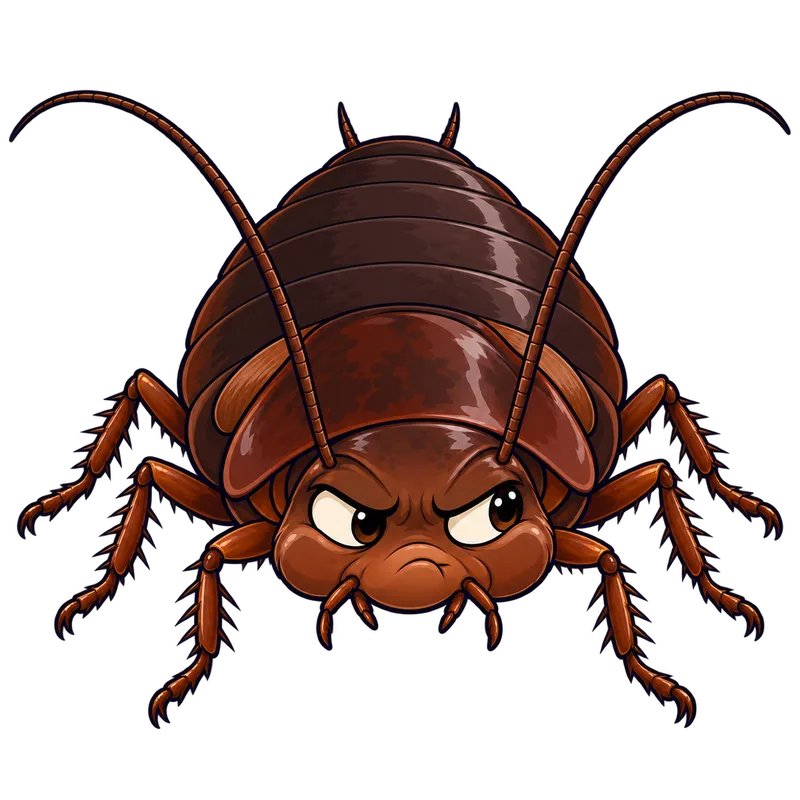
Florida woods cockroach
Eurycotis floridana
- Size
- Not established
- Color
- Not established
- Habitat
- Moist wooded environments and rotting logs
- Diet
- Decaying organic matter and plant products
- Life cycle
- Gradual metamorphosis from egg to adult
The Florida woods cockroach is a large, outdoor-dwelling insect that often startles homeowners when it accidentally wanders into living spaces. When you spot one of these insects on a patio or crossing a basement floor, you notice a broad, oval, and flattened body accompanied by long, thread-like antennae that match the length of the body itself. The head remains completely hidden beneath a shield-like plate above the thorax. Six strong legs covered in spiny bristles allow the insect to scramble across rough tree bark or smooth siding with surprising speed. For a positive identification when a specimen looks ambiguous, you might need a hand lens at 10x magnification or even a trip to a local university extension agent, because telling a harmless outdoor wanderer apart from a true structural pest matters before you decide what to do next.
Habitat & behaviour
These roaches spend their natural lives outdoors in moist wooded environments, rotting logs, leaf litter, tree stumps, hollow tree cavities, and piles of firewood stacked too close to the back porch. They are nocturnal creatures, spending the daylight hours hidden in dark, secluded harborages before emerging after dark. Unlike other cockroaches that thrive indoors, wood roaches are accidental invaders. They do not establish breeding populations inside climate-controlled human structures. They wander inside by crawling up exterior foundation walls, slipping through open windows or door thresholds, squeezing through weep holes, or hitching a ride on a split log brought in for the fireplace. Because they need high relative humidity and decaying organic matter to survive, an individual that wanders inside usually dies of dehydration fairly quickly.
Visual variations
Cockroaches grow up through a gradual metamorphosis, skipping the pupal stage entirely to move straight from egg to nymph and then adult. Females tuck bean-shaped egg cases behind loose bark or inside rotting timber when the weather warms up. Nymphs hatch looking like tiny, wingless copies of the adults. Right after shedding their old skin, a young nymph looks stark white for a few hours until the new shell hardens and darkens. Adults develop fully formed bodies, though their wings differ a lot by sex in these wood-loving groups. Males usually have working wings that reach past the end of the abdomen, making them strong fliers that head right for your porch lights after dark. Females tend to carry much shorter wings that cover only a fraction of their bodies, which keeps them grounded in the damp leaf litter.
Why it matters
Finding one of these chunky roaches inside can send you straight into a panic, but seeing one hardly ever means you have an infestation. They do not bite, they leave your structural timbers alone, and they will not chew up your favorite rugs or carpets. They are just outdoor insects that made a wrong turn. Because of that, grabbing an indoor aerosol spray and soaking your baseboards is mostly a waste of time. Sealing up your home physically is the smart way to go. Putting tight sweeps on your doors, caulking gaps around foundation pipes, and moving that stack of firewood away from your outer walls will stop almost all accidental entries. If you keep seeing them or if you cannot figure out whether you are looking at a harmless wanderer or a true house pest, call in a professional. If an outdoor barrier treatment makes sense, the product label rules every move, and any choice involving restricted chemicals belongs entirely to a licensed applicator.
Similar species
 Pennsylvania wood cockroachParcoblatta pennsylvanica
 Field cockroachBlattella vaga
 Surinam cockroachPycnoscelus surinamensis
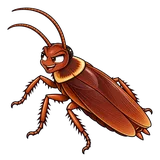 Brown cockroachcombinações Periplaneta/Validiblatta brunnea: confirmar
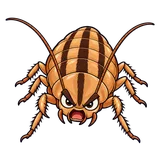 Three-lined cockroachLuridiblatta trivittata
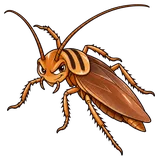 German cockroachBlattella germanica