
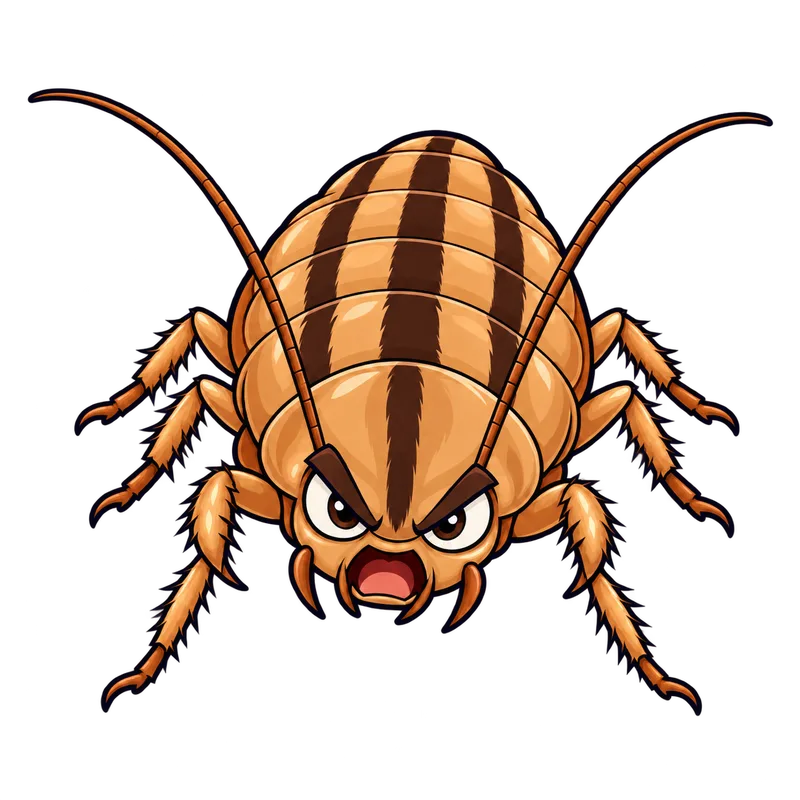
Three-lined cockroach
Luridiblatta trivittata
- Size
- Not established
- Color
- Not established
- Habitat
- Not established
- Diet
- Not established
- Life cycle
- Not established
The three-lined cockroach, cataloged under the working scientific identity Luridiblatta trivittata, is a bit of a ghost in standard entomological literature. If you run across a small insect indoors and assume it is this species based on a name, you are likely looking at something else entirely. In professional pest control sources, the specific epithet trivittata actually belongs to the boxelder bug rather than any recognized cockroach. True cockroaches that display distinctive dorsal markings, such as the German cockroach or the Asian cockroach, sport exactly two dark parallel stripes behind the head on their pronotal shield, which is the plate covering the thorax. They never feature three. Separating a true pest roach from a harmless wanderer requires looking past general shapes to examine the pronotal shield closely, ideally under a 10x magnification hand lens. Without an intact physical specimen evaluated by an extension specialist or a trained pest professional, pinning down an exact species remains difficult.
Habitat & behaviour
Little has been written about exactly where the three-lined cockroach hides and forages, so the best guide is how its relatives behave. Other small-to-medium structural cockroaches typically fall into two clear behavioral groups. Indoor synanthropic species complete their entire life cycles inside human structures, favoring the warm, humid microhabitats found near kitchen plumbing and bathroom sinks. Outdoor peridomestic invaders live out in leaf litter, mulch beds, and woodpiles, only wandering inside when driven by weather changes or bright outdoor lights. Most cockroaches are strictly nocturnal, choosing to stay tucked away in tight, dark cracks and crevices while the sun is up. Spotting one out in the open during daylight usually means a heavy population has outgrown its primary hiding spots, or someone recently disturbed their harborage.
Visual variations
Cockroaches grow up through incomplete metamorphosis, skipping the pupal stage entirely and moving straight from egg to nymph and then adult. The journey starts inside a hard, bean-shaped egg case called an ootheca, which the female might lug around with her or glue into some dark crevice depending on her species. When the nymphs finally hatch, they look like miniature, wingless versions of their parents, though their color is often a bit off until they shed their skin a few times. Right after a molt, these youngsters look ghostly white and alarmingly soft for a few hours before their new armor hardens and darkens into the proper shade. Adults get the full set of equipment, including functional reproductive gear and, in many cases, fully formed wings. You will often see clear differences between the sexes in body shape and wing span, as with the brown-banded cockroach where the slender males boast long flight wings while the females are stubby, teardrop-shaped runners who stay firmly on the ground.
Why it matters
Finding a stray bug scuttling across the baseboard usually makes you want to grab the nearest aerosol can, but figuring out what you are actually looking at matters before any chemical comes out of the bottle. The directions printed on a pesticide product label are legally binding rules, meaning you never get to guess at mixing rates, application methods, or safety precautions. Real structural roaches can turn a clean kitchen sour by leaving behind fecal specks, cast-off skins, and regurgitated fluids that create a distinct, musty odor in tight spaces. Their discarded armor and waste also carry strong protein allergens that can set off stubborn asthma attacks and allergic rhinitis, especially in young kids who spend a lot of time on the floor. If someone in the house starts wheezing, breaking out, or showing signs of serious respiratory distress, step away from the bug spray and call a clinician instead of a pest control company.
Similar species
 German cockroachBlattella germanica
 American cockroachPeriplaneta americana
 Oriental cockroachBlatta orientalis
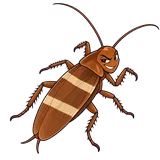 Brown-banded cockroachSupella longipalpa
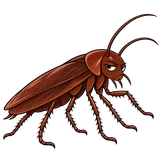 Smokybrown cockroachPeriplaneta fuliginosa
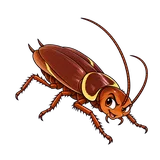 Australian cockroachPeriplaneta australasiae