
German vs brown-banded cockroach: why does identification change control?
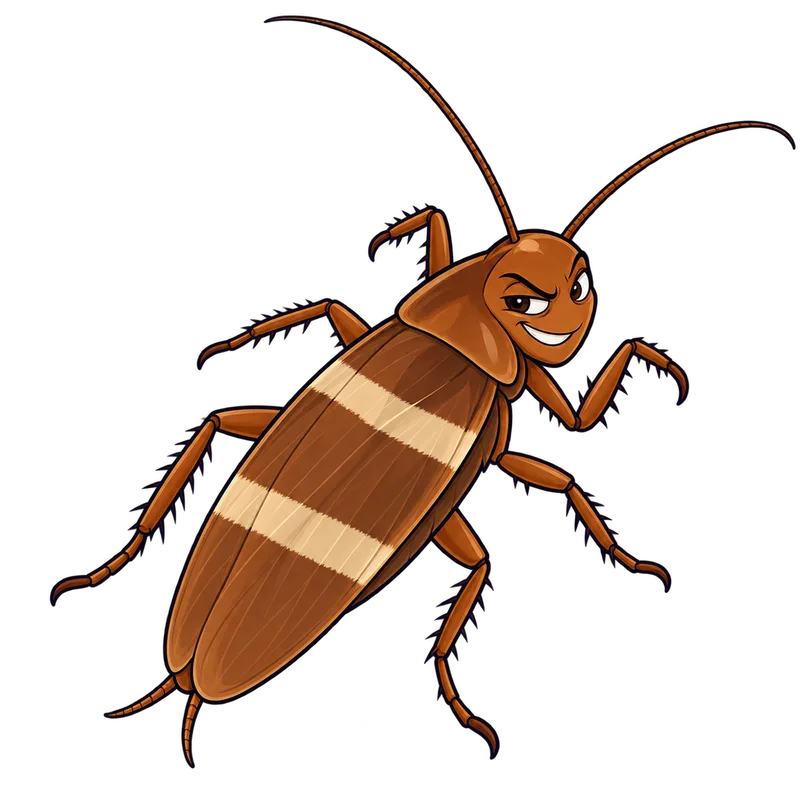
Identifying the exact cockroach species changes control because German cockroaches require moisture near kitchen and bathroom plumbing, while brown-banded cockroaches prefer dry, warm environments and scatter structure-wide into high areas. Treating only the kitchen sink will fail for a brown-banded infestation.
What is actually going on
Picture walking into the kitchen late at night to grab a glass of water. You flip on the overhead light, and a small, light brown insect scurries across the counter, darting into the narrow gap right next to the dishwasher. Most people immediately assume every small indoor cockroach is the typical kitchen-dwelling pest, but that quick guess is usually where pest control efforts fail. Misidentifying a brown-banded cockroach as a German cockroach means you are treating the wrong areas entirely.
The core reason identification changes your entire strategy comes down to where these insects live and how they use a building. German cockroaches need moisture and warmth. They cluster tightly around kitchen sinks, dishwashers, and bathroom plumbing, rarely venturing far from a reliable water source. If you find a tiny roach near a wet coffee maker or under a leaky pipe, you are almost certainly looking at a German cockroach.
Brown-banded cockroaches operate on a completely different set of rules. They actually prefer dry environments and higher ambient temperatures, which means they do not stay confined to the kitchen. Instead of hiding near plumbing, they scatter structure-wide into high, dry areas. You might find them behind wall clocks, inside bedroom closets, tucked into picture frames, or nesting within the warm motor housings of televisions and stereo equipment. Treating only the kitchen sink for a brown-banded infestation is a bit like trying to fix a leaky roof by mopping the basement floor. You are cleaning up in the wrong zone while the actual problem remains untouched elsewhere.
How to tell for sure
Before you buy a single trap or spray, you need to look closely at the physical markings, because body patterns tell you precisely which species has moved in. Adult German cockroaches are usually about half an inch long and feature two dark, parallel stripes running lengthwise down the tan plate right behind the head. Brown-banded cockroaches are roughly the same size, but they usually lack those vertical head stripes. Instead, they usually sport a solid, dark, bell-shaped pattern on that head shield, combined with two pale, yellowish horizontal bands running across their wings and body.
Behavior provides another major clue once you start observing them. Adult male brown-banded cockroaches are usually slender, golden-brown, and fly readily when disturbed. Female brown-banded cockroaches are usually darker, broader, and cannot fly at all. Neither sex of the German cockroach can achieve true flight.
Egg cases also give away the game. A female German cockroach usually carries her light tan egg capsule attached to her abdomen almost the entire gestation period, dropping it only a day or two before the nymphs hatch. A brown-banded female usually carries her egg case for just a couple of days before gluing it securely onto hidden, elevated surfaces like the undersides of tables, dressers, or high wall corners. If you spot tiny, purse-like egg cases glued behind a picture frame in a dry guest bedroom, you are usually dealing with brown-banded roaches, and your inspection needs to move upward and away from the plumbing zones.
What usually comes next
Once you have figured out the exact species using physical cues instead of guessing, your next logical step is deciding where to put your control materials. If your inspection points directly to a German cockroach issue, your entire focus stays low and damp. You will want to place gel baits or enclosed bait stations right inside those narrow gaps situated within a few feet of sinks, refrigerators, and bathroom vanities. Fixing plumbing leaks and eliminating standing water usually forces these insects to consume the bait.
If you instead confirmed a brown-banded infestation, forget about that kitchen-centric approach. Because these roaches scatter across the upper levels of a house, baiting needs to happen throughout the entire structure. You have to dab small amounts of bait along upper moldings, inside closets, around bookcases, and close to electronic appliances located in dry rooms. Beyond that, you must check the undersides of furniture and picture frames to scrape away any glued egg cases.
Keep in mind that certain groups develop behaviors that complicate standard treatments. Some German cockroach strains can develop an inherited dislike of glucose, meaning they find traditional sweet-tasting gel baits bitter and refuse to touch them. If your baits remain completely untouched despite being placed correctly, you may need to switch to protein-based formulations. And whatever you do, steer clear of total-release aerosol foggers, which people often call bug bombs. These sprays fail to reach deep hiding spots, and the repellent ingredients typically drive cockroaches further into wall voids, scattering the infestation into previously clean rooms.
When to get help
There are times when a DIY effort simply falls short, or when safety requires stepping back and letting a professional handle the situation. If you live in a multi-unit apartment building, treating your own home alone rarely solves the problem. Cockroaches move freely between neighboring apartments through shared utility pipe chases and electrical wiring voids, acting like a hidden internal highway network. In shared housing, adjacent units above, below, and beside the affected space need to be inspected and treated at the same time, which demands coordination beyond what a single tenant can manage.
Health concerns also dictate when to bring in outside help. Cockroach shed skins, droppings, and saliva carry strong allergens that frequently trigger severe asthma attacks, especially in young children and sensitive people. If anyone in the house suffers from ongoing breathing trouble or severe allergic responses, professional remediation becomes necessary.
Always treat the pesticide product label as a legally binding rule, making sure applications never occur on food preparation surfaces or unapproved spots. If you decide to use insecticidal dusts for cracks and crevices, never swap in industrial or pool-grade materials for EPA-registered products, since pool-grade dusts contain crystalline silica and carry serious inhalation and lung damage hazards. When infestations remain stubborn in schools, commercial buildings, or large apartment complexes, reach out to a licensed pest management professional who has the right tools and legal clearance to handle structural pests safely.