Camel crickets
Family Rhaphidophoridae
- Size
- 13 to 33 mm
- Color
- Light brown to dark brown, frequently mottled or spotted
- Habitat
- Caves, damp leaf litter, basements, crawl spaces
- Diet
- Omnivorous scavenger of fungi, plant matter, paper, and fabrics
- Life cycle
- 1 to 2 years, with eggs laid in spring
Camel crickets are wingless, humpbacked insects belonging to the family Rhaphidophoridae that frequently turn up in damp basements, crawl spaces, and dark corners of the home. When you walk down into a damp cellar and see something launch itself wildly into the air, you are almost certainly looking at a camel cricket, also known as a cave cricket or spider cricket.
Identity
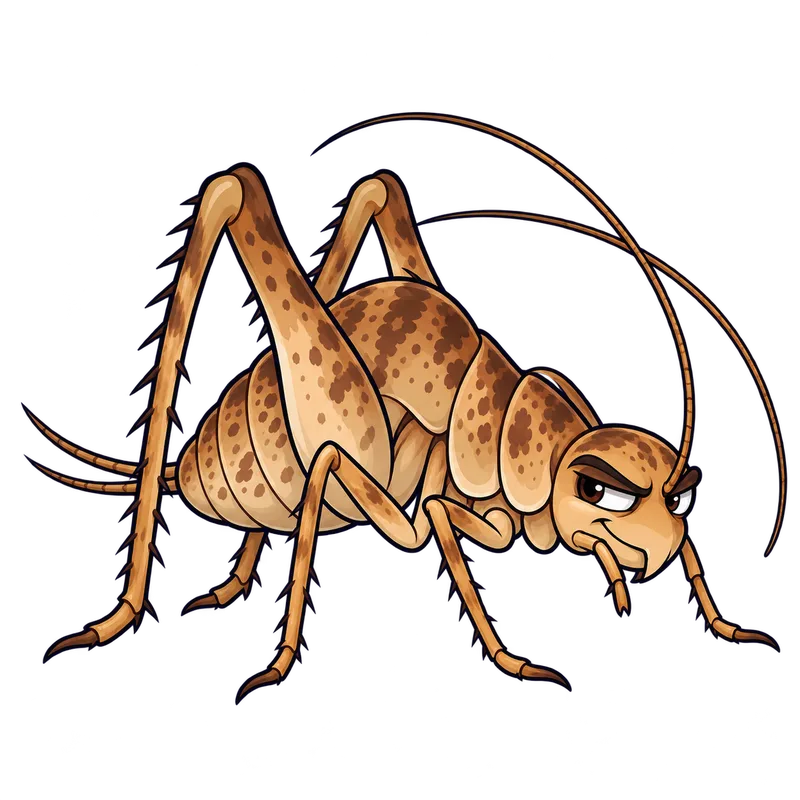
Identifying these insects comes down to a few unmistakable physical traits that set them apart from standard field crickets. Adults measure from 13 to 33 mm in body length. The most glaring difference is that they lack wings entirely across every stage of their lives, meaning you will never see flying adults or even wing pads on the younger versions. Their coloration runs from light brown to dark brown, often splashed with mottled spots and bands. Their antennae are remarkably long, thread-like structures that reach past the length of the body to help them navigate pitch-black voids. If you look closely at their profile, you will notice an exaggerated, arched back that gives them their common name, coupled with a massively oversized set of hind legs. You will also never hear them chirp because they possess zero sound-producing organs.
Habitat & behaviour
Outdoors, these creatures prefer cool, damp retreats like caves, rotting logs, and thick leaf litter. When summer heat bakes the soil or dry weather sets in, they drift toward human structures in search of moisture. They are strictly nocturnal, spending daylight hours wedged tightly into foundation cracks or behind stored boxes. Their diet is broad and opportunistic, acting as general scavengers that feed on fungi, rotting organic matter, cardboard, paper, and occasionally fabrics. When a flashlight beam hits them, they do not run away in an orderly fashion. Instead, they launch a sudden, blind leap that often carries them straight toward the person who startled them. That ballistic escape is a reflexive startle response, not an attack.
Visual variations
They grow up through simple metamorphosis, skipping the pupal stage completely and moving straight from an egg to a tiny nymph and then an adult. Nymphs look like pale, miniature carbon copies of the grown insects, sharing that same wingless and humpbacked build while simply scaling up in size through a series of molts. Adult females carry a prominent, blade-like tail structure known as an ovipositor, which they use to slide eggs into damp soil or organic debris, while adult males lack this extra appendage and feature rounded abdominal tips instead. Because they do not build colonies or live in structured societies, you will never find worker or soldier castes among them. Through every single phase of growth, the total absence of wings remains the steady rule that separates them from other hopping invaders.
Why it matters
Spotting these creatures indoors usually serves as a handy early warning system for high indoor humidity, leaky plumbing, or unsealed gaps around a foundation. A stray visitor here and there is mostly harmless, but heavy indoor populations can damage stored goods by chewing on book bindings, cardboard boxes, wallpaper glue, and fabrics. They are entirely harmless to human health because they possess no venom, cannot bite human skin, and do not carry human diseases. Still, a massive buildup of discarded skins, waste, and dead insects can trigger indoor allergies for sensitive people. Pinpointing the exact insect matters because management relies entirely on drying out the damp environments they love, rather than jumping straight to chemical treatments.