
What are mole crickets?
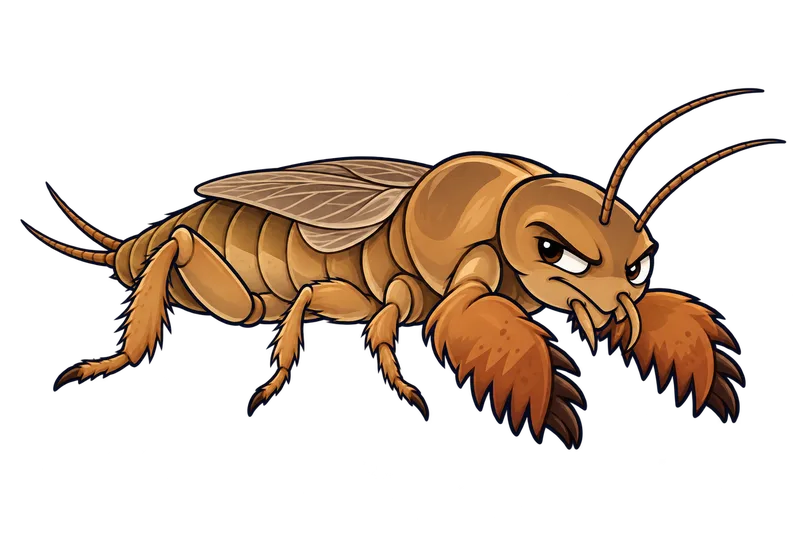
Mole crickets are burrowing insects that spend nearly their entire lives underground, tunneling through the top few inches of soil. An adult measures around an inch to an inch and a half long, featuring a velvety brown or tan body with heavy, shovel-like front legs built for digging.
What is actually going on
You step out onto the back lawn on a bright Saturday morning, coffee mug in hand, only to feel the ground sink and bounce beneath your sneakers like an overstuffed mattress. When you look closer, narrow squiggly ridges snake across the turf as though someone dragged a tiny rake just under the surface, leaving patches of grass sickly and yellowed. If you live in the warm and sandy parts of the American Southeast, you might already suspect you are sharing your yard with one of the strangest sub-surface excavators in the insect world.
Mole crickets are burrowing insects featuring heavy, shovel-like front legs built for digging and spending nearly their entire lives underground. An adult generally measures around an inch to an inch and a half long, with a velvety brown or tan body that looks like a bizarre biological cross between a cricket and a miniature lobster. Instead of hopping around like their pasture-dwelling cousins, these creatures use their modified limbs to tunnel through the top few inches of soil, pushing up the earth as they go.
The trouble they cause comes down to a double-whammy of direct feeding and mechanical destruction. Pest species do not just chew on grass roots, underground tubers, and young seedlings until they wither. Their relentless back-and-forth tunneling acts like a subterranean plow, breaking the vital contact between plant roots and the soil. The ground loses its moisture, seedlings get yanked right out of the dirt, and your once-firm turf turns into that spongy, unstable trap you felt underfoot.
How to tell for sure
Pinpointing the culprit usually starts by looking closely at the front legs, because not all mole crickets are bad actors wreaking havoc on your property. Native species tend to mind their own business in low numbers, while invasive pest species cause widespread economic and turf damage. To tell them apart, turn the insect over and count the hard, blade-like claws on its front feet.
If you count exactly two prominent claws on each front leg, you are usually looking at an aggressive, introduced pest species. If you count four distinct claws, you generally have the harmless native variety that rarely triggers any need for management. Another great visual clue is the damage itself, which often gets mistaken for white grub activity. While grubs chew roots and let you peel the turf back like an old rug, mole crickets leave that characteristic springy, raised ridge network without loosening the sod into loose mats.
When you want to know if an active population is hiding beneath a troubled patch of lawn, extension agents usually recommend running a simple soap flush test. Mix about one and a half tablespoons of liquid dish soap into a gallon of water, and pour it evenly over a marked two-foot by two-foot square of suspect turf. Watch that drenched patch closely for three minutes. If two or more mole crickets emerge from their burrows to escape the suds, you have found the threshold that typically warrants taking action.
What usually comes next
Once you confirm an infestation through a soap flush, your single most important practical decision involves timing your response around the life cycle of the insect rather than reacting to what you see in spring. Homeowners often panic in April or May when they spot large adult crickets tumbling clumsily around porch lights or crawling across driveways, and they rush to treat the lawn. That impulse usually wastes time and money because those spring adults have tough outer shells, burrow too deep for surface treatments, and are about to die naturally anyway.
The real window for effective control opens up in early-to-mid summer, specifically around June and July, when the eggs have hatched into tiny, quarter-inch nymphs living right near the surface. These young nymphs are soft-bodied and far more vulnerable to management strategies. Waiting for that summer window changes everything about how well your efforts pay off, shifting you from chasing resilient adults to intercepting a new generation before they can ruin the root zone.
If you decide to use an insecticide bait during that summer window, you have to follow a strict operational rule that runs counter to normal lawn care. Unlike sprays or granular contact products that require thorough watering to wash them down into the soil, bait formulations must be applied to dry turf in the late afternoon and never watered in afterwards. Moisture ruins the bait matrix and stops the insects from feeding on it, making your timing and your application method the difference between success and a wasted Saturday.
When to get help
There are moments when handling a lawn pest crosses the line from a DIY weekend chore into territory that requires outside help. If your property sits in a region with strict municipal or state pesticide regulations, or if the product label specifies that an insecticide is restricted-use, you must hand the job over to a state-licensed commercial applicator rather than mixing chemicals yourself. The product label is the absolute law, and ignoring safety precautions on professional-grade formulations can easily lead to accidental runoff, groundwater contamination, or severe harm to foraging pollinators like bees.
You should also look outward when your lawn damage brings in unwanted secondary visitors. Massive mole cricket populations act as an all-you-can-eat buffet for local wildlife, and it is common for armadillos, raccoons, and flocks of birds to tear up the remaining turf looking for a meal. When your yard starts looking like a plowed agricultural field because a family of armadillos moved in overnight, bringing in a wildlife control specialist or a turf professional is usually the smartest way to stop the cascading structural destruction.
Finally, while mole crickets do not bite humans or transmit diseases, accidents happen when dealing with concentrated lawn chemicals and detergents. If someone in your household experiences direct exposure, skin irritation from chemical mixing, or accidental ingestion of an insecticide, skip the internet searches and immediately contact your regional Poison Control Center or a qualified medical clinician for guidance.