Mole crickets
Family Gryllotalpidae
- Size
- 22 to 33 mm
- Color
- Light yellow to dark brown, tan, or gray
- Habitat
- Moist, well-drained sandy soils in lawns and turf
- Diet
- Plant roots, stems, organic debris, and soil insects
- Life cycle
- Incomplete metamorphosis with one generation per year
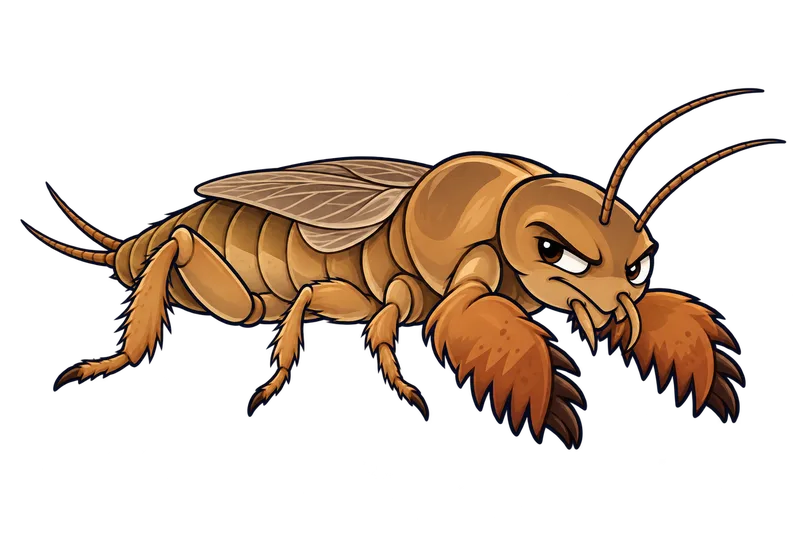
Mole crickets look like something a mad scientist engineered out of a crustacean and an ordinary field cricket, built entirely for subterranean demolition. They measure anywhere from 22 to 33 mm in total adult body length, featuring cylindrical bodies covered in fine, velvety hair. The head carries short antennae and prominent compound eyes, but the real engineering marvel hides at the front end. Their forelegs are heavily modified into spade-like digging appendages equipped with sharp, claw-like digits known as dactyls.
Identity
To tell them apart from one another, grab a magnifying glass and check those front claws. Native northern mole crickets possess four prominent dactyls on each foreleg, while the invasive pest species belonging to the genus Neoscapteriscus have only two. Among those two-clawed invaders, you can separate the species by looking at the tiny gap between the digging fingers. The tawny mole cricket features a sharp V-shaped notch between its dactyls, whereas the southern and shortwinged mole crickets display a rounded U-shaped gap.
Habitat & behaviour
These insects spend most of their lives underground, carving out intricate tunnel systems in the top 10 inches of soil. They have a strong preference for light, sandy, and consistently moist soils, making the coastal plains and warm-season turf regions of the southeastern United States prime real estate. You will rarely catch them during the heat of the day, as they stay tucked deep inside their galleries to avoid drying out.
Nighttime brings a complete shift in routine. After sunset, mole crickets push up to the surface to feed, tunnel, and look for mates. If you leave your porch lights or landscape fixtures burning on a warm, humid evening, flying adults will home in on the glow, frequently gathering in large numbers around outdoor lights or lit parking lots. When they are not flying, they propel themselves through the upper root zone, leaving behind tiny, squiggly soil ridges that make a lawn feel suspiciously like a spongy foam mattress under your shoes.
Visual variations
These insects skip the pupal stage entirely, moving through an incomplete life cycle from egg to nymph to adult without ever taking a resting break. The females lay oval, gray or brownish eggs that begin around 3 mm in length, swelling up as they soak in moisture from the surrounding earth right before they hatch. Brand-new nymphs start off whitish, but they darken into a solid tan shade within a single day. They look like pocket-sized versions of their parents, except they are missing functional wings entirely, wearing only tiny wing-buds on their backs while they push through 8 to 10 growth stages.
Adult bodies vary quite a bit when you look at their wing lengths and the hard protective shields right behind their heads. The shortwinged mole cricket has forewings shorter than that neck shield and cannot fly at all, wearing a brown coat splashed with darker spots. The southern mole cricket sports long wings reaching past its abdomen, full flying power, and a dark brown shield marked with four lighter spots. Meanwhile, the tawny mole cricket flies just as well, but its brown shield features a distinct dark patch right in the center instead of spots. Boys and girls look largely the same size, though the mature males grow special wing parts so they can rub them together and sing calling songs from their burrow entrances when the sun goes down.
Why it matters
Finding these creatures in your yard relies heavily on which specific type has arrived, because their menu choices are surprisingly distinct. The tawny mole cricket eats plants exclusively, chewing fiercely on grass roots, stems, and tender new shoots until whole sections of turf turn brown and die. The southern mole cricket prefers hunting other bugs hiding in the soil, but its constant digging causes massive mechanical damage by drying out the ground and ripping grass roots right out of the dirt.
You can check whether an infestation is truly underway by pouring a simple soap flush over a 2 ft by 2 ft patch of lawn using a mix of 1.5 tablespoons of liquid dish soap per gallon of water. If a couple of crickets or more scramble up to the grass surface within 3 minutes, the population has officially reached a damaging level. Mole crickets do not bite, sting, or harm your house structure, but their messy tunneling practically begs foraging mammals like raccoons, skunks, and armadillos to drop by, and those animals will tear up the rest of your lawn looking for an easy snack.