
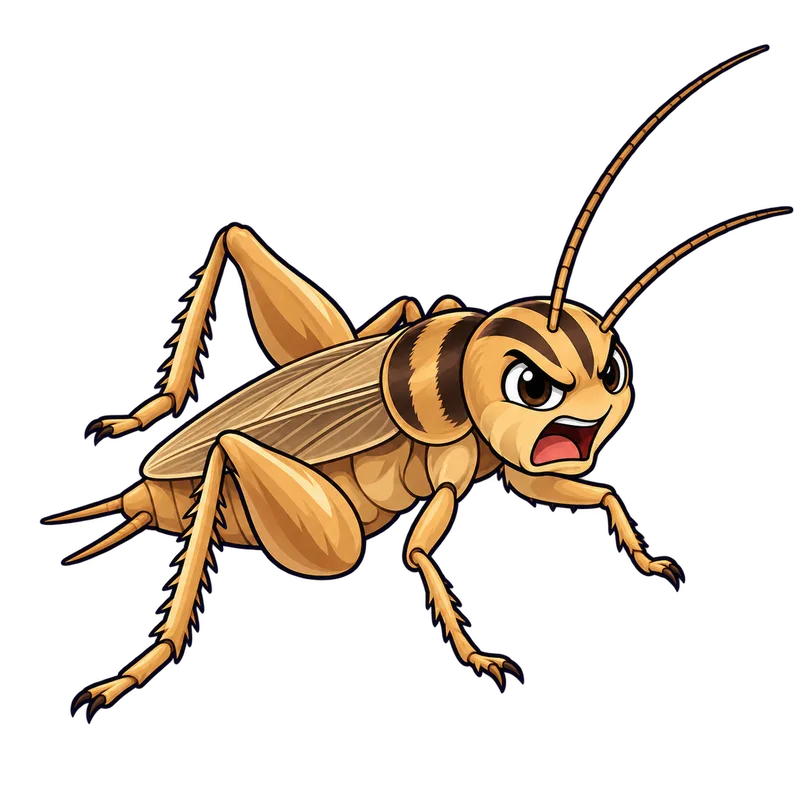
House cricket
Acheta domesticus
- Size
- Up to 1 inch
- Color
- Tan to yellowish-brown
- Habitat
- Warm indoor spaces, exterior foundations, and heavy mulch
- Diet
- Generalist scavenger, omnivorous
- Life cycle
- Hemimetabolous metamorphosis from egg to nymph to adult
The house cricket is the creature that sets up camp behind your water heater and keeps you awake at two in the morning. Reaching up to 1 inch in body length, it wears a tan to yellowish-brown coat marked with three dark bands across the head, which immediately sets it apart from the heavy black field crickets you might find in the yard.
Identity
You do not need a magnifying glass to spot the details, though a quick look at the back end tells you everything. Adult males carry file-and-scraper combs on their forewings for making music, while adult females sport a long, spear-like egg-laying tube called an ovipositor right between their rear appendages. Their thread-like antennae stretch out longer than their entire bodies, waving around in the dark as they hunt for microscopic crumbs.
Habitat & behaviour
These insects are nocturnal scavengers with a taste for almost anything left lying around. Indoors, they crowd into the warmest voids they can find, hugging heating ducts, basements, and laundry rooms. Outside during the warm months, they live in woodpiles, rock gardens, and deep mulch right up against the foundation.
When fall temperatures drop and the outdoor vegetation dries out, they migrate toward human structures. They are strongly attracted to porch lights at night, which explains why you often find them gathered right outside the doorway before they slip inside. Unlike many other outdoor insects, house crickets possess the rare ability to complete their entire life cycle indoors, meaning a stray visitor in October can easily turn into a self-sustaining population by December.
Visual variations
These crickets skip the pupa stage entirely, moving straight from egg to nymph to adult through incomplete metamorphosis. The young look like tiny versions of the grown-ups with the same tan shade and general build, just missing their wings and reproductive gear. Once adulthood hits, fully formed wings fold flat over the back.
The sexes show clear differences once they mature. Males have modified front wings built for stridulation, which is just the scientific way of saying they rub their wings together to chirp. Females have plain front wings and stay completely silent, using that long, dagger-like egg tube at the rear to push eggs deep into warm, damp organic material.
Why it matters
A handful of crickets hanging out in the utility room will not tear your house down, since they lack wood-chewing mouthparts and leave structural framing alone. They will, however, chew holes in stored paper, loose wallpaper, and starched clothing while grazing on invisible food scraps or sweat marks, and they easily dirty up pet food bowls and pantry shelves with their droppings.
Beyond minor fabric damage, a chorus of males calling from behind the baseboards turns into a serious sleep nuisance. More importantly, built-up insect debris, shed skins, and droppings can trigger real allergic reactions in sensitive household members. If you run into a heavy infestation or stubborn allergy flare-ups, talk to a clinician or pest management professional to handle the situation safely.
Similar species
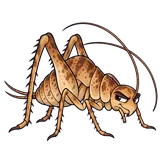 Camel cricketsFamily Rhaphidophoridae
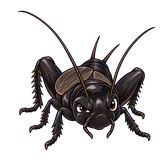 Field cricketsGryllus species
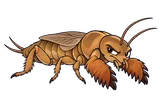 Mole cricketsFamily Gryllotalpidae