
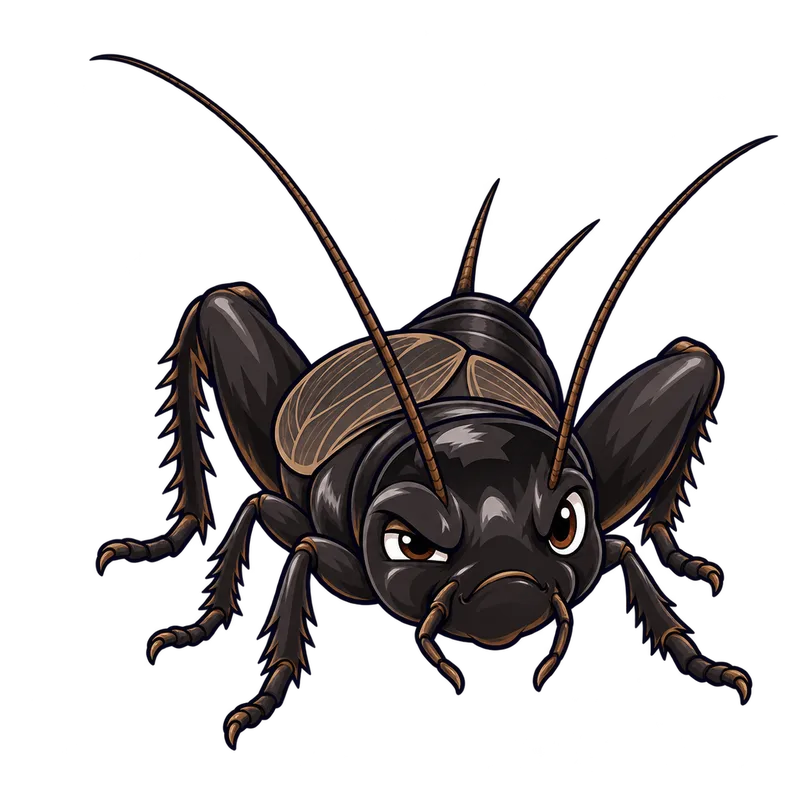
Field crickets
Gryllus species
- Size
- Up to 1.25 inches
- Color
- Solid dark black
- Habitat
- Damp outdoor areas and tall grass
- Diet
- Omnivorous scavenger
- Life cycle
- Egg, nymph, and adult
Field crickets are robust, dark black insects that belong to the genus Gryllus, measuring up to 1.25 inches long with fully developed wings that lie flat across their backs. They are easily distinguished from other household insects by their solid dark coloration and heavy bodies. When you spot one outdoors or wandering near a doorway, you will notice their broad, rounded heads and long, thread-like antennae reaching forward.
Identity
Only adult males chirp, producing a loud nocturnal sound by rubbing their front wings together. Females are completely silent and carry a long, needle-like ovipositor at the rear of the abdomen, which looks like a tiny spear used for laying eggs in the soil. You do not need magnification to see these features, as field crickets are large enough to examine clearly with the naked eye.
Habitat & behaviour
These crickets spend their lives outdoors in damp, shaded spots like tall grass, mulch beds, woodpiles, and underneath flat stones or garden debris. They are strictly nocturnal, meaning they spend the daylight hours hidden away in dark soil cracks and emerge only after dark to forage.
As omnivorous scavengers, they feed on decaying organic matter, seeds, garden seedlings, and dead insects. They are drawn to properties by two main factors in late summer and autumn: dropping temperatures that push them toward warm foundation walls, and bright exterior lights that trick their navigation at night. When autumn nights turn chilly, mass migrations toward homes happen because the crickets are looking for warmth and moisture, not because they want to move in for good.
Visual variations
Field crickets go through a gradual metamorphosis involving three distinct stages, namely egg, nymph, and adult. Eggs are laid in damp soil and hatch into nymphs, which look almost identical to miniature adults except they lack wings entirely. Nymphs spend the summer molting and growing small wing pads before reaching their final adult size.
Adults possess two pairs of wings, including leathery forewings and membranous hindwings that allow them to fly short distances when disturbed. Unlike social insects such as ants or termites, field crickets do not have worker, soldier, or queen castes. They live solitary or loose, gregarious lives, meaning every individual you see is acting on its own.
Why it matters
Finding a field cricket indoors does not mean your house is dirty or suffering from an active infestation. They are accidental invaders that cannot reproduce inside buildings because they lack the damp soil required for their eggs, meaning indoor stragglers simply die off over time. However, large numbers gathering around a home can become a serious nuisance.
When trapped inside, male crickets can keep you awake all night with their loud chirping behind appliances or in wall voids. They also chew on fabrics like cotton, wool, and linen, leaving behind irregular holes and surface grazing marks, alongside staining from droppings and digestive fluids. Their shed skins and dead bodies break down into allergenic dust that can trigger respiratory reactions in sensitive people.
If you are trying to figure out what is hopping around your basement, make sure you are not misidentifying the pest. House crickets are smaller, measuring up to 1 inch, and feature a tan or yellowish-brown body with distinct dark bands across the head, plus they can actually breed indoors. Camel crickets, on the other hand, are completely wingless, have a bizarrely arched, humpbacked profile, and never make a sound because they lack chirping organs entirely.
Similar species
 Mole cricketsFamily Gryllotalpidae
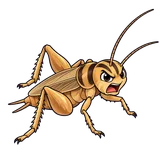 House cricketAcheta domesticus
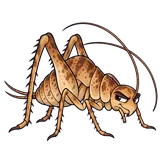 Camel cricketsFamily Rhaphidophoridae