
What do mole cricket holes and lawn damage look like?
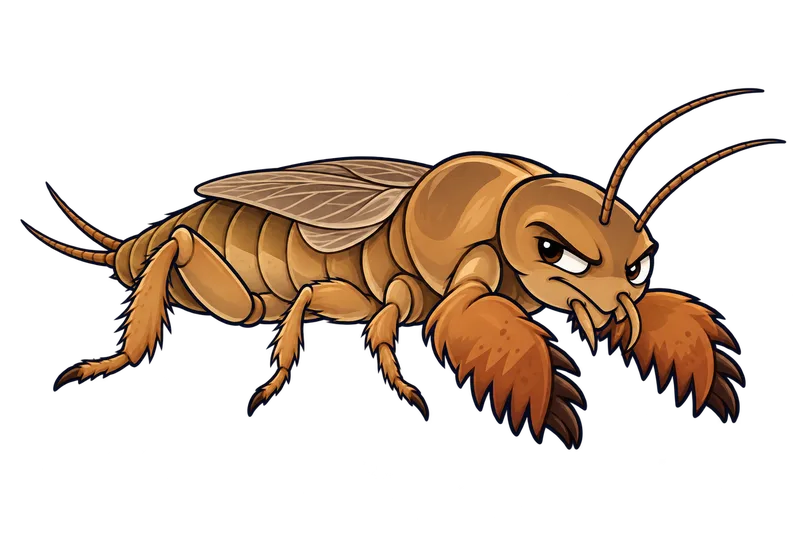
Mole cricket damage looks like raised, winding tunnels near the surface, small pushed up bits of soil, and turf that feels loose and spongy underfoot. Instead of making neat round holes, mole crickets leave a messy pattern of ridges while chewing grass roots and stems, which creates irregular yellow or brown patches.
What is actually going on
You step out with coffee, cross three paces of lawn, and the ground gives under your boot like a tired mattress. Not mud, not a sinkhole, just a soft roll that was not there last month. Then you notice thin ridges of soil wandering through the grass, as if someone dragged a fork under the turf and lifted it in slow motion.
That is the classic mole cricket signature: raised, winding tunnels near the surface, small pushed-up bits of soil where they pop out, and turf that feels loose because the roots underneath have been cut loose. Mole crickets are built for this. Their front legs are broad and flat, closer to little shovels than feet, and they spend most of their lives below the surface. They do not make a neat round hole like a cicada or a tidy volcano like an ant. They leave a mess that looks stitched, spongy and slightly drunk.
The damage comes from two directions at once, which is why it confuses people. The tunneling itself breaks roots and leaves air pockets, so grass loses contact with moist soil. On top of that, the insects chew roots, stolons and crowns, the parts that keep turf anchored and fed. The result is irregular yellow or brown patches that look exactly like drought stress, except the sprinkler can be doing its job and the grass still collapses. If you tug a stem and it lifts like hair from a loose wig, that is not thirst. That is a root problem.
Here is the belief worth challenging: brown grass does not automatically mean dry grass. Pouring more water on a mole cricket lawn can make you feel busy while the real issue keeps tunneling under your feet. Water matters for diagnosis and treatment, but it does not reattach severed roots.
How to tell for sure
Start with your feet, then your eyes. Mole cricket ground usually feels soft and springy, with raised squiggly trails and little emergence mounds scattered through the worst areas. White grubs can also kill roots, but they usually leave the soil firm enough that dead turf peels back in a sheet, like lifting an old rug. Mole crickets make the lawn feel loosened from below, not cleanly detached.
If you want proof without turning the yard into a science fair, use the soap flush. Mix 1.5 tablespoons of liquid dish soap into a gallon of water and pour it evenly over a marked section about two feet by two feet where activity seems likely. Do this when the soil is already moist, because dry ground sends the insects deeper and gives you a false all clear. Watch for two to three minutes. The soap irritates them and drives them upward.
Seeing two to four mole crickets surface in that small patch is usually enough to stop blaming the weather. If you catch one, look at the digging legs. Problem species usually have two obvious claws on those front shovels, while harmless native relatives are often described as having four. Treat that as a supporting clue, not courtroom evidence, because lighting, mud and a squirming insect can make anyone overconfident.
Where you live changes the odds. Warm-season lawns such as Bermudagrass and Bahiagrass, especially in sandy southern soils, are usually hit hardest. Cooler regions, heavier soils and different turf types can still have mole crickets, but the same spongy feel may point somewhere else. That is why the pattern matters more than one dramatic hole. A single mound after rain is gossip. A network of ridges, loose turf and soap-flush crickets is a story.
What usually comes next
The useful choice is not which bottle to grab first. It is whether the calendar is on your side. If adults are showing up around porch lights or skittering across the driveway in spring, resist the urge to launch a full campaign. Those adults are close to finished, and chasing them can feel wonderfully productive while doing almost nothing about the next crop already being set up underground.
The better opening is usually early to mid summer, often June or July, when freshly hatched nymphs are still small, feeding near the surface and not yet practiced at vanishing into deeper tunnels. That is when control has the best shot at breaking the cycle instead of just bruising egos. Miss that window and you are mostly bargaining with bigger insects that can wait out your bad decisions in the dark.
Whatever route you take, moisture decides whether the effort even reaches the target. Dry soil lets mole crickets sit below the party, so pre-watering is often part of making a treatment work the way it is supposed to. Follow the product label exactly, because the label is not a mood and it is not an invitation to mix stronger, spray oftener or invent a clever schedule after dinner. A home lawn and a commercial property can also call for different choices, so scale matters more than bravado.
Keep the goal modest on purpose: protect roots during the vulnerable stage, shrink the next generation and give the turf room to knit itself back together. A perfect lawn by Friday is not a plan. It is a wish wearing mowing stripes.
When to get help
Call a professional when the damage is widespread, the turf is close to collapse, or the situation starts pointing toward restricted-use products that belong in licensed hands. The same goes if you still cannot separate mole crickets from grubs after a fair check, because treating the wrong suspect burns money and leaves the real one chewing like it pays rent.
Bring in the right agency when wildlife joins the plot. Armadillos, skunks, raccoons and opossums may rip up turf while hunting the insects, and suddenly the lawn looks bombed rather than tunneled. Those animals can be protected or regulated locally, so contact your state wildlife agency or a licensed wildlife control operator instead of improvising traps in the dark and hoping for the best.
For your own body, keep it plain. Mole crickets do not bite or sting people, but handling insects, working in soil or using lawn chemicals can still irritate skin. If you get an unexpected rash, symptoms that hang around, or any accidental chemical exposure, stop and contact a physician or poison control. A lawn can be repaired. Your skin is less patient.