
How do you get rid of mole crickets in a lawn?
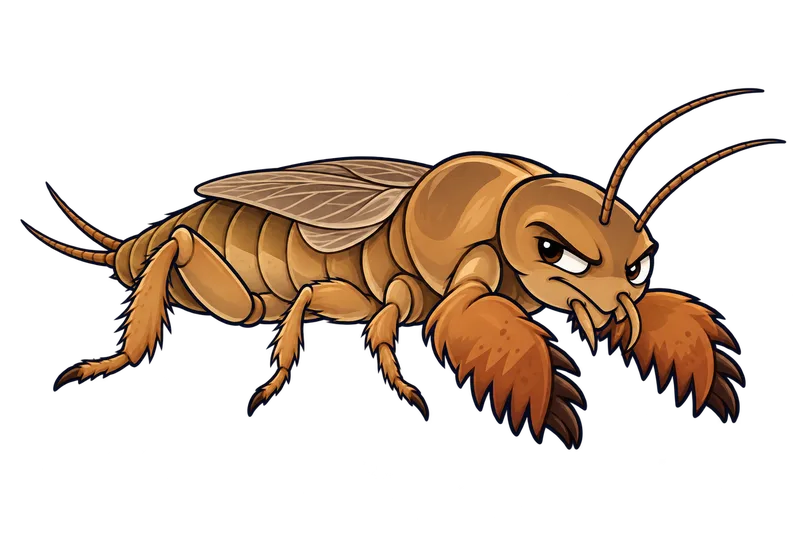
You get rid of mole crickets in a lawn by treating them during a narrow window in early to mid summer when the young nymphs are small and vulnerable. Success depends on confirming the pests first with a soap flush and then using targeted insecticides or beneficial nematodes.
What is actually going on
You walk across the lawn barefoot one evening and something feels wrong. The ground gives under your heels like a worn couch cushion, and there are little raised ridges snaking through the grass, as if someone dragged a finger through wet soil from underneath. A week later, brown patches show up even though the sprinkler has been running fine. That spongy feel is the signature of mole crickets: chunky, shovel-handed insects tunneling through the top couple of inches of your soil and tearing roots loose as they go.
So how do you get rid of them? The honest answer is that you do it with timing, not brute force. The whole job comes down to three moves: confirm they are actually mole crickets with a simple soap flush, treat during a fairly narrow window in early to mid summer when the young ones are small and vulnerable, and back that up with lawn care habits that make your turf harder to damage. Skip any one of those and you are mostly just buying products and hoping.
The timing point is where most people go wrong, so it is worth saying plainly. Those big, alarming adults you see bumbling around porch lights in spring are nearly untouchable. They are large, tough-skinned, and burrow deep, and they are going to die on their own shortly after mating and laying eggs anyway. Spraying them feels productive and accomplishes almost nothing. The eggs hatch from spring into early summer, and the new nymphs, barely a quarter inch long, feed right near the surface like tiny underground mowers. That is the moment they are vulnerable, and in most of the Southeast that means June and July. By late summer the survivors are big, armored, and deep, and you have missed your shot for the year.
One more thing before you reach for anything. Mole crickets are mostly a problem in the warm-season South, roughly from North Carolina along the Gulf Coast into Texas. And if your lawn is getting torn up overnight in bigger chunks, that may be armadillos, skunks, or raccoons digging for the crickets rather than the crickets themselves. Annoying, yes, but also a free population estimate.
How to tell for sure
Before you treat anything, do the soap flush. It sounds like a folk remedy, but it is the standard diagnostic that extension services actually recommend, and it takes about five minutes. Mix 1.5 tablespoons of liquid dish soap into a gallon of water, pick a 2 foot by 2 foot patch where you see tunneling or spongy ground, and pour the whole gallon over it evenly. Then watch for 3 minutes. The soap irritates whatever is down there, and mole crickets will scramble to the surface like swimmers coming up for air. If 2 or more crickets come up from that patch, you have a population worth treating. If nothing surfaces, your brown patches have a different cause, and you just saved yourself the cost of an unnecessary treatment.
Now look at what surfaced. A mole cricket is unmistakable once you know it: brown, cylindrical, an inch or so long, with front legs flattened into broad digging claws, like a cricket that got fitted with miniature excavator buckets. Here is the detail that matters, though. Count the claw-like points on those front feet. The invasive pest species behind lawn damage have 2 of them. The native northern mole cricket, which mostly minds its own business in damp soil and rarely builds up to damaging numbers, has 4. Usually the ones churning up a lawn in the Southeast are the pests, but if you are in a wetter area or farther north, it is worth the ten seconds of checking before you declare war on a harmless local.
You should also rule out the usual lookalikes, because the fixes are different. White grubs, the larvae of scarab beetles, chew roots off cleanly, and the dead turf peels back like a loose carpet with C-shaped white larvae curled underneath. Mole cricket damage is different: the roots are torn and loosened rather than severed, the soil feels churned and spongy, and you see those raised ridges. Chinch bugs are another common suspect, especially in St. Augustinegrass, where they cause yellowing patches in hot, sunny spots. They are tiny surface insects and will not show up in a soap flush the way crickets do. When the diagnosis depends on what you find, the soap flush plus a look at the claws usually settles it.
What usually comes next
So your flush turned up 3 crickets and now you are standing in the yard wondering what to buy. Hold that thought. The real decision in front of you is not which product, it is when. If it is already June or July and the nymphs are hatching, you treat now. If it is April, you wait, get your prep work done, and treat once the eggs have hatched and the nymphs are still small. Treating outside that window is the expensive version of doing nothing.
Once the window arrives, you have a few routes. Targeted insecticides labeled for mole crickets work, but there is one rule people constantly get backwards, and it decides whether the application does anything at all. Liquid and granular products that go into the soil have to be watered in right after application, about a quarter to half inch of water, to carry the active ingredient down into the tunnels where the crickets actually live. Bait granules are the exact opposite. They work because the crickets come out at night and eat them, so they go down in the late afternoon on dry grass, they must not be watered in, and you want no rain or irrigation for a day or two afterward. Water a bait and you have just dissolved dinner. Skip watering a soil treatment and it sits on the grass blades doing nothing. Same lawn, same evening, opposite instructions. So read the label on the specific product in your hand and follow it, not your neighbor's routine.
If you would rather lean on biology, there is real help available, with one caveat. Beneficial nematodes, microscopic worm-like organisms you water into moist soil, can parasitize soil insects including mole crickets, though results with the off-the-shelf kinds vary and they need consistent moisture to work. The more interesting ally is a parasitic wasp called Larra bicolor, which hunts mole crickets specifically, paralyzes one, and lays an egg on it. Grisly, yes, but the wasp wants nothing to do with you and the adults feed on wildflower nectar. Planting its favorite flowers, like partridge pea, along a fence line or bed edge is a genuinely useful long-game move in the Southeast.
While you wait for the treatment window, tighten up the cultural side, because a stressed lawn takes mole cricket damage much harder than a healthy one. Water deeply but infrequently rather than sprinkling a little every day, since constantly moist surface soil is exactly what egg-laying females are shopping for. Keep your mowing height right for your grass, which usually means roughly 1 to 1.5 inches for centipedegrass, 2 to 2.5 inches for zoysia, 3.5 to 4 inches for standard St. Augustine, and 3 to 4 inches for bahiagrass. And if you can, switch off outdoor lights near the lawn for the first couple of hours after dark during the spring flight season, since lights pull in flying adults like a porch party they were invited to. If you are ever replanting or renovating, know that bahiagrass and bermudagrass are mole cricket favorites, while centipede, zoysia, and St. Augustine tend to tolerate them better.
When to get help
Most average lawns with a moderate infestation are a reasonable do-it-yourself job, provided you hit the summer window and follow the label. But there are clear points where handing it off makes sense.
If the infestation covers a large area, if the turf is high-value or newly sprigged with no root system to spare, or if you have treated correctly and the soap flush still turns up crickets the following season, call a licensed lawn or pest professional. There is also a hard regulatory line here: some of the most effective mole cricket products, including fipronil and certain concentrated formulations, are restricted-use pesticides, which means only state-licensed applicators can legally buy and apply them. That restriction exists because these materials are serious chemistry, and it is not a hurdle to work around.
Whatever you apply yourself, keep it off blooming weeds and flowering plants to protect pollinators, and never let product wash toward storm drains or ponds. And if anyone in the household has a reaction to a product during or after application, that is a call to poison control or a clinician, not a wait-and-see situation. The lawn will forgive a cautious approach. The crickets, ideally, will not get the chance to.