
How do you get rid of camel crickets in a house?
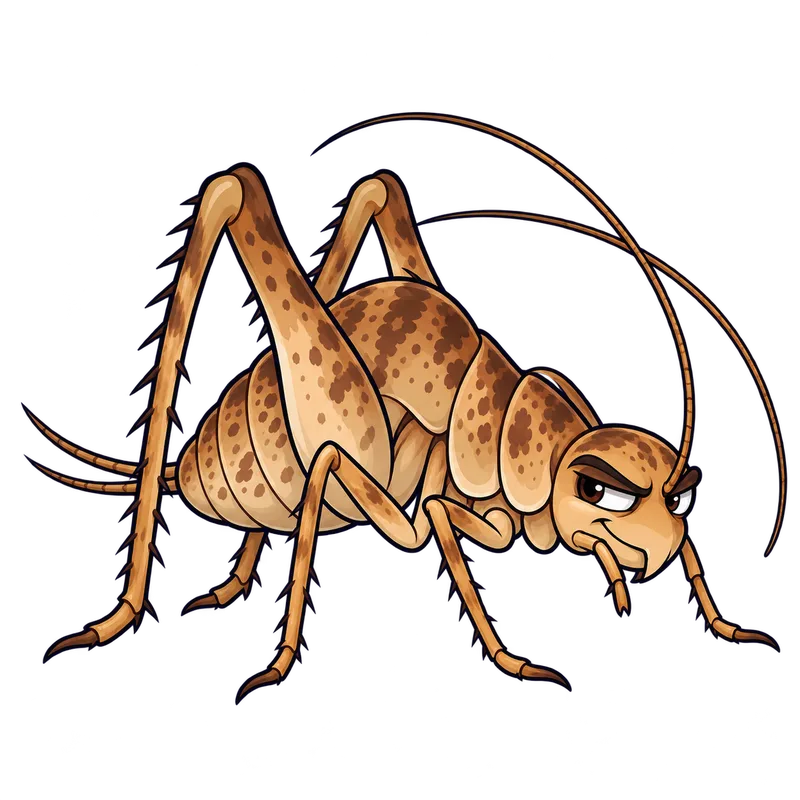
You get rid of camel crickets by cutting off the moisture they need to survive, sealing up the tiny gaps they use as entry points, and stripping away damp outdoor hiding spots. Drop your basement relative humidity below fifty percent using a reliable dehumidifier, and seal foundation cracks tightly with silicone caulk or expanding foam.
What is actually going on
You walk down to the basement on a Tuesday evening to grab an old suitcase, flip the light switch, and notice a brownish, humpbacked thing sitting near the drain. Before you can blink, it launches itself straight toward your shin with a terrifying, uncalculated leap. You jump back, wondering what kind of mutant spider crossed with a cricket just moved into your house. If you are dealing with camel crickets, the fix is not about grabbing a can of bug spray and hoping for the best. You get rid of them by systematically cutting off the moisture they need to survive, sealing up the tiny gaps they use as front doors, and stripping away the damp outdoor hiding spots that invite them close to your foundation in the first place.
Camel crickets are what pest control folks call occasional invaders. They do not want to live in your cozy, climate-controlled living room. Outdoors, they thrive under rotting logs, deep stone crevices, and damp leaf piles, essentially treating those spaces like natural caves. When summer brings a brutal drought, heavy rains flood their hiding spots, or autumn temperatures start dropping, those outdoor environments turn hostile. They go looking for an artificial cave that matches the dark, damp conditions they love. That leads them straight into your unconditioned crawl space, dark garage, or damp basement.
Once they get inside, they do not build nests or chew through your drywall. They scavenge. They eat microscopic mold, fungi, rotting wood, paper, and cardboard resting on damp concrete. If you only spray a bit of pesticide around the floor, you are treating the symptom while ignoring the invitation. To truly clear them out, you have to change the environment so they simply cannot survive or find a way inside.
Before you start hauling dehumidifiers around, you want to make sure you are actually looking at camel crickets rather than some other basement wanderer. They are usually easy to spot with the naked eye because of a few distinct physical traits. An adult typically measures anywhere from one-half inch to one and one-half inches long. They sport a pronounced, arched, humpbacked profile that gives them that distinct camel silhouette, and their coloring is usually a mottled light or dark brown.
How to tell for sure
You will notice their legs immediately. They have six legs, but the hind pair is massively enlarged for jumping, attached to a body that completely lacks wings. That is right, they do not have wings at all, which brings up a major point of confusion for many homeowners. Because they have no wings and no sound-producing organs, they are completely silent. If you hear a loud, rhythmic chirping echoing through the walls at night, you are usually dealing with field crickets or house crickets instead. Camel crickets do not chirp.
Another detail worth mentioning is their behavior when startled. Because they have poor eyesight and no wings to fly away, they rely entirely on those giant back legs to spring blindly away from danger. They often jump straight toward whatever dark mass is closest, which usually happens to be your shoes. It feels like an aggressive attack, but it is just a blind panic response. You usually find them huddled in dark, damp corners, behind stored boxes, or near floor drains where moisture lingers.
What usually comes next
You have to decide whether you want to spend your weekends chasing individual bugs around with a vacuum or fix the root cause of the whole mess. Vacuuming up the ones you see right now feels satisfying, but if you do not pull the welcome mat out from under them, fresh crowds will just wander in next week. That means your single most important practical decision is committing to moisture management and physical exclusion.
Start by tackling the heavy humidity hanging out in your basement or crawl space. You want to drop in a reliable dehumidifier and keep the relative humidity strictly below fifty percent, aiming for a cozy target range of forty to fifty percent. Camel crickets depend heavily on ambient moisture to breathe and survive. If you suck the moisture right out of the air, you pull the rug out from under their survival and stop reproduction cold. Pair that interior dry-down with a careful walk around your foundation to seal up entry points. Look for hairline cracks, gaps, and utility pipe penetrations, sealing them tightly with silicone caulk or expanding foam. Cover crawl space vents and foundation openings with sturdy hardware cloth that features a mesh size under one-eighth of an inch so they simply cannot squeeze through.
Outside, push back the perimeter. Clear away heavy leaf litter, rotting woodpiles, and damp mulch touching your foundation walls, and establish a two to four foot wide plant-free border of gravel or river rock right against the house. If you store firewood for the winter, keep it at least twenty feet away and elevated off the ground on a rack. By handling moisture and closing gaps first, you stop relying on temporary fixes and permanently change the rules of the house.
When to get help
There are times when a do-it-yourself approach hits a brick wall and you need to hand the job over to someone else. If your basement or crawl space suffers from active plumbing leaks, sewer backups, or chronic groundwater seepage through the foundation walls, dehumidifiers and traps will not cut it. You need a professional to handle water remediation and plumbing repairs before any pest control measures will ever stick.
Finished basements can also complicate things. When camel crickets manage to get behind drywall or wood paneling in finished living areas, surface vacuuming will never reach them. In those situations, a licensed pest management professional needs to step in to apply specialized drying powders or baits safely into hidden wall voids using proper equipment.
On the health and safety front, while camel crickets do not possess venom, sting, or carry human diseases, large numbers of them dying inside dark wall voids can leave behind organic debris, shedding skins, and droppings. These accumulations can trigger allergic reactions or asthma flare-ups in sensitive individuals. If someone in your home experiences persistent skin irritation, unknown marks, or respiratory symptoms, do not try to guess the cause or diagnose it yourself. Take that person to a qualified clinician or an urgent care facility right away.
Finally, remember that if you decide to use chemical perimeter treatments as a secondary support tool, pesticide labels carry the weight of federal law. Never improvise mixtures or apply products outside their labeled instructions, especially since exterior residual sprays can pose risks to non-target wildlife or local waterways. When a heavy infestation or a complex property layout demands professional strength solutions, call a licensed applicator who knows how to handle the job safely and legally.