
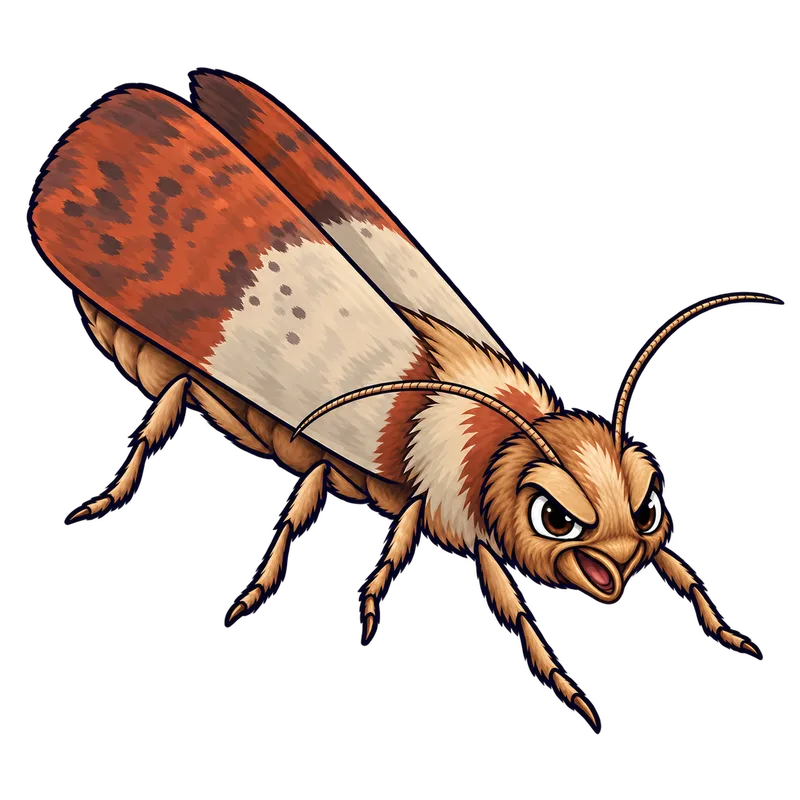
Indianmeal moth
Plodia interpunctella
- Size
- 5/8 to 3/4 inch long
- Color
- Two-toned body with copper-colored wing tips
- Habitat
- Indoor food storage areas and domestic pantries
- Diet
- Stored dry foods, grains, nuts, and pet food
- Life cycle
- Complete metamorphosis from egg to adult
The Indianmeal moth is the creature responsible for those erratic little fliers you spot zigzagging across the kitchen ceiling, usually heading straight for the cereal boxes. At rest, measuring between 5/8 and 3/4 inch long, it folds its wings longitudinally over its body in a way that highlights a very specific paint job. The inner half of the wing is a pale grey or straw color, while the outer half shifts abruptly into a darker shade capped with distinct, metallic reddish-copper scales. If you squint at it from a distance, it looks like a scrap of burnt leaf or an accidental bit of ash. But bring it under a hand lens at 10x magnification, and those coppery wing tips provide a foolproof positive identification. It shares domestic space with other small insects, yet this specific two-toned contrast and coppery flash set it apart instantly from anything else drifting around your cupboards.
Identity
The Indianmeal moth is easily mistaken for other small household fliers, yet its markings are distinct once you look closely. Webbing or casemaking clothes moths are smaller at around 1/4 inch long, featuring a uniform golden or silvery-grey appearance without any coppery wing tips. More importantly, clothes moths avoid light and eat natural animal fibers like wool, fur, and feathers, whereas the Indianmeal moth is a pantry dweller that targets dry groceries. Grain mites are microscopic arachnids with eight legs that produce a dusty mess and a distinct odor, entirely different from a six-legged winged insect. Confused flour beetles are small, reddish-brown hard-shelled beetles, making them simple to separate from a soft-scaled moth once you check the pantry.
Habitat & behaviour
This is an indoor creature through and through, anchored entirely to heated residential pantries, commercial food warehouses, and domestic kitchens where dry commodities sit undisturbed. Adults are weak, meandering fliers, often dismissed as mere nuisances until you realize they are not just passing through. They are drawn inward by the invisible scent plumes of stored carbohydrates, dried fruits, and high-protein pet foods. While traditional guides describe them as nocturnal fliers that hunker down during the day, university extension observations confirm that they frequently take wing in broad daylight inside a warm home. They do not care about your structural timber, your drywall, or your winter coats. They want your open bags of flour, your stray oats, and the bag of bird seed sitting out in the utility room.
Visual variations
The Indianmeal moth skips the whole social structure business that you see with ants or termites, meaning you will never find a queen giving orders or workers tending a central nest. Instead, you get separate life stages that look like completely different animals sharing the same address. The adult is the familiar winged flier with its pale base and coppery tips, bouncing around the kitchen in a hesitant, aimless drift. Before that airborne stage, the creature spends its time as a pale, worm-like caterpillar chewing silently through your groceries. This larval phase is the only part of the life cycle that actually eats, and as it feeds, it leaves behind sticky silken threads that clump food together into gross little mats mixed with tiny droppings called frass. Once the caterpillar eats its fill, it crawls right out of the package to find a quiet corner along a shelf rim or wall seam, spinning a silky cocoon to pupate far away from the food source. Males and females look almost identical to the casual observer, though professional sticky traps use synthetic sex scents to catch the roaming adult males before they can find a mate.
Why it matters
Spotting these moths indoors means something tucked away in your cupboards has gone bad, leading to wasted food and a ruined grocery budget rather than any damage to your house. The adults cannot bite, sting, or chew through your drywall, but their hidden larvae will steadily make their way through your cereal boxes, pet kibble, baking spices, and dried fruit. If an infestation gets out of hand and builds up a heavy mess of insect debris and waste dust, people with allergies can sometimes experience respiratory irritation just from breathing near the contaminated shelves. Getting rid of them comes down to strict kitchen cleanup rather than reaching for pesticide sprays, beginning with tossing out compromised packages, vacuuming out every crumb in the shelf cracks, and moving vulnerable dry goods into heavy glass or thick plastic containers with tight lids. When these insects take over commercial food warehouses, or when heavy treatments are being considered, a licensed professional needs to step in to make sure every safety rule and product label is followed properly.
Similar species
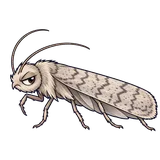 Mediterranean flour mothEphestia kuehniella
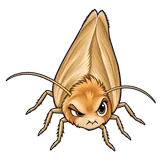 Webbing clothes mothTineola bisselliella
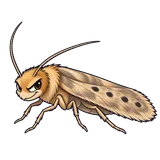 Casemaking clothes mothTinea pellionella
 Sod webwormsFamily Crambidae
 Squash vine borerMelittia cucurbitae
 Imported cabbagewormPieris rapae