
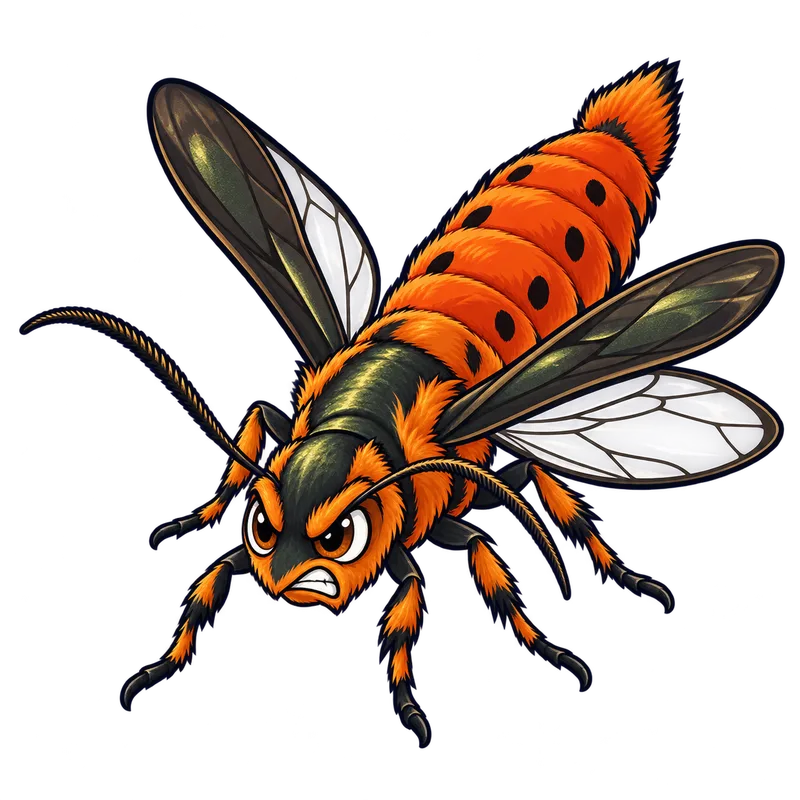
Squash vine borer
Melittia cucurbitae
- Size
- Not established
- Color
- Dark forewings, clear hindwings, orange-red abdomen
- Habitat
- US vegetable gardens and cucurbit crops
- Diet
- Internal stems of cucumbers, squash, and pumpkins
- Life cycle
- Overwintering pupa to day-flying moth and stem-boring larva
The squash vine borer is a destructive agricultural and home-garden pest found throughout the United States, targeting cultivated cucurbit crops such as pumpkins, winter squash, summer squash, melons, and cucumbers by boring directly into their stems during its larval stage.
Identity
Identifying this pest starts with looking at the adult moth, which is a day-flying insect featuring dark forewings, transparent hindwings with unscaled panels, and bright orange-to-reddish markings on its abdomen and legs. This distinct appearance gives the adult a strong resemblance to a paper wasp or thread-waisted wasp. When inspecting plants in the field, growers can spot small entry or exit holes near the base of the stems accompanied by moist, yellowish-brown frass that looks like damp sawdust. Confirming the internal resident requires slitting the stem lengthwise to reveal a plump, creamy-white caterpillar with a distinct dark brown head capsule. If confusion arises with other borers, examining the head capsule under ten times magnification provides definitive confirmation. Similar species include the squash bug, which feeds externally and leaves coppery eggs without boring into stems, and cucumber beetles, which chew external plant parts and vector bacterial wilt without internal tunneling. Pickleworms also differ by growing to twenty-five to thirty millimeters and targeting buds, flowers, and fruit before moving to vines.
Habitat & behaviour
This species ties its entire lifecycle to cucurbit host plants in gardens and commercial fields across the United States. The adults spend the winter as pupae inside silk cocoons coated in dirt, tucked safely into the soil right near where last year's host plants grew, before crawling out in late spring or early summer. They mate during the day, and female moths then glue their eggs right onto stems and low-lying vines near the soil line. As soon as a tiny larva hatches, it burrows straight into the middle of the vine, completely bypassing the outside world. Inside that hollow stem, it eats nonstop, chewing through the vascular tissues that carry water and nutrients. When it finishes growing, the caterpillar cuts an exit hole through the stem wall, drops to the dirt, digs down, and spins a dirty silk shell to transform into a pupa.
Visual variations
These moths do not split into worker or soldier castes, and both males and females pull off the same convincing wasp disguise, complete with clear hindwings and bright orange bands on their abdomens. Each stage of their life cycle looks completely different. The egg is tiny and sits either alone or in small groups on the outside of a vine. The larva looks like a smooth, tube-shaped, creamy-white caterpillar sporting an obvious dark brown head capsule, built specifically for tunneling through plant tissue. Inside the soil, the pupa develops into a smooth, segmented, dark brown cylinder held inside an oval silk cocoon plastered in dirt. By the time it becomes an adult, it is a sleek clearwing moth with dark front wings, see-through rear wing panels, and striking fringes of orange hair along its legs.
Why it matters
Heavy infestations can easily wipe out entire patches of squash, pumpkins, and melons if you leave them unchecked, because those tunneling larvae sever the plant's internal sap lines, causing vines to collapse and die overnight. That said, neither the adult moths nor their caterpillars pack any toxin, bite, sting, or allergen for people, dogs, cats, or livestock, so the headache here is purely about saving your garden harvest. Getting the identity right matters immensely because spraying the leaves after the caterpillars have already slipped into the stems is a total waste of effort, which means any meaningful protection comes down to well-timed preventive measures or garden setup long before any boring starts.
Similar species
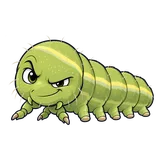 Imported cabbagewormPieris rapae
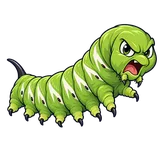 Tomato hornwormManduca quinquemaculata
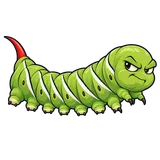 Tobacco hornwormManduca sexta
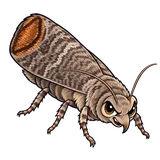 Codling mothCydia pomonella
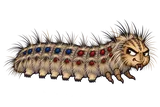 Spongy mothLymantria dispar
 Browntail mothEuproctis chrysorrhoea