
Spongy moth
Lymantria dispar
- Size
- 30 to 60 mm long by 20 to 30 mm wide
- Color
- Tan, grey-brown, or sun-bleached fuzz
- Habitat
- Broadleaf forests, orchards, and residential landscapes
- Diet
- Polyphagous on oak, maple, apple, and hardwoods
- Life cycle
- Univoltine with one generation per year
The spongy moth is most easily tracked when it is not moving at all. During autumn and winter, you will find its egg masses stuck flat against tree bark, wooden fence posts, or the side of your house. They look like small, oval patches of felted, tan-colored fuzz measuring 30 to 60 mm long by 20 to 30 mm wide, and each one hides anywhere from 100 to 1,000 tiny eggs. If you are inspecting an old mass from the previous season, look closely for pin-sized exit holes left behind by emerging larvae.
Identity
People often mix these up with other backyard insects. The eastern tent caterpillar builds large, silky web-nests in the crotches of tree branches in early spring, and fall webworms weave similar tents at the tips of branches in late summer. Spongy moth caterpillars never build silken tents or webs of any kind. They feed out in the open.
You might also confuse the egg masses with those of the spotted lanternfly. Lanternfly eggs are laid in neat, straight rows and covered in a shiny grey secretion that cracks and dulls over winter, whereas spongy moth masses are decidedly spongy, tan, and randomly packed with hairs scraped from the female's own abdomen. When distinguishing between the two main subspecies, the European strain and the Asian strain, visual field observations will not cut it. You need molecular or DNA analysis to tell them apart, though their behavior gives them away.
Habitat & behaviour
This species is thoroughly at home in broadleaf forests, orchards, and suburban landscapes. Oak, maple, and apple trees are prime targets, though these caterpillars are not particularly picky when populations surge.
The life cycle runs to a strict calendar. Eggs overwinter on hard outdoor surfaces, protected inside their fuzzy masses until early spring rolls around. When the host trees begin to leaf out and fruit trees reach the petal-fall stage, the eggs hatch en masse. The tiny first-stage larvae climb upward or let themselves drift on wind currents, scattering to find fresh foliage.
As the caterpillars grow larger, their habits shift from round-the-clock feeding to a distinct daily commute. Older caterpillars feed in the upper canopy at night, then crawl down the trunk at dawn to hide in bark crevices or under leaf litter during the heat of the day. By mid-to-late summer, they pupate in these same sheltered spots, emerging weeks later as adult moths to mate and lay the next generation of eggs.
Female moths are remarkably unfussy about where they lay those eggs. While tree trunks are standard, females frequently choose artificial substrates like residential siding, door frames, patio furniture, trailers, camping gear, and firewood stacks. This hitchhiking behavior makes human transport the primary engine for long-distance spread, which is why agricultural agencies like the Canadian Food Inspection Agency and the United States Department of Agriculture run extensive trapping networks and enforce strict quarantine rules on moving firewood across regional boundaries.
Visual variations
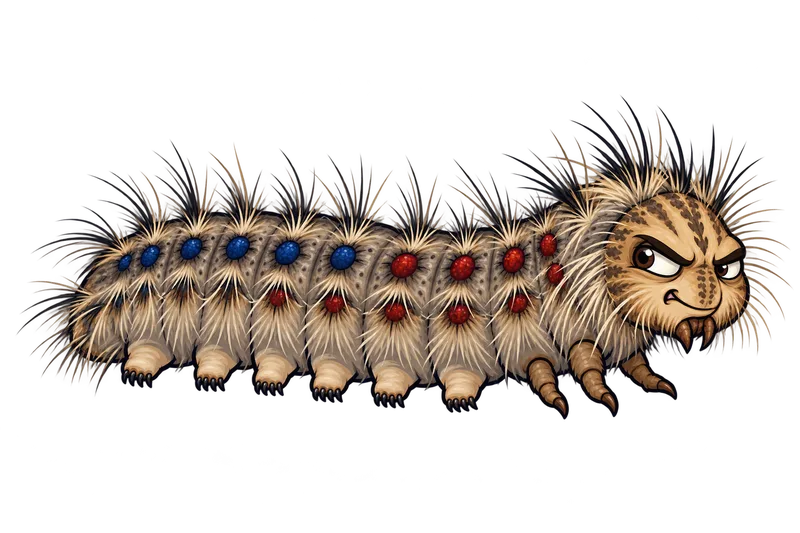
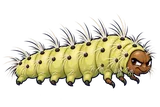
Every stage of this creature changes completely, keeping gardeners on their toes from one month to the next. Newly hatched larvae are tiny and eager to move, but as they grow, they develop long bristles and a noticeable pattern of paired spots running along the top of the back. Those hairs and bumps can cause physical skin irritation or allergic contact reactions if you happen to brush against them with bare hands.
The stationary resting stage comes next, showing up as a dark, firm shell tucked away deep in bark crevices or hidden beneath deck railings.
Adult moths display clear differences between the sexes, meaning males and females look like entirely separate insects. Males are smaller, shaded in dark brown or grey-brown, and carry large, feathery antennae designed to pick up female scent trails on the breeze. They fly actively and strongly.
Females grow larger and lighter in color. This is where the specific strain matters for local risk: the European version settled across eastern North America features females with full-sized wings that simply cannot fly. They remain right where they pupated, crawl a few inches, and wait for a male to arrive. The Asian version, however, features females that fly quite well, bringing a much greater threat of rapid natural spread if accidental arrivals happen.
Why it matters
A heavy outbreak means your shade trees are facing a brutal season. When caterpillar numbers surge, they devour leaves from the upper canopy at a startling speed, causing widespread defoliation that drains a mature tree's energy and leaves it open to secondary diseases and harsh weather.
For homeowners, spotting these insects usually leads to a balancing act of yard defense and personal safety. Scraping egg masses off house siding or low branches is a standard weekend task, but you need to put on safety glasses and gloves to stop the loose hairs and fuzz from irritating your skin or eyes. If you simply scrape the masses onto the dirt, the eggs stay alive; you have to drop them into a bucket of water spiked with dish soap or bleach and leave them to soak for at least two days before throwing them out.
Massive outbreaks on tall trees, canopy treatments, or managing properties near sensitive wildlife areas require a licensed commercial arborist or professional pest control operator. If anyone in your home suffers a serious allergic reaction, skin rash, or accidental eye contact from caterpillar hairs, reach out to a doctor, urgent care clinic, or local poison control center immediately.
Similar species
 Browntail mothEuproctis chrysorrhoea
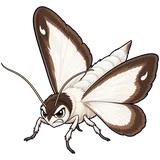 Box tree mothCydalima perspectalis
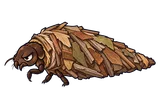 BagwormThyridopteryx ephemeraeformis
 Eastern tent caterpillarMalacosoma americanum
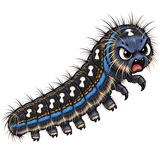 Forest tent caterpillarMalacosoma disstria
 Fall webwormHyphantria cunea