
What is the life cycle of a spongy moth?
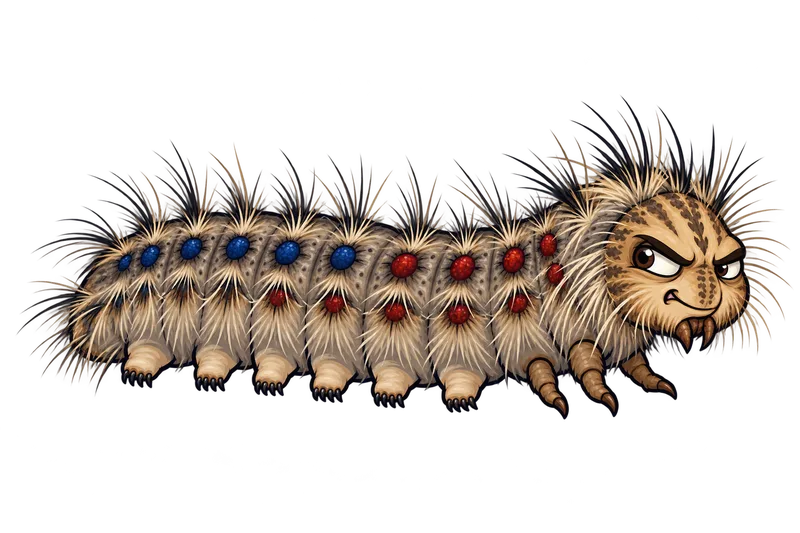
The spongy moth goes through four stages which are egg, caterpillar, pupa, and adult. There is usually one generation per year, starting with tan egg masses that overwinter on trees or outdoor objects before hatching into foliage feeding caterpillars in mid spring.
What is actually going on
Picture a Saturday in late winter. You are dragging the trash can past the big oak, the branches still bare, and you spot a tan patch on the bark that looks like a scrap of old felt. It is about the size of a thumbprint, and it does not flick off with a fingernail. That is not fungus, and it is not just grime. It may be a spongy moth egg mass, which is the quiet opening act of a very loud spring.
The spongy moth, the insect older books call the gypsy moth, goes through four stages: egg, caterpillar, pupa and adult. Entomologists call this complete metamorphosis, which is a fancy way of saying the insect changes shape so thoroughly that each stage looks like a different animal. There is usually one generation per year, and the whole calendar is built around one neat trick: the moth rides out winter as eggs, then times its hatch for the exact moment trees push out tender new leaves.
From fall through early spring, nothing appears to happen. The eggs sit inside that fuzzy tan cushion, glued to bark, rocks, firewood, siding, trailers, patio furniture, grills, even the underside of a lawn chair. A single mass is usually about 30 to 60 mm long and 20 to 30 mm wide, and it can hold roughly 100 to 1000 eggs. The fuzz is not decoration. It is hair from the female moth's own body, packed over the eggs like a weatherproof coat.
In mid spring, often around the time apple petals drop and leaves are expanding, the eggs hatch. Tiny caterpillars climb toward the foliage and start feeding, and the youngest ones can drift short distances on silk threads in the wind, which is one reason a tidy yard can still end up with caterpillars. Through late spring and early summer they eat, grow and molt, and on hot days many crawl down the trunk to rest in shade before climbing back up to feed. By early to mid summer the feeding is mostly done. The mature caterpillars tuck into bark crevices, under loose bark, in debris or under a burlap band, and pupate. Adults emerge in mid to late summer. Males fly to find females. In the European spongy moth already established across much of the Northeast and Upper Midwest, females have wings but do not fly. In the Asian spongy moth, females fly well, which is why detections outside established areas get treated so seriously. After mating, the female lays one egg mass and dies. Then the yard goes quiet again, at least on the surface.
How to tell for sure
The easiest stage to identify is the egg mass, because it sits still for months and never argues. Look for a tan to buff patch with a felted, spongy surface, usually stuck firmly to bark or an outdoor object. Fresh masses tend to be darker and fuzzier. Older ones bleach in the sun and can look pale by spring, so color alone is not proof. A better clue comes after hatch: a spent mass is usually peppered with pin sized exit holes where the caterpillars chewed their way out, like a tiny pincushion. Hollow and full of holes means the show already started.
One common mix up is worth clearing out of the way. Spongy moth caterpillars do not build the obvious silken tents you see in branch forks in spring. Those usually belong to Eastern tent caterpillars. The messy webbing on branch tips later in summer is usually fall webworm. Spongy moth caterpillars feed out in the open and hide during the day, which is less tidy but very much their style.
The caterpillars are hairier than most people expect, and those hairs can irritate skin, so identification should not be a bare handed hobby. Clusters of caterpillars crawling on trunks in May or June, or chewed leaves with larvae gathered under bark flaps, make spongy moth a reasonable suspect where it is established. But a rash, a chewed leaf or one hairy crawler is not a diagnosis. Plenty of insects feed on trees, and plenty of caterpillars look vaguely guilty.
If you live where spongy moth is not established, especially in western states or outside regulated zones, treat a suspicious mass as a reportable find rather than a backyard puzzle. Take a clear photo, note the exact location, and hold off moving firewood, vehicles, nursery stock or outdoor gear from the spot until you know what you have. The life cycle is simple. The regulatory meaning of one egg mass in the wrong place is not.
What usually comes next
Here is the honest starting point: you are not going to stop every moth on the continent, and you do not need to. The real question is which stage you can interrupt on your own trees with the least fuss. For most homeowners, the best window is before hatch, from fall through early spring, when the eggs sit still and the leaves are not yet on the menu.
If you find egg masses within safe reach, put on gloves and eye protection first, because that fuzzy coating can irritate skin and eyes. Scrape the mass with a firm flat tool into a container, not onto the ground, then destroy the eggs by crushing them thoroughly or soaking them in water with household soap or liquid bleach for at least two days. The step everyone skips is the one that matters. Scraping a mass onto the soil feels productive, but the eggs can still hatch right where they land. That is not control. That is relocation.
Once the leaves expand and small caterpillars show up, the clock changes. This is the short window when biological sprays based on Bacillus thuringiensis, usually shortened to Bt, can work well, because young caterpillars have to eat treated leaf surface for it to affect them. It does its best work on small larvae and gets far less satisfying once the caterpillars are large and the damage is done. Whatever you use, the label has to list both the pest and the site, and the label directions are the limit. Big caterpillars, tall trees and full canopies are not a spray harder situation. They are a different equipment, different training situation.
Through late spring and summer, low effort trapping can help on small yard trees. A burlap skirt tied around the trunk at waist height, with the top folded down, gives day resting caterpillars a shady hideout. Check it every few days and knock what you find into soapy water. Sticky or slick trunk bands can also block climbing caterpillars, but they need monitoring so they do not catch harmless insects or turn into a gummy mess. None of this makes a tree moth proof. It can, however, keep a light infestation from turning your favorite shade tree into a skeleton with attitude.
The bigger goal is protecting the tree's energy. A healthy hardwood can often push out a second flush of leaves after one bad defoliation, but that costs stored reserves. Two or three heavy years in a row can weaken a tree enough that borers, root problems and drought stress start circling like they smell opportunity. So the life cycle matters because timing matters: eggs before hatch, small caterpillars during leaf expansion, traps and cleanup while larvae are active, then a pause once pupae and adults take over.
When to get help
Call in help before the job gets heroic. If egg masses are high in a mature tree, do not balance on a ladder with a putty knife and optimism. Use a pole tool from the ground if you can do so safely, or hire a certified arborist. If the canopy of a large shade tree needs treatment, that usually belongs to a licensed applicator with equipment that can reach the foliage without turning your yard into a drift zone.
Get medical advice if handling caterpillars or egg masses leads to more than mild, short lived irritation. A spreading rash, eye exposure, breathing trouble, dizziness or a known allergy history is not a wait and see situation. Contact a clinician, and use poison control for pesticide exposure or if a product gets in eyes, on skin in a significant amount, or anywhere it was never supposed to go.
Report suspected spongy moth finds when you are outside established areas, when activity is unusually heavy in a place that has not had it, or when there is any reason to suspect the Asian strain. In the United States that means your state department of agriculture or USDA APHIS. In Canada, contact the Canadian Food Inspection Agency. The reason is simple: the European female does not fly, so most new infestations travel as egg masses on cars, firewood, campers and outdoor furniture. A flying female changes the spread math completely, and that is an agency problem, not a weekend project.
If a tree has lost most of its leaves for more than one season, is dropping limbs, or shows cracks, fungus at the base, bore holes or thinning that keeps getting worse, bring in an arborist even if the moths are long gone. By then the question has shifted from what stage the insect is in to how much reserve the tree has left. That answer decides whether you are managing a nuisance or protecting a large, aging plant that cannot afford another bad year.