
How do you get rid of bagworms on trees?
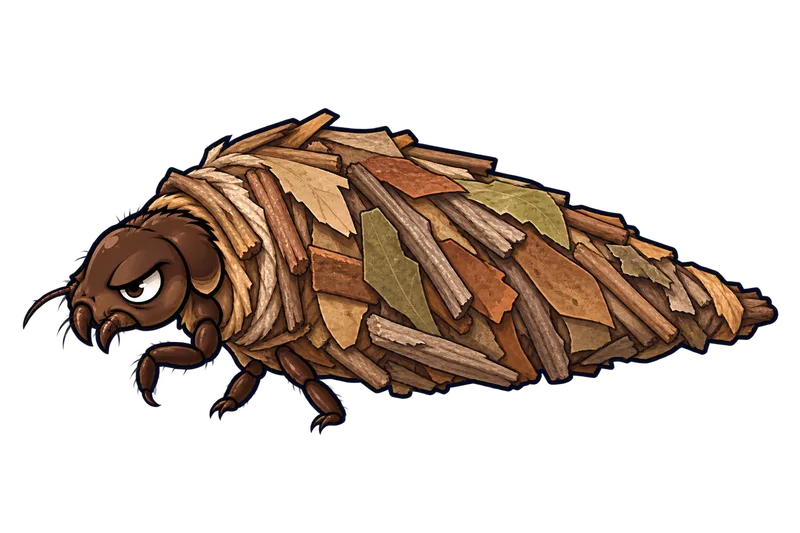
Getting rid of bagworms on trees depends on the calendar. In fall, winter, or early spring, you handpick every bag, destroy it, and snip the tough silk band left on the twig. In late spring or early summer when bags are under half an inch long, you spray foliage with Bt or a conventional insecticide.
What is actually going on
Picture this: you are out in the yard in early fall, admiring the arborvitae you planted a few years back, and you notice what look like little pinecones hanging off the branches. Except your arborvitae does not make pinecones. You pull one off, and it is a tough little pouch, an inch or two long, made of silk and bits of the tree itself. Congratulations, you have bagworms. The good news is you can absolutely get rid of them. The catch is that how you do it depends entirely on the calendar.
Here is the short answer. If it is fall, winter, or early spring, you get rid of bagworms by handpicking every bag you can reach, destroying it, and snipping the silk band each bag leaves wrapped around the twig. If it is late spring or early summer and the new bags are still tiny, under half an inch long, you spray the foliage with Bt (a biological spray made from a bacterium, Bacillus thuringiensis) or with a conventional insecticide. If it is August and the bags are big, put the sprayer away, because nothing you spray will touch them at that point.
Why so rigid? Because the bagworm spends almost its entire life inside a portable armored case it builds out of silk and plant debris. Think of a hiker who carries a bulletproof sleeping bag everywhere and zips it shut at the first sign of trouble. A spray that lands on the outside of a mature bag does nothing. The only moments when the insect is genuinely vulnerable are when it is an egg sitting in last year's bag, which you can physically remove, and when it is a young caterpillar actively feeding on leaves, which is when it can eat a treated leaf and poison itself.
One more thing worth knowing up front, because it changes how urgent this is: evergreens take bagworm damage much harder than leaf-dropping trees. An arborvitae, spruce, or juniper that loses a big share of its needles usually cannot regrow them from bare wood, and a heavy infestation can kill branches or whole trees in a single season. A maple or oak that gets chewed will look rough but generally bounces back. So if your evergreens are the ones wearing the little brown ornaments, do not file this under "deal with it someday."
How to tell for sure
Bagworms get confused with webworms and tent caterpillars all the time, and the difference matters because the fixes are different. Webworms and tent caterpillars build big, messy silken tents that sprawl over whole sections of branch, with crowds of caterpillars living communally inside. Bagworms never do that. Each bagworm lives alone inside its own small case, which it carries around like a hermit crab carries a shell, poking its head and front legs out to eat and dragging the bag along behind.
The bags themselves are the giveaway. On an evergreen they are usually 1 to 2 inches long, spindle-shaped, brownish, and decorated with bits of needle and twig from whatever tree they are eating, so they blend in embarrassingly well. On a deciduous tree in winter they hang from bare branches like small dried seed pods. If you open one in winter, you will typically find it packed with eggs, sometimes several hundred in a single bag, which explains how a light problem one year becomes a bald tree the next.
Timing is the other identification tool. There is only one generation per year. Eggs sit in the old bags all winter, hatch in late spring (late May in warmer coastal and southern areas, early to mid-June farther inland and north), and the young larvae immediately start building their own little bags and feeding. By mid to late summer they stop eating, anchor their bags firmly to twigs, and pupate, meaning they seal themselves in to transform into adults. So if you are seeing fresh chewing damage and small bags in June, that is a live, treatable infestation. If you are seeing big motionless bags in September, the feeding is already done for the year, and your job has quietly changed from spraying to picking.
What usually comes next
The choice in front of you is refreshingly plain: figure out which window you are in, then figure out whether the job is a bucket job, a sprayer job, or a phone call.
If you are reading this somewhere between October and April, your move is handpicking, and honestly it is one of the few pest chores that gives you immediate proof you did something. Pull or snip off every bag within reach and drop them into a bucket of soapy water, or crush them. Do not toss them on the ground under the tree and call it a day, because the eggs inside ride that out without complaint and hatch right where they land. Then do the step everybody wants to skip: look at the twig after the bag comes off. The female wraps a band of absurdly tough silk around the branch to anchor her bag, and if that ring stays put, it behaves like a zip tie on a growing limb. As the wood thickens next season, the loop tightens, the branch gets strangled, and the tip dies back. Snip the silk band with your pruners. Two extra seconds per bag, cheaper than a dead branch.
If you are reading this in late spring, start watching the foliage in May. The moment you find new bags under half an inch long, you are in the spray window, the only window where spraying earns its keep. For an organic approach, Bt is the classic choice, and it is not some harsh blanket poison. It is a very specific stomach bug: the caterpillar eats a treated leaf, the bacterial protein wrecks its gut, and feeding stops within hours. Two practical catches. Bt only works if the caterpillar actually swallows it, so coverage has to include the undersides of leaves, and sunlight breaks it down fast, so spray early in the morning or in the evening instead of at high noon. Spinosad is another lower-toxicity option on the same timing. Conventional products such as bifenthrin, permethrin, or carbaryl also work in this window, but follow the label exactly and know the trade-off: these broad-spectrum sprays kill the beneficial insects and predatory mites that normally keep spider mites quiet, and a mite flare-up a few weeks later is a well-documented side effect. Check the tree a couple of weeks after spraying for fine webbing and stippled, bronzed foliage. Keep pyrethroid sprays well away from ponds, streams, and storm drains too, since they are highly toxic to fish.
Now for the objection that shows up every year: “I will just spray harder in August when the damage is obvious.” Please do not. By August the caterpillars have stopped feeding and sealed themselves into thick bags to pupate. Spraying then is money, exposure, and optimism poured onto armor, which is how you get the neighbor who ignored the problem all summer out on a ladder in January picking bags off frozen branches while the neighbor who sprayed tiny bags in June is inside drinking coffee. If you missed the window, accept it and handpick.
When to get help
Height is where this stops being a weekend job. Once an infestation is up in a tree taller than about 15 feet, you cannot safely handpick it, and a garden sprayer from the ground will not give you the canopy coverage a spray needs to work. That is certified arborist territory: they have commercial mist blowers, and where spraying near water or public space is a concern, they can use options like trunk injection that keep the product out of the environment entirely. A tree care professional can also tell you honestly whether a badly defoliated evergreen is likely to recover, which is worth knowing before you spend money treating a tree that is already gone.
Location matters too. On school grounds, in parks, or in tight residential yards, the stronger synthetic insecticides are a poor fit, and biological options like Bt are the appropriate call. If anyone applying pesticides has a reaction to a product, or a child or pet gets into a treated area before the label’s re-entry interval has passed, contact poison control or a medical professional rather than guessing.
The whole thing really boils down to this: bagworms are one of the most beatable tree pests there is, as long as you respect the calendar. Pick bags and snip the silk rings in the off-season, spray only when the new bags are small in late spring, and never bother spraying big bags in late summer. Do that, and the little pinecone impostors do not stand a chance.