
What do bagworms on arborvitae look like?
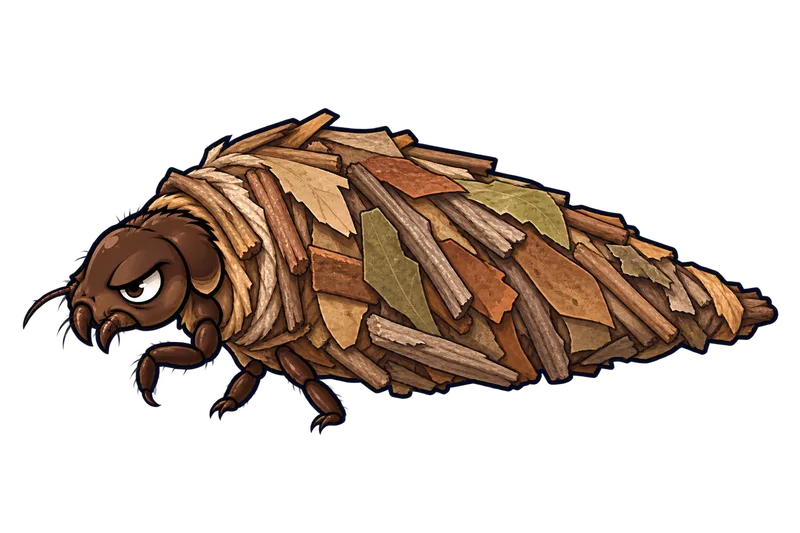
Bagworms on arborvitae look like little brown, cone-shaped structures hanging vertically downward from the twigs, closely resembling small pinecones or discarded seed pods. These portable shelters are built by case-bearing caterpillars using tough silk interwoven with bits of host plant foliage. As the season progresses, the spindle-shaped bags expand from under half an inch to over an inch and a half long.
What is actually going on
You walk out to the front yard with your morning coffee, glance over at the row of emerald green arborvitae lining the driveway, and notice something odd. The foliage looks a bit ragged in patches, as if someone took small, dull scissors to the tips. When you step closer and peer into the branches, you see dozens of little brown, cone-like structures hanging off the twigs. They look remarkably like small pinecones or discarded seed pods, except one of them seems to be shifting slightly.
What you are looking at is an active infestation of bagworms, and those hanging cones are actually portable shelters built by case-bearing caterpillars. These insects construct their spindle-shaped homes out of tough silk interwoven with bits of green or brown arborvitae foliage harvested directly from the host plant. Because the exterior is made from the tree's own leaves, the bags blend into the canopy, which explains why many homeowners completely miss them until the damage becomes glaringly obvious.
The caterpillar lives its entire larval life inside this protective backpack, dragging it along wherever it goes. When it wants to feed or move around, it extends only its head and front legs out of the top opening of the bag, leaving the rest of its body safely hidden. As the growing season progresses, the caterpillar eats voraciously and adds more material to its shelter, causing the bag to expand from a tiny speck to something well over an inch long.
Arborvitae are absolute favorites for these pests, and heavy feeding can quickly strip a tree of its scale-like leaves, leading to severe defoliation and branch dieback. Beyond the direct damage caused by chewing, the caterpillars anchor their bags to the twigs using tough, circular bands of silk. If left in place, these persistent silken loops can act like tight plastic ties around growing branches, eventually cutting off sap flow and killing the twig all on their own.
Telling bagworms apart from other garden quirks usually comes down to spotting the actual structure of the bag and looking for signs of life. At first glance, people often mistake them for natural arborvitae seed cones. The easiest way to tell the difference is to look at how they are attached and whether they move. Seed cones grow upright or point outward as part of the plant's normal anatomy, while bagworms usually hang vertically downward from the twigs.
If you grab a pocket magnifier or a ten-power hand lens and look closely at a suspected bag, you will usually see the distinct weave of silk holding tiny fragments of foliage together. You might even catch the caterpillar poking its head out if you wait quietly for a moment. Other arborvitae troubles, such as fungal tip blights or spider mite damage, cause browning and needle drop, but they never produce structured, hanging debris that you can individually pluck off the branch.
Size is another major clue to keep in mind as the season moves along. In late spring and early summer, newly hatched larvae build tiny bags that measure under half an inch long. By mid-to-late summer, those same bags expand to exceed an inch and a half in length. Spotting tiny moving cones in June tells you one thing about the infestation stage, while finding massive, rigid cases in August tells you a completely different story about what kind of control options will actually work.
How to tell for sure
Your single most important practical decision relies entirely on the calendar and the exact size of the cases dangling from your evergreen. If you check your arborvitae during late spring or early summer and discover that the bags are small, measuring under half an inch, you have an active window where treatments can still succeed. Throughout this early phase, young caterpillars actively feed and remain vulnerable to targeted microbial or chemical sprays, or even to straightforward handpicking when the population is small.
On the flip side, if you walk out later in the summer and notice the bags are already larger than an inch and a half, spraying usually becomes a waste of time and money. Mature caterpillars at that point have largely stopped eating and have retreated inside their tough, armored bags to transform. During that stage, your only reliable option for saving the plant without creating unnecessary chemical runoff is to physically pull every single bag off the branches by hand.
If you choose to pluck the bags off manually, you cannot skip one critical extra step. Simply snapping the hanging bag off the twig leaves behind that stubborn silken attachment band wrapped tightly around the stem. If you leave that loop intact, the branch will continue to grow and thicken around the constriction, resulting in self-inflicted choking and branch death later on. You have to manually unwind or snip that tough little loop right off the bark.
What usually comes next
Sometimes an arborvitae hedge proves simply too tall for weekend maintenance, or the outbreak spreads across mature trees whose canopies sit completely out of reach of standard garden hose sprayers. When the hanging bags take over the upper branches of large landscape trees, trying to manage them yourself can be risky or totally ineffective. In those scenarios, you should reach out to a professional tree care specialist who possesses commercial equipment like hydraulic spray rigs or high-reach mist blowers to handle the application safely.
When to get help
You also need to consult local authorities or extension specialists if you live near protected natural areas, or if you suspect that your landscape maintenance might run afoul of environmental regulations. Certain state and federal wildlife protection rules, including those covering migratory birds or fragile habitats, apply to extensive tree treatments and vegetation management. If you ever feel uncertain about whether a strange growth on your evergreens is a bagworm, a fungal gall, or something protected by local conservation policies, clip a modest sample and bring it to your local university extension office for proper identification before applying any pesticides.