
Why are tiny moths in the pantry?
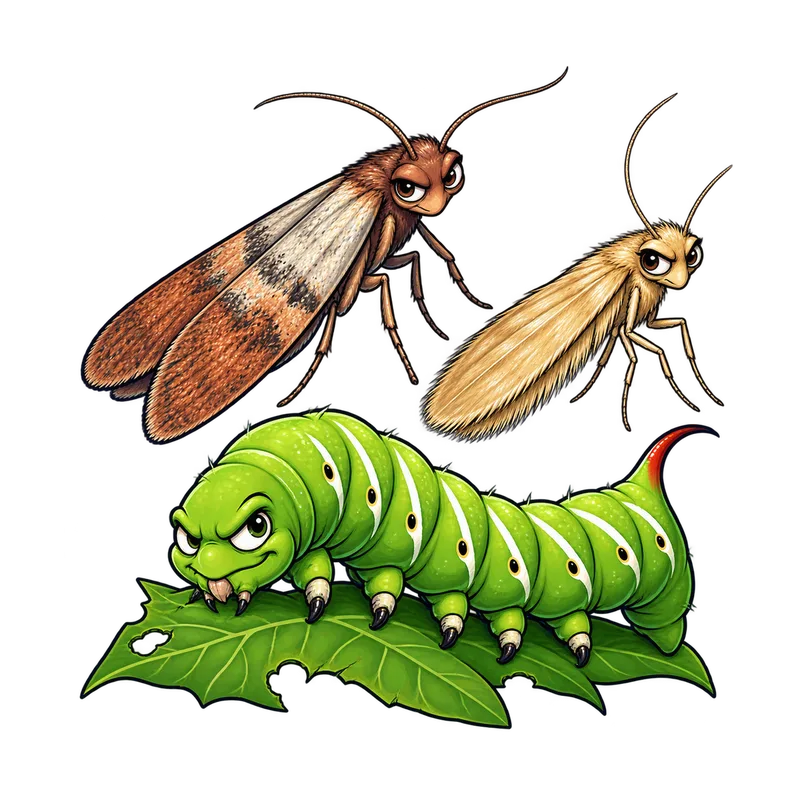
Tiny moths in the pantry are almost certainly Indian meal moths that arrived as hidden passengers inside store-bought food packaging. They usually show up as microscopic eggs or early-stage larvae tucked away in flour, grains, pet food, or birdseed.
What is actually going on
You are standing in the kitchen late at night, reaching into the cupboard for a box of oatmeal to make a quick snack, when a small, fluttery insect darts out past your shoulder and lands on the wall. You flick it away, thinking nothing of it, but by the next evening, there are two more fluttering near the ceiling. You check the flour, the rice, and the bag of brown sugar you bought last month, and sure enough, you spot tiny, pale caterpillars crawling right through the dry goods.
Those tiny moths in your pantry are almost certainly Indian meal moths. They are not visiting your kitchen by accident, and they certainly did not fly in through an open screen door because they smelled your groceries from the lawn. Instead, they arrived as hidden passengers inside store-bought food packaging, usually as microscopic eggs or early-stage larvae tucked away in flour, grains, pet food, or birdseed.
Here is something that usually surprises people: the adult moths you see flying around do not eat a single thing. They have non-functional mouthparts and live only to mate and lay the next generation. The real damage is entirely the work of the larval stage, the little caterpillars that hatch out of those microscopic eggs and start chewing through your stored foods.
As those larvae feed on your grains, flours, and nuts, they leave behind an unmistakable calling card. They spin extensive silken webbing across the food matrix, binding everything together into sticky, clumpy messes while dropping hard, granular fecal pellets called frass. What looks like a strange, spoiled clump of oatmeal is usually an active feeding zone packed with larval waste, turning your groceries into unpalatable debris that has to go straight into the trash.
How to tell for sure
Adult Indian meal moths usually measure about five-eighths to three-quarters of an inch across their wingspan, and you can usually spot them by the distinctive reddish-copper or bronze coloration on the outer two-thirds of their forewings. If you happen to pick up a hand lens with ten-magnification power, that two-toned scale pattern makes them straightforward to identify.
People often worry that these kitchen visitors are going to ruin their winter sweaters, but that is usually a mix-up with clothes moths. Clothes moths prefer animal-derived keratin like wool, fur, and feathers, and they avoid food pantries entirely. If the moths are hovering around your cereal boxes, they are pantry pests, whereas finding damage in your wardrobe usually points to an entirely different insect.
You might also spot small, humped beetles in the same cupboards, such as drugstore beetles or cigarette beetles, which chew through spices and pet food just as easily as moths do. If you notice tiny, pale moving specks or a fine dust alongside your moths, your pantry usually has an underlying humidity issue above fifty or sixty percent relative humidity, which tends to invite booklice or grain mites instead.
Finding the source usually requires a bit of detective work. Larvae do not just stay inside open containers, because late-stage caterpillars can easily chew straight through paper, cardboard, cellophane, and thin plastic bags, or crawl through microscopic gaps in package seams.
What usually comes next
The single most important decision you face right now is whether to hunt down the source or just wait it out, and the only choice that actually works is a thorough, uncompromising cleanout. Spraying chemical aerosols or foggers across your kitchen will not fix the problem, because no fog can penetrate sealed food packaging or deep cracks where larvae hide, and you should never apply insecticides directly to food-contact surfaces anyway.
You need to take every single package out of your pantry, inspect the seams for tiny holes or fine powder spills, and wrap heavily infested items in heavy-duty trash bags to take straight out to the outdoor bin. Do not leave infested food in your indoor kitchen trash can, or the larvae will simply crawl back out onto your counters.
For uninfested dry goods that you want to save, you can usually sanitize them by placing them in sealed plastic bags and freezing them at zero degrees Fahrenheit for four to seven days, or heating small quantities in a standard household oven at one hundred twenty degrees Fahrenheit for sixteen to twenty-four hours. Once your shelves are wiped down with hot, soapy water, transfer all of your safe or treated dry goods into rigid, airtight containers made of heavy glass, metal, or thick hard plastic with rubber-gasket lids. Thin plastic bags and cardboard boxes offer zero protection against hungry caterpillars.
When to get help
Pantry moths do not bite, sting, or transmit infectious human diseases, so a stray moth is not a medical emergency. However, ingesting heavily contaminated food containing insect fragments, larval hairs, or associated mites can sometimes trigger allergic reactions, contact dermatitis, or mild respiratory irritation in sensitive individuals. If anyone in your household experiences persistent allergic symptoms, skin rashes, or breathing difficulties, direct them to a qualified clinician, urgent care facility, or regional poison control center right away.
You should also keep pet food and birdseed locked away in sealed containers, as animal feeds are prime breeding grounds for these pests, and always keep any pesticide products completely out of reach of children and pets.
If you live in a multi-family housing complex or apartment building where pantry moths keep migrating through shared utility lines and wall voids, or if your best sanitation efforts fail to stop the activity after several months, it is time to call a licensed pest control professional. If you ever discover unusual, densely hairy larvae that resemble high-priority quarantine pests like the Khapra beetle in imported goods or bulk grain, report it immediately to your state department of agriculture or national biosecurity agency.