
Why are plaster bagworms in the house?
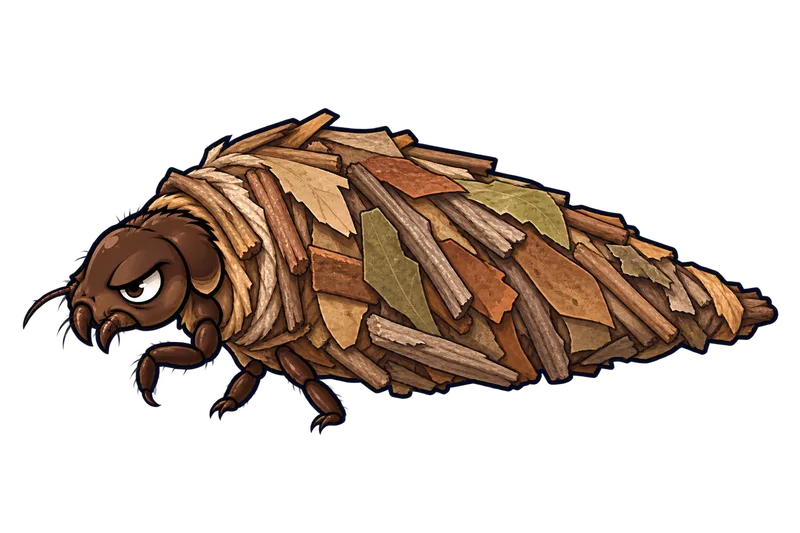
Plaster bagworms are in your house because they found high indoor humidity, damp building materials, and microscopic mold or organic debris to eat. These conditions create the exact substrate that the larvae need to thrive and build their portable silk shelters.
What is actually going on
You walk down the hallway to turn off the living room lamp, and something small catches your eye on the pale wall above the baseboard. It looks like a tiny, moving grain of dust, or perhaps a miniature grey seed dragging itself along the paint. When you lean in closer, it scuttles sideways inside its portable little silk shelter. You are looking at a case-bearing pest, often called a plaster bagworm or household casebearer, and finding one usually means the indoor environment is offering it both shelter and a specific menu.
These creatures are in your house because they found a combination of high indoor humidity, damp building materials, and an invisible buffet of microscopic mold and organic debris. Newly constructed homes, freshly plastered walls, or rooms with persistent moisture problems trap water inside wall cavities and drywall compounds. That trapped moisture encourages unseen surface mold and fungal growth to take root behind the scenes, creating conditions that few people notice until the inhabitants start moving.
That micro-garden of mold acts as an invitation for primary grazers like booklice and silverfish. Once those tiny moisture-loving insects move in, they leave behind waste pellets and shed skins. This accumulated organic detritus creates the exact substrate that case-bearing larvae need to thrive. They use silk combined with bits of dust, plaster, and hair to construct their custom portable cases, dragging their little sleeping bags across your walls as they scavenge for the tiny particles settling from the air.
How to tell for sure
Finding small cases crawling on your walls usually means you need to look closer to figure out what you are dealing with, because identification comes before control. You can usually tell a case-bearing moth larva from other indoor wanderers by looking for that characteristic flat, gray, seed-shaped pouch that moves around under its own power. The larva itself stays safely tucked inside, only poking its head and front legs out to crawl along the vertical plaster or graze on microscopic film.
If you grab a magnifying glass, the differences become much clearer, though you rarely need laboratory equipment for basic confirmation. Casemaking clothes moth larvae weave silk and fabric fragments into their cases, while carpet beetle larvae do not build cases at all. Carpet beetle larvae usually look like tiny, hairy, carrot-shaped bugs with bristly tufts at their tails, wandering freely across baseboards or wool rugs. Booklice are usually even smaller, soft-bodied, and wingless with a bulging face, scurrying rapidly across damp drywall where mold is present.
Remember that adult moths and beetles do not actually eat your walls or chew your clothes. The adults have entirely different priorities, such as finding a mate or feeding on outdoor flower pollen. The damage and the movement you notice are almost always the work of the hungry larvae hidden below, which means treating the flying adults will not stop the population cycle happening at the baseboard level.
What usually comes next
Your most practical decision right now is to skip the chemical spray aisle and start tracking down the excess moisture and hidden food sources instead. Fogging the living room with a bug bomb usually fails because the aerosol mist cannot reach inside wall cavities, creep under heavy furniture, or penetrate the tough silken cases where the larvae sleep. You have to remove what keeps them alive rather than chasing every grey seed across the plaster.
Instead, focus on dropping your indoor humidity using dehumidifiers and exhaust fans. Deprived of water, the mold, booklice, and associated pests usually dry out and die within a couple of weeks. Pair that environmental shift with thorough vacuuming along every baseboard, cold-air return, and dark corner where human hair, pet dander, and dust settle, making sure to empty the vacuum canister outside right away.
If you find infested woolens or garments, skip the guesswork and use thermal control by sealing the items in a plastic bag and leaving them in a freezer for at least a week. Always remember that the product label is law if you do decide to use a residual pesticide later, and never spray chemicals directly onto clothing, bedding, or surfaces where you sit or sleep.
When to get help
Most household case-bearing pest issues clear up with steady cleaning, vacuuming, and humidity control, but some situations call for outside help. You should call a professional pest control operator if you notice a heavy infestation spreading across multiple rooms or crawling continuously from wall voids where you cannot find the structural leak feeding the mold.
Call in a specialist if you are dealing with expensive heirloom textiles, antique rugs, or valuable collections that need specialized gas fumigation or controlled thermal chambers to avoid total destruction. Licensed structural applicators are also necessary when the job requires specialized dust treatments inside enclosed architectural spaces that are unsafe or out of reach for a homeowner.
If anyone in your household suffers from severe allergies, chronic asthma, or unexplained breathing trouble linked to heavy mold growth and insect contamination, talk to a clinician right away. While these pests do not bite humans, massive mold and insect allergen loads in indoor air can cause real trouble for sensitive people, and a medical professional is the only one who can help with those health effects.