
Why are plaster bagworms on walls?
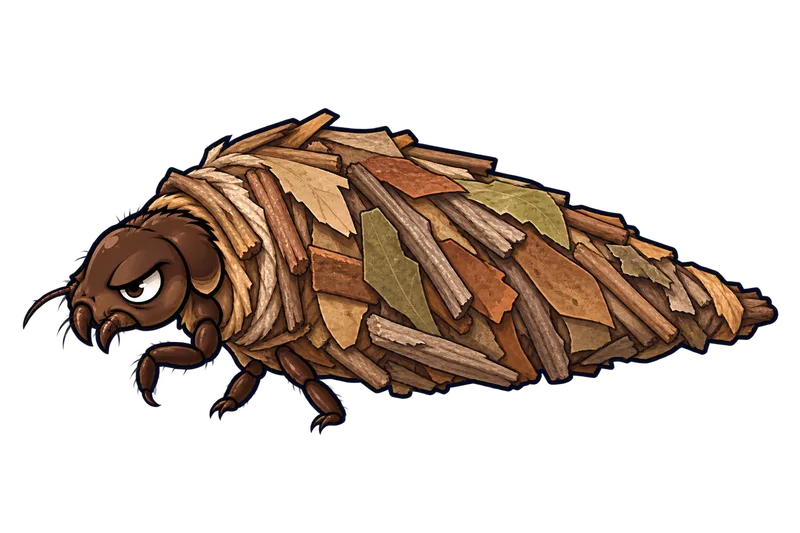
Plaster bagworms crawl on walls because damp drywall acts like a sponge, hosting the microscopic mold spores, organic dust, or wallpaper paste they need to eat. When these case-bearing moth larvae finish feeding, they climb upward to high, dark spots near ceiling moldings to anchor their cases and pupate.
What is actually going on
You walk into the spare bedroom, flip on the light, and notice a tiny, grayish object clinging to the pale paint near the ceiling. It looks remarkably like a single grain of rice stuck sideways on the wall. When you look closer, or perhaps see it slowly relocate an inch to the left over the course of an hour, you realize it is not a crumb or a paint flake at all. Something is living in it.
You are usually looking at a case-bearing moth larva or a moisture-loving scavenger like a booklouse or a silverfish. These small organisms do not scale your vertical walls for sport. They are there because the drywall or plaster is acting like a damp sponge, and the surface is hosting the microscopic mold spores, organic dust, or wallpaper paste they need to eat. If the room is part of a recent renovation, or if that particular corner catches poor air circulation and ambient moisture, the wall essentially becomes a grazing ground.
The case-bearing moth caterpillar is the most dramatic tenant of the bunch. It builds a portable, flattened tube out of silk and scavenged bits of lint or plaster dust, living inside it like a tiny camper dragging a sleeping bag. It pokes its head and front legs out of the aperture to crawl along the vertical plaster, pulling its heavy case behind it.
When these larvae finish feeding, they change direction and climb upward. They march up baseboards and vertical walls to reach high, dark, and undisturbed spots near ceiling moldings, where they anchor their cases and pupate. The rice-grain shapes you spot plastered against the upper wall are often just the empty silken husks left behind after the adult moths have flown away.
How to tell for sure
Pinning down the exact culprit usually requires looking at the shape of the intruder and checking where it tends to hang out. The casemaking clothes moth larva carries a silk bag that looks gray, brown, or dirty white, usually measuring about one-quarter to one-half inch long. It moves deliberately, dragging its shelter behind it, and leaves behind tiny, hard fecal pellets that resemble grains of salt.
If the creature on your wall lacks a case entirely and is microscopic, you are usually dealing with booklice, also called psocids. These are tiny, soft-bodied insects, rarely more than a sixteenth of an inch long, ranging from translucent white to light brown. They have surprisingly large noses and prefer to scuttle across damp walls where microscopic mold is thriving.
Silverfish are another frequent wall-crawler, especially in bathrooms or kitchens. They are carrot-shaped, about a third to a half-inch long, and covered in metallic silver scales that give them a fish-like shimmer as they dart toward a baseboard crack. Unlike caterpillars or psocids, silverfish are after the starch sizing in wallpaper glue or plaster adhesives.
Carpet beetle larvae also wander onto walls, particularly when they finish feeding in carpets or closets. These are fuzzy, brownish creatures often called woolly bears. They leave behind bristly cast skins that look remarkably like the live larvae themselves, which usually catches homeowners off guard.
What usually comes next
Before you buy a spray or start wiping down every surface in the house, you have to make a choice about moisture control. If the wall pests are visiting a newly plastered room or a space recovering from a leak, no amount of cleaning will keep them away permanently until the underlying humidity drops.
Your most effective practical move is to measure and lower the indoor relative humidity. Bringing your indoor humidity down below 50% and keeping it there for sixteen consecutive days will stop these populations in their tracks, drying out the mold spores that booklice graze on and halting the moisture cycle that attracts them. You can achieve this with air conditioners, dehumidifiers, or improved cross-ventilation.
Once the air dries out, physical removal does the heavy lifting. Grab a vacuum with a narrow crevice tool and clear out the baseboards, wall-floor junctions, and ceiling corners to suck up stray larvae, dust, and empty cases. Empty the vacuum bag immediately into an outdoor trash bin so nothing crawls back out.
If you decide to use an insecticide, remember that the product label is the final word on how it can be applied. Never spray chemicals directly onto clothing, bedding, or food-contact surfaces. Standard indoor surface sprays or dusts belong strictly along baseboard cracks and crevices where these pests travel, never out in the open living space.
When to get help
Most wall-crawling pests are a cosmetic nuisance rather than an immediate medical emergency, but certain situations require outside backup. If moisture is trapped deep inside your wall voids due to a hidden plumbing failure or structural leak, you will need a professional contractor or restoration specialist to open the drywall and dry the framing properly.
Health concerns can also shift your strategy. Booklice are known to aggravate indoor allergies and asthma for sensitive people. Furthermore, the bristly, barbed hairs shed by carpet beetle larvae can cause skin irritation and contact dermatitis if they brush against bare skin or get stirred into the air. Anyone experiencing persistent rashes or respiratory distress should consult a clinician.
If you suspect you are dealing with a regulated quarantine pest, such as the destructive khapra beetle, do not attempt to treat it yourself. Report suspected infestations immediately to your state department of agriculture or federal plant health authorities. For large, entrenched infestations in commercial settings or stubborn residential outbreaks that resist basic environmental controls, bringing in a licensed pest control operator for specialized treatment or structural drying is the safest path forward.