
Are bagworms common in Oklahoma?
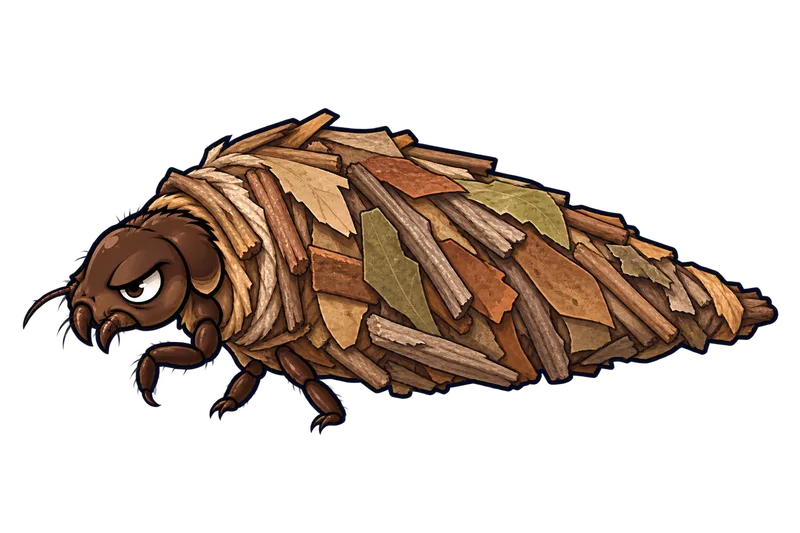
Yes, bagworms are common in all areas of Oklahoma. Eastern redcedar, other junipers and arborvitae are their favorite hosts, and heavy feeding usually kills those evergreens. Handpick the bags from fall through early spring, before the eggs hatch, or treat by early June while the caterpillars are still small.
What is actually going on
You are walking past the row of junipers along the driveway on a crisp November morning, coffee in hand, when you notice what look like little brown pinecones hanging from the branches. Except junipers do not grow pinecones like that. You pull one off and it is tough, woven from silk and bits of dead foliage, and it is tied to the twig so firmly that it takes a real tug. Your shrubs are wearing dozens of tiny sleeping bags.
So, are bagworms common in Oklahoma? Yes. Oklahoma State University's entomologists describe the common bagworm as common in all areas of the state. Its range runs through most of the country east of the Rocky Mountains, and it is at its most abundant in a belt from Pennsylvania to Nebraska and south to Florida and Texas. Oklahoma sits right in the middle of that belt, and some years are much worse than others. The state's extension specialists have described summers where their inboxes filled up with bagworm questions for weeks.
The favorite targets here are the plants many Oklahoma yards are full of: eastern redcedar, other junipers and arborvitae. Bagworms also feed on pines, spruce, bald cypress, maple, boxelder, sycamore, willow, black locust, oaks and even roses, and across the United States they have been recorded on 128 different plant species.
That preference for evergreens is what makes them more than a curiosity. On a broadleaf tree like a maple, heavy feeding weakens the tree and leaves it more open to wood-boring insects and disease, but the tree usually survives. On eastern redcedar and other junipers, defoliation usually kills the plant. Evergreens do not simply grow a fresh set of needles the way a maple regrows leaves.
The life cycle explains why the problem seems to appear out of nowhere. Every bag you see in winter is a shelter that a caterpillar built around itself during the summer, and if it belonged to a female, it is now packed with several hundred eggs. The female never leaves her bag. She has no wings, no functional legs, no eyes and no antennae, and she looks almost like a maggot. The male is a small moth with a black, hairy body and clear wings about an inch across, and he flies to her bag in late summer or early fall to mate. After mating she lays her eggs inside her old pupal case, drops out of the bag and dies. The eggs wait out the winter in that hanging bag.
In late April or early May the eggs hatch, and the tiny caterpillars start feeding and building their own bags right away. The young caterpillars can also drift to new branches on strands of silk, which is how an infestation spreads from one shrub to the next. There is only one generation a year, but it is a hungry one.
How to tell for sure
The bag is the giveaway, and it changes size as the season goes on. The first sign of a new infestation is usually a small bag about a quarter inch long, often standing almost on end on the twig while the caterpillar inside feeds. The caterpillar keeps adding silk and pieces of the host plant as it grows, and by the end of summer the bag reaches 1 1/2 to 2 inches long. Because it is built from the plant it hangs on, a bag on a juniper looks like a clump of juniper, and a bag on a maple carries bits of leaf.
If you open a bag in summer, you will find the caterpillar itself. A mature larva is about an inch long, with a dark brown abdomen and a white head and thorax marked with black spots. In winter, a bag that feels firm and heavy may be holding a female's eggs.
The feeding damage shows up as browning, thinning branch tips on evergreens, often starting in the upper parts of the plant. On a small juniper or arborvitae that damage can progress to complete defoliation in a heavy year.
Bagworms are easy to confuse with fall webworms, another caterpillar that Oklahoma sees plenty of. The difference is the structure. Fall webworms feed in groups inside a shared web spun over the ends of branches, usually on trees like pecan and persimmon. Bagworms each carry a private, portable house and never build a communal tent.
What usually comes next
With bagworms, the calendar decides almost everything, so the useful question is not "what do I spray" but "what month is it."
If it is fall, winter or early spring, grab a bucket and a pair of pruners. Handpicking in this window is the cheapest control there is, because every bag that held a female is carrying several hundred eggs, and each one you remove is a whole family that never hatches. Two details make the difference. First, the eggs stay alive inside a picked bag, so tossing bags on the ground or into the compost just relocates the problem. Seal them in a trash bag or destroy them. Second, cut through the silk band that ties each bag to the twig instead of yanking the bag off. That band is tougher than it looks, and if it stays wrapped around a growing stem it can slowly strangle the branch.
You might be thinking this is a lot of fuss for a few ugly bags. On a maple, maybe. On a redcedar hedge, those few bags are next summer's defoliation, and junipers rarely come back from that.
If you missed winter and it is now late spring, the window shifts to spraying, and it is narrower than most people expect. Insecticides work well while the caterpillars are small, and in Oklahoma the usual advice is to treat by early June. The gentler options are Bt (a bacterial insecticide sold as Bacillus thuringiensis var. kurstaki) and products with spinosad. Both only work once a caterpillar eats treated foliage, so do not panic when nothing seems to happen the same afternoon. In most years that early June treatment catches the bulk of the hatch. Occasionally a second round is needed later in summer, not because a new generation appears, but because the eggs do not always hatch all at once and young larvae can drift in from a neighbor's shrubs.
If you are finding big bags in July and August, be honest with yourself about what spraying can still do. Older caterpillars are much harder to kill, and once the bags are large and sealed, sprays accomplish very little. There are stronger products labeled for larger larvae, but broad-spectrum sprays also kill the beneficial mites that keep spider mites under control on evergreens, so a late, heavy spray can swap one problem for another. At that point, handpicking what you can reach and planning a proper early June treatment for next year is usually the smarter move.
It is also worth knowing why some years are awful and others are quiet. Parasitic wasps and predatory insects attack bagworms, and their numbers rise and fall too. A light year does not mean the bagworms left for good.
When to get help
A few shrubs along a fence are a Saturday job: gloves, pruners, a trash bag. Call a licensed arborist or pest control professional when the bags are high in trees you cannot reach safely, when a windbreak or a long row of redcedars is involved, or when bagworms keep coming back even though you picked and treated on time. If you are not sure what is hanging from your trees, your county extension office can look at a sample and tell you whether it is bagworms, fall webworms or something else.
Whatever you apply, the label is the law, including which plants it may go on and how. Wear gloves when handpicking, since the bags are rough and full of debris, and if anyone has a skin or eye reaction after handling bags or getting spray on them, call a clinician or poison control.
For an Oklahoma yard, the whole plan fits on a sticky note: pick the bags in winter, check the junipers again in May, and treat by early June if the little bags are back.