
What does sod webworm damage look like early in the season?
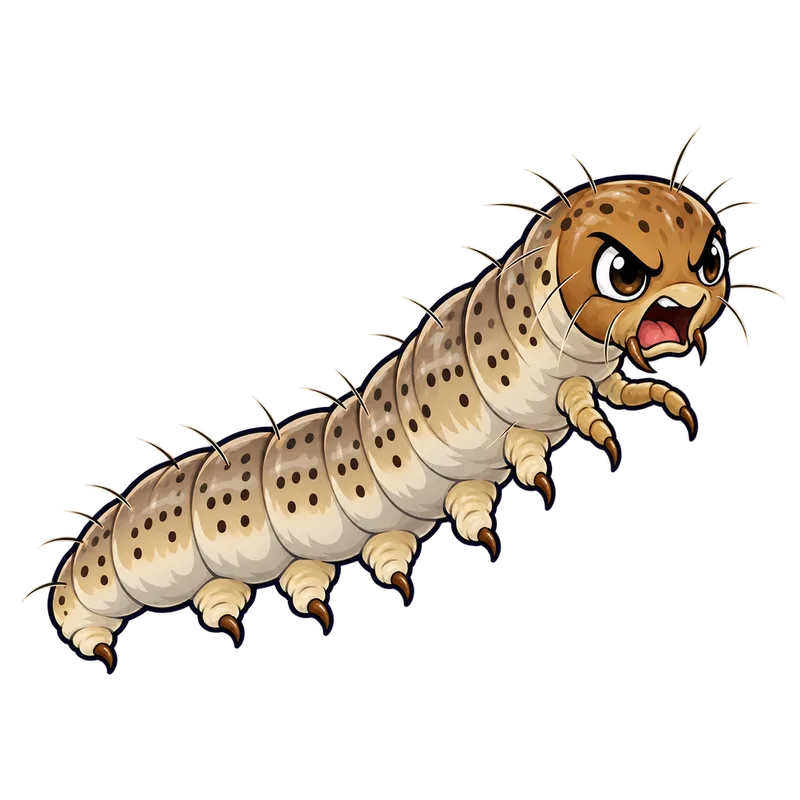
Early in the season, sod webworm damage shows up as subtle, notched grass blades and small, irregular, yellowish or brown patches across the lawn. The caterpillars leave behind ragged notches or skeletonized patches on the leaf edges. Damage appears much faster if the turf received a heavy dose of nitrogen fertilizer in the spring.
What is actually going on
Picture stepping out onto the back patio on a warm June evening with a cup of coffee. You notice a few small, dull-colored moths fluttering in erratic, low zig-zag patterns across the grass, almost like bits of gray confetti caught in a breeze. You probably think nothing of it, since bugs live outside. But a week later, you look out that same window and spot a few strange, hand-sized brown patches scattered randomly across an otherwise emerald-green lawn. You might assume the dog has been busy, or that a patch of turf missed the sprinkler swing.
What is actually going on down there is a quiet, nocturnal clipping operation. Early in the season, sod webworm damage shows up as subtle, notched grass blades and small, irregular, yellowish or brown patches. The culprits are caterpillars, which are the larval stage of those harmless-looking moths you saw fluttering around at dusk. These pests do not eat the roots of your grass like white grubs do. Instead, they hide out during the day in tiny, silk-lined tubes built right in the thatch layer, which is that spongy mat of dead and living stems sitting between your green lawn and the soil.
When the sun goes down, these caterpillars emerge from their daytime sleeping bags to chew on the grass blades. Early on, their nibbling looks like someone went along the edge of the leaf with a pair of craft pinking shears, leaving small, ragged notches or skeletonized patches where only the transparent veins remain. As they grow a bit larger, they start cutting off entire blades right at the crown and dragging those green blades back into their silk tubes for a late-night snack.
Because they feed exclusively at night and stay hidden during the daytime, you usually notice the patchy, scalped look of the lawn long before you ever spot a caterpillar. If your lawn is kept closely clipped, or if it received a heavy dose of nitrogen fertilizer in the spring, this damage shows up much faster because the grass is tender and the turf canopy is thin.
How to tell for sure
You cannot identify a sod webworm problem by simply gazing across the yard from the patio, because plenty of other lawn issues look identical from ten feet away. Dollar spot fungus, localized drought stress, and pet urine spots can all mimic early webworm injury. You have to get down on your hands and knees and look at the micro-habitat of the turf.
Usually, the most reliable physical evidence sits right in the upper inch of the thatch layer. If you part the grass blades around one of those suspicious brown spots, look for fine strands of silk webbing binding the bits of organic debris together. You will also usually find tiny, round fecal pellets that look like miniature green or dark green peppercorns scattered near the burrow entrances.
When you want to confirm the presence of the caterpillars themselves without tearing up your turf, you can use a simple low-tech alarm clock known as a soap flush. Mix three to four tablespoons of mild liquid dishwashing soap into a gallon or two of water in a watering can. Pour that soapy mixture evenly over a one-square-yard section of turf right near the edge of the damage.
Give it about ten minutes. The soapy water irritates the membranes of the caterpillars, forcing them to crawl upward and pop out of the thatch canopy so you can count them. If you pull up fifteen or more caterpillars from that single square yard, you have crossed the threshold where intervention makes sense. If you only find one or two, your grass can usually tolerate the grazing without turning into a disaster.
What usually comes next
Once you have counted your caterpillars and confirmed you are dealing with an active webworm population past that fifteen-per-square-yard threshold, you face a straightforward decision on how to handle them. Timing matters more than anything here, because a treatment designed for a tiny, newly hatched caterpillar will not touch a mature one.
If your soap flush brings up small, young caterpillars, you can try biological options like the bacterial spray known as Bacillus thuringiensis, which targets the digestive systems of feeding larvae. But if you are looking at large, fat caterpillars that already survived the winter down in the soil, that biological spray will not get the job done. Those older, overwintered larvae need a different biorational approach or a conventional treatment, or you might simply let the grass recover on its own if the turf is vigorous enough to outgrow the damage.
Whatever control route you choose, there is one major rule about application that catches many homeowners off guard. If you apply a liquid spray to your lawn, you must not water it in. While white grub treatments need a heavy soak to wash down to the roots, webworm treatments have to stay right on the grass blades where the caterpillars crawl and eat. Leave the sprinklers off and keep the mower parked for one to three days after spraying to give the product time to work on the upper canopy.
For the long term, you can make your yard far less inviting to future generations of moths by raising your mower height. Keeping your turf cut at or above two and a half inches shades the soil, keeps the microclimate cooler, and helps the grass blades recover quickly from light grazing without ever showing visible browning.
When to get help
Most lawn insect issues can be managed with a bit of patience, a soap flush, and proper cultural care, but certain situations call for an outside hand. If the damage covers a massive commercial property, a shared community space, or a specialized athletic turf where perfection is required, handing the job over to a professional turf manager is usually the smartest path.
You should also bring in a professional if you are dealing with persistent, heavy infestations that shrug off standard cultural controls and biorational treatments, or if the property requires specialized commercial-grade formulations that are restricted to licensed applicators. If you ever decide to use chemical insecticides, always read and follow the product label instructions to the letter, paying close attention to environmental warnings. Many standard lawn insecticides are highly toxic to aquatic life, bees, and beneficial predatory insects, meaning they should never be applied near storm drains, open water, or drainage ditches. When in doubt about local regulations, product choices, or the exact identity of a stubborn turf pest, your local university extension office can offer guidance tailored to your specific region.