
Why are bagworms appearing on pine trees?
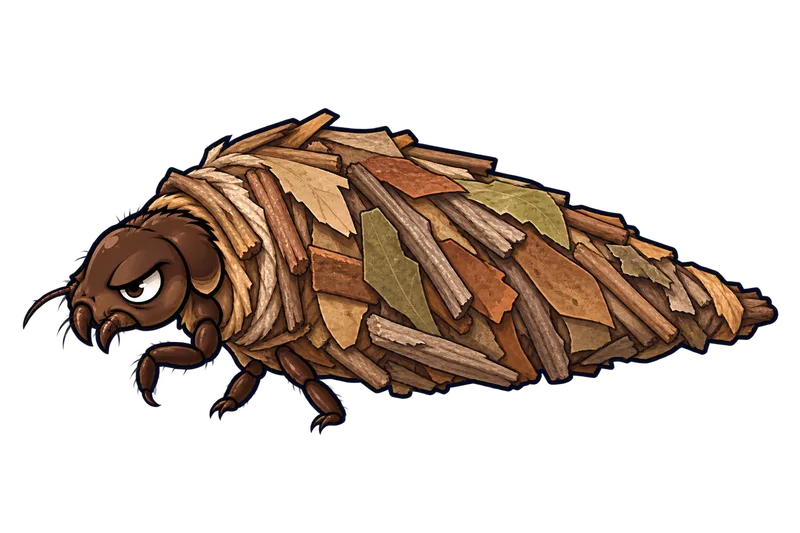
Bagworms are appearing on your pine trees because tiny caterpillars hatched from overwintered eggs in late spring and crawled out onto the needles. These larvae immediately started building mobile, armored sleeping bags out of silk and bits of foliage while chewing through your evergreen.
What is actually going on
You walk out to the front yard with your morning coffee, glance at the pine tree by the driveway, and notice a few branches looking oddly ragged and brown. When you step closer to investigate, you realize those odd little pine cones hanging from the twigs are actually moving.
Bagworms are appearing on your pine trees because tiny caterpillars hatched from overwintered eggs in late spring, crawled out onto the needles, and immediately started building mobile, armored sleeping bags out of silk and bits of foliage. These insects are the larval stage of a specific moth species, and they spend their entire youth dragging their little homes around while chewing through your evergreen's needles. Evergreens do not store heavy energy reserves in their roots the way broadleaf shade trees do, meaning a heavy round of defoliation can leave permanent brown patches or even kill the branch outright.
Why are they showing up in such numbers now instead of last month? The timing is entirely tied to the calendar. Those eggs sat safely tucked inside the dead female's old bag all winter long, waiting for warm weather to trigger hatching. Once the larvae emerge, they start feeding right away. If you missed them in May, you usually only notice them later in the summer when the bags grow large enough to look like strange, dangling ornaments.
How to tell for sure
What is actually quite tricky about them is how easily they blend in. Homeowners often walk right past bagworms for months because the casings are camouflaged with dry pine needles and bark fragments, making them look almost identical to natural pine cones or galls. You might assume the tree is just shedding or suffering from dry weather until the damage becomes too severe to ignore.
To tell for sure, look closely at the suspicious objects hanging from the twigs. Natural pine cones are fixed firmly to the branch and have woody scales, but bagworms are spindle-shaped, cone-like bags that measure anywhere from under half an inch in late spring up to nearly two inches by late summer. If you gently touch one, you might even see a small caterpillar head and thorax poke out the front to pull the structure along.
You usually do not need any special magnification to spot established bags, but using a simple hand lens in late May or early June can help you inspect the twigs for newly hatched larvae before the bags exceed half an inch in length. If you notice sparse, chewed needles and ragged brown tips concentrated on your pines or arborvitae, you are almost certainly dealing with a bagworm infestation rather than a typical nutrient deficiency or fungal disease.
What usually comes next
What usually comes next is a bit of a race against the clock. When those bags are still tiny, meaning under half an inch long, the caterpillars are quite vulnerable to management steps. Once July rolls around and the insects mature, their casings thicken into sturdy armor that simply shrugs off standard garden sprays. If you are dealing with just a light infestation, your best bet is usually physical removal. You can simply pick the bags off the pine branches by hand during autumn, winter, or early spring before the next generation hatches out.
There is a critical catch when you pull them off, however. You cannot just yank the bag downward and call it a day. You have to completely cut or pull off the tough silken attachment band wrapped tightly around the twig. Leaving that loop of silk in place acts just like a plastic zip-tie left on a growing stem, and as the branch expands in diameter over the summer, the unyielding band will girdle and kill the twig.
If you have too many bags to handpick and the insects are still small, you can turn to treatments. Organic options include biological sprays containing certain bacteria that specifically target caterpillars when they eat treated foliage, as long as you apply them while the larvae are actively feeding. Other approved organic and synthetic products are available at garden centers, but your choice should always be guided by the exact instructions printed on the product label. Keep in mind that certain broad-spectrum synthetic insecticides can kill beneficial predatory mites, which sometimes triggers a secondary flare-up of spider mites that creates a whole new headache for your pine tree.
When to get help
When to get help depends entirely on the scale of the problem and the height of the tree. If your pine tree is large and mature, and the heaviest infestations are sitting high up in the canopy where you cannot reach them safely from the ground with standard equipment, it is time to call a professional arborist who has high-pressure mist blowers.
You should also consult a local extension office or a tree care professional if defoliation exceeds thirty percent, or if the silken structures look unusual and resemble regulated quarantine pests rather than standard landscape bagworms. If you or anyone in your household experiences unexpected health symptoms related to pesticide exposure, or if you accidentally get chemicals on your skin or in your eyes, contact your local poison control center, an urgent care clinic, or a clinician immediately.