
How should suspected browntail moth caterpillars be distinguished from harmless lookalikes?
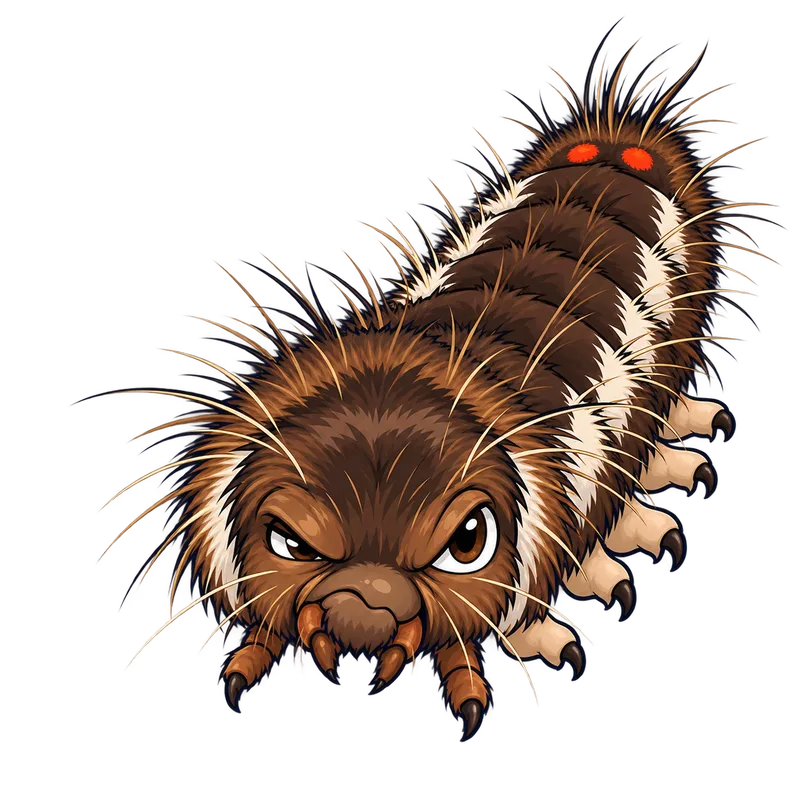
Browntail moth caterpillars are distinguished from lookalikes by a dark brown body measuring about 1.5 inches long, a broken white line on each side, and two reddish-orange spots on the rear. Their winter webs also provide clues because they measure 2 to 5 inches long and use white silk to tightly anchor leaves to twig tips.
What is actually going on
Imagine walking out to check your backyard apple tree on a brisk February morning, only to spot a cluster of crumpled brown leaves clinging stubbornly to the very tip of a branch while the rest of the tree stands completely bare. It looks like a bit of windblown trash at first glance, but if you look closer, those leaves are wrapped tight in bright white silk. That is the calling card of the browntail moth caterpillar, an invasive pest that spends the cold months tucked away by the hundreds inside a custom shelter.
What makes this insect such an unwelcome guest is not just its appetite for fruit trees and oaks, but the microscopic, barbed hairs covering its body. These hairs carry a toxin that causes a persistent, intensely itchy rash resembling poison ivy, and the hairs can float through the air or linger in dry environments for years. When homeowners start pruning fruit trees or cleaning up brush in the spring, they often stir up these invisible prickles without ever seeing a live caterpillar.
People frequently wonder how such a tiny creature can cause so much misery, or whether every single web hanging in a tree means trouble. The truth is that not all fuzzy caterpillars or silken nests are created equal. Nature hosts several harmless lookalikes that spin webs or wander across bark at different times of the year, and mixing them up can lead to either needless panic or dangerous exposure. Figuring out what you are looking at requires separating the true signs of the browntail moth from common impostors.
How to tell for sure
Definitive identification usually relies on a mix of visual markers on the caterpillar itself and the specific architecture of its winter home. A fully grown browntail moth caterpillar reaches about 1.5 inches in length and features a dark brown body covered in brownish hairs. Two distinct features set it apart from every harmless lookalike: a broken white line running down each side of the body, and two noticeable reddish-orange spots sitting on the top of the rear end. Think of those rear spots as tiny twin brake lights on a dark body.
If you are looking at the silken webs during the dormant winter months, location and construction matter more than spotting the tiny larvae hidden inside. Browntail nests measure roughly 2 to 5 inches long and are built at the very outer tips of hardwood branches, typically on oaks, crabapples, and wild cherries. The structural giveaway is how the nest attaches to the tree. The caterpillars wrap white silk around the leaf petiole, which is the small stem connecting the leaf to the branch, and anchor it directly to the twig. This double-knotting mechanism keeps the leaf from dropping off in autumn storms, whereas normal leaves fall right away.
Several other insects often show up and cause confusion. Eastern tent caterpillars build large webs, but they always place them in the crotches and forks of branches rather than at the twig tips, and their bodies feature a solid, unbroken white stripe down the back with pale blue side spots. Fall webworms also spin web masses at branch tips, but they do so in late summer, and their expired winter webs are loose, dirty, empty bags that lack any petiole-to-twig silk wrapping. Spongy moth caterpillars, formerly known as gypsy moths, show pairs of blue and red spots on their backs, but they never build silken tree nests at all.
Very young larvae emerging in autumn are tiny and dark, meaning their side stripes and tail spots can be hard to see without a magnifying glass. Weathered caterpillars or those affected by natural fungi can also look darker or shriveled, which sometimes obscures their markings.
What usually comes next
Once you confirm the presence of a browntail moth nest on your property, the practical choice usually comes down to removal timing and safety precautions. Because the microscopic toxic hairs remain active for up to three years in dry conditions, handling nests incorrectly is a recipe for a miserable rash.
Ground-level scouting works best between November and February after the leaves have dropped, making those bright white twig-tip nests stand out against the sky. If the webs are within safe reach from the ground, you can clip them off using long-handled pole pruners. Never attempt to prune nests high in the canopy or anywhere near overhead power lines, as those situations require a licensed arborist with proper bucket equipment.
When you clip the nests, personal protective equipment is non-negotiable. Wear a long-sleeved shirt tucked into gloves, coveralls, safety goggles, a hat, and an N95 respirator mask to keep those floating hairs out of your lungs and off your skin. Drop the clipped webs straight into a bucket of water mixed with household detergent and let them soak for at least 48 hours, or burn them in a proper incinerator. Never leave clipped webs on the ground where lawn mowers or foot traffic can launch the toxic hairs into the air. For larger infestations requiring chemical sprays, tree trunk injections, or canopy treatments, the job belongs strictly to a licensed pesticide applicator operating within the limits of the product label.
When to get help
There are moments when DIY measures stop being practical and outside expertise becomes essential. If an infestation reaches high into large shade trees or sits close to utility lines, call a certified arborist rather than risking a fall or electrical contact.
On the health side, accidental exposure to the toxic hairs can trigger severe reactions. If you or someone in your household experiences difficulty breathing, swelling of the mouth, tongue, or throat, or a severe widespread rash accompanied by intense pain, seek immediate emergency medical evaluation through urgent care or an emergency room. For mild skin irritation after contact, wash the area immediately with mild soap and cool water, change your clothes, and take a cool shower with colloidal oatmeal or baking soda. Avoid hot water, which opens up skin pores and makes the itching much worse. Over-the-counter hydrocortisone cream or calamine lotion can offer comfort, but you should consult a clinician if symptoms persist or worsen.