
Tomato hornworm vs tobacco hornworm: what markings differ?
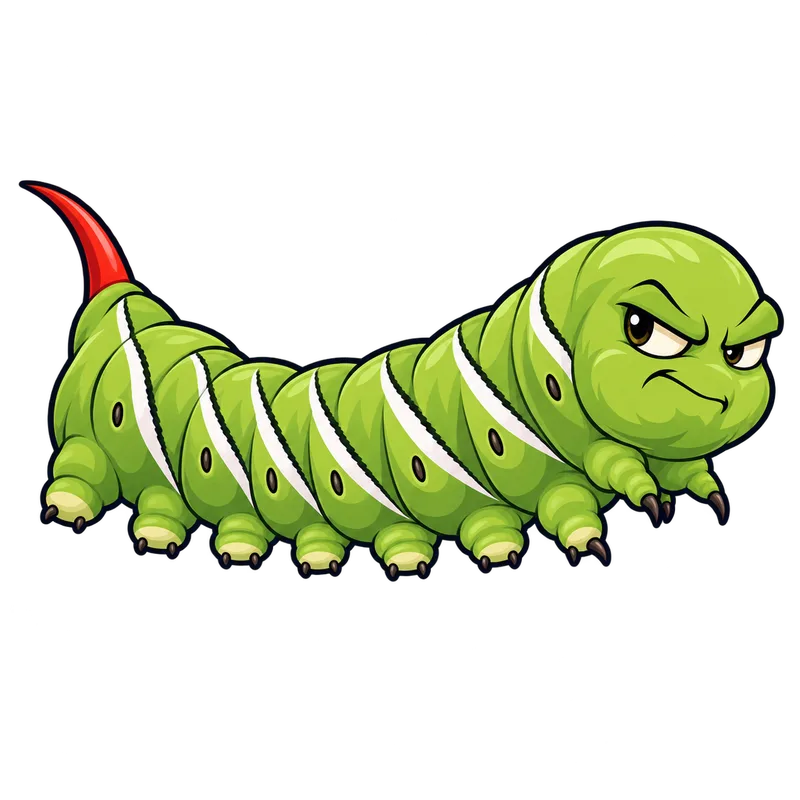
The tobacco hornworm features seven straight white diagonal lines and a red rear horn, while the tomato hornworm displays eight V-shaped white markings and a black or dark blue rear horn. Telling these two pests apart depends on checking the white stripe pattern along their sides and the color of the horn on their rear end.
What is actually going on
Picture walking out to the garden on a warm July morning, bucket in hand, ready to admire a row of vigorous tomato plants. Yesterday they looked fine, but today you notice a whole branch stripped down to the bare, ragged ribs, with a few dark, star-shaped pellets scattered on the mulch below. You look closer among the sprawling green leaves and spot a thick, finger-sized green caterpillar chewing away. It blends in so well you might wonder if it is the famous tomato hornworm or its very close cousin, the tobacco hornworm.
Gardeners often use the phrase tomato hornworm as a catch-all for any giant green caterpillar ruining nightshade crops. The truth is that two distinct species share these habits, and the one munching your prize heirlooms might actually be the tobacco hornworm. While both turn into large, heavy-bodied sphinx moths that hover over evening flowers like tiny hummingbirds, their caterpillars wear different patterns. Telling them apart comes down to the white markings along their sides and the color of the little horn on their rear end.
People usually assume that because these pests live on tomato plants, they must be tomato hornworms. In many places, the vast majority of caterpillars found on backyard tomatoes are actually tobacco hornworms. Environmental factors push one species to dominate a region over the other, which means local common names can easily mislead you.
How to tell for sure
To figure out which caterpillar you are dealing with, look past the bright green body and check the stripes along its flanks. The tobacco hornworm usually features seven straight, diagonal white lines along its sides, and those stripes are typically bordered by dark upper margins, resembling crisp sports-jersey pinstripes. The tomato hornworm, by contrast, sports eight white or yellowish V-shaped markings or chevrons pointing toward its head, like a series of tiny military rank insignias.
Next, look at the rear end of the caterpillar. The tobacco hornworm has a reddish or bright red horn protruding from its eighth abdominal segment. The tomato hornworm usually features a black or dark blue rear horn. Despite how intimidating that spike looks, it is completely soft, non-venomous, and harmless to human skin.
You can usually make this identification with the naked eye once the caterpillars reach their later stages. If you happen to catch the adult moths resting on a wall or visiting flowers at dusk, you can count their abdominal spots. The five-spotted hawkmoth, which is the adult form of the tomato hornworm, possesses exactly five pairs of yellow-orange spots along the sides of its gray abdomen. The Carolina sphinx moth, which comes from the tobacco hornworm, features six pairs of those yellow-orange spots.
What usually comes next
Once you have figured out which caterpillar you are looking at, you have to decide what to do about the stripped foliage. These insects actually eat about ninety percent of their entire lifetime food supply during their final growth stage. That sudden, massive defoliation makes it seem like a horde just arrived overnight, but the younger caterpillars were simply hiding and feeding quietly under the shade of the leaves for weeks.
For a typical backyard garden, simply picking them off by hand in the early morning or around dusk works best. If you turn over a leaf and spot a caterpillar covered in upright white cocoons that look like tiny grains of rice, leave that insect right where it is. Those little white structures are the cocoons of beneficial braconid wasps. The wasp larvae have already eaten the internal tissues of the pest, and leaving them alone means you get free biological control for the rest of your growing season.
When you have too many caterpillars for handpicking to make a dent, you might want to look into biorational sprays. Microbial insecticides containing Bacillus thuringiensis work well if you spray them on young caterpillars under three-quarters of an inch long, because the pests have to swallow the bacteria for it to work. Other labeled organic options include spinosad or pyrethrins. Always apply any pest control product according to the manufacturer label instructions, paying strict attention to pre-harvest intervals and safety rules.
When to get help
Most hornworm issues in a home garden are easily managed with handpicking or targeted organic treatments, but certain situations call for outside expertise. If you manage commercial field crops and scouting reveals more than one larva per ten plants sampled, you have reached the economic threshold where professional intervention becomes necessary.
Certain chemical choices, such as specific commercial insecticides used in large-scale agriculture, are restricted-use products that require a licensed pesticide applicator to handle and apply them. Leave those materials to the professionals.
On the health side, hornworms do not sting, but other common garden caterpillars possess microscopic hairs that cause severe rashes, blisters, or respiratory distress. If you encounter an unfamiliar caterpillar that causes sudden skin irritation or if you suspect accidental pesticide exposure, contact a medical clinician or your regional poison control center immediately.