
What does a cabbage looper moth look like?
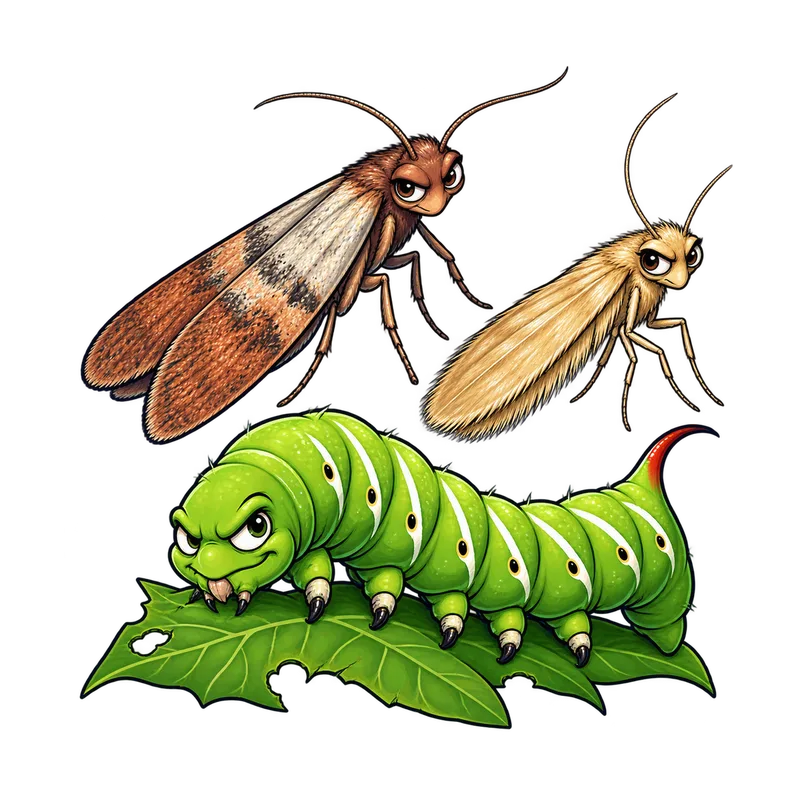
The adult cabbage looper moth is a rather nondescript brown and mottled night flying insect, though gardeners are far more likely to spot its pale green caterpillar. That caterpillar grows up to 1 and 1/2 inches long with thin white lines on its back and sides. It moves in a distinct measuring worm motion by arching its back.
What is actually going on
You walk out to the garden with your morning coffee, crouch down beside the raised bed, and spot a ragged mess of holes chewing right through the underside of your prized kale leaves. Naturally, you want to know what kind of creature is doing the damage. If you are picturing some winged night visitor, you might be surprised to learn that agricultural extension sources and biosecurity guides often skip the adult moth entirely when discussing field identification. The culprit everyone talks about is not the moth at all, but the caterpillar.
The adult cabbage looper is a rather nondescript brown, mottled night-flying moth, which is precisely why university guides tend to focus instead on the active, hungry stage of its life cycle. You are far more likely to notice the damage or find the caterpillar itself than you are to spot the parent resting quietly on a fence post or hiding under a leaf during daylight hours. The life cycle moves from egg to adult in just over a month, meaning you can have multiple overlapping generations chewing through your cole crops all summer and autumn long.
So, what is the actual pest doing out there? The female moth lays tiny, dome-shaped eggs on the leaves, and out pops a pale green caterpillar that treats your garden like an all-you-can-eat buffet. They love brassicas like broccoli, cabbage, cauliflower, and Brussels sprouts, but they will happily branch out to leafy greens and even tomatoes if given the chance. Left unchecked, these caterpillars progress from chewing harmless surface holes on leaf undersides to burrowing straight into the developing heads of your crops, bringing rot and ruin in their wake.
How to tell for sure
If you want to confirm you are dealing with a cabbage looper, look closely at the caterpillar rather than waiting for a moth to fly by. The caterpillar usually grows up to 1 and 1/2 inches long and sports a pale green body marked with thin white lines running down its back and sides. It has no distinct spots, unlike some of its garden-dwelling peers.
The biggest giveaway is how it moves. Standard caterpillars crawl flat along a leaf, but the cabbage looper lacks certain middle abdominal prolegs, forcing it to double up and arch its back in a distinct measuring-worm motion. It looks like it is pacing out the leaf with a flexible tape measure every time it moves forward across the foliage.
Watch out for a common mix-up in the garden. Gardeners often see a small white butterfly fluttering around their brassicas during the day and assume it is the parent of the looper. That white butterfly is usually the imported cabbageworm, which produces a velvety green caterpillar that crawls flat without looping. If your caterpillar arches its back as it walks, you have got a true looper.
What usually comes next
Once you have figured out who is eating your greens, you need to decide how to handle the population before it destroys your harvest. In a small home garden with only a few caterpillars, handpicking is usually the quickest fix. Just pluck them off the undersides of the leaves and drop them into a bucket of soapy water. When you are dealing with heavier numbers, clearing and plowing under crop remnants right after harvest or early in the spring will bury any pupae overwintering in the soil and break the breeding cycle.
If the infestation is a bit more established, you can turn to biological control sprays. When using a biological spray containing Bacillus thuringiensis, apply it at a rate of 2.0 to 3.0 tbsp per 1 gallon of water and direct it squarely at the undersides of the leaves where the loopers feed. Keep in mind that these biological options do not act like a chemical knockdown spray. The caterpillar has to consume the foliage, and while it stops feeding within the first day, it usually takes a couple of days to die off entirely. The upside is that this biological spray carries a 0-day Pre-Harvest Interval, meaning you can harvest your crops on the day of application once the spray dries.
If you decide to use chemical insecticides instead of biological options, you must pay strict attention to the mandatory waiting periods that tell you how many days must pass between spraying and picking your vegetables. For instance, permethrin requires 1 day, carbaryl requires 3 days, and malathion requires 7 days. Always verify the label directions for your specific crop and product before treating anything you plan to eat.
When to get help
There are moments when standard garden remedies stop working and you need to call in outside expertise. If your cabbage or lettuce heads have already been invaded by tunneling caterpillars, surface treatments will no longer reach them, and your crop may be unmarketable.
If you are a commercial grower facing a widespread outbreak, or if your home garden plants are suffering heavy leaf damage despite repeated treatments, it is time to contact a local university extension agent or a licensed agricultural consultant. They can help you evaluate threshold levels, confirm whether natural predators or pathogens are already at work in your soil, and guide you on safe, compliant management strategies that protect your yield without breaking local regulations.