
What does a fall armyworm larva look like on turf?
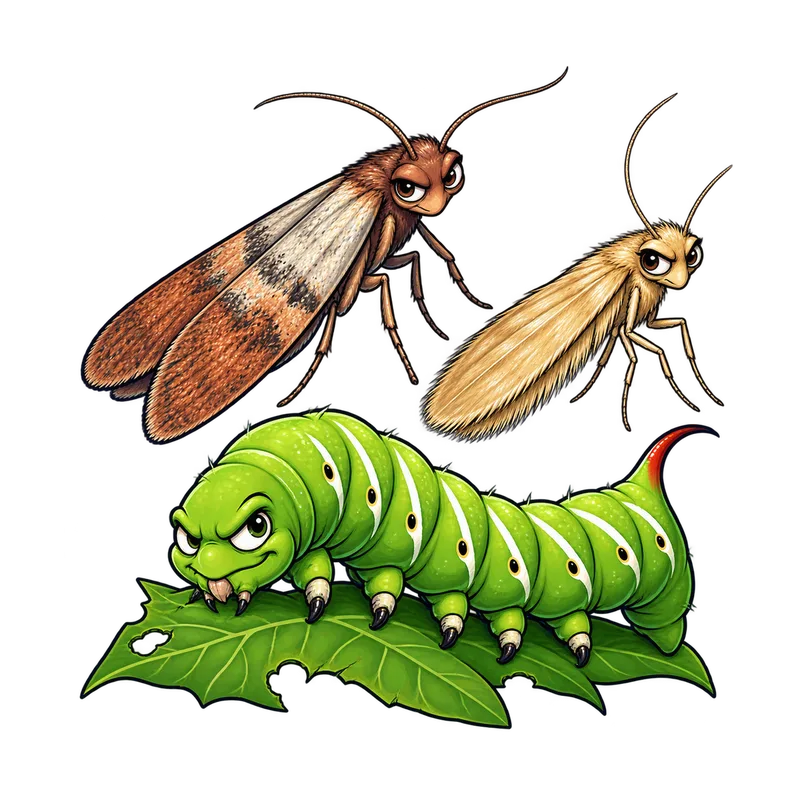
A fully grown fall armyworm larva is a greenish-brown to dark caterpillar measuring between 1.25 and 2 inches long. Its exact body color varies depending on what it eats and the crowding of the lawn. You can identify the pest by prominent stripes running the full length of its body and a dark band on each of its five pairs of abdominal prolegs.
What is actually going on
Imagine stepping out onto the back lawn on a quiet Tuesday morning with your coffee, only to notice that a patch of grass near the patio looks a bit dusty and bleached. You figure it is just some late-summer heat stress and head back inside. By Thursday afternoon, that same corner of the yard looks like someone took a weed trimmer to it. The grass blades are gone, the soil is exposed, and you might even spot a few greenish-brown caterpillars marching steadily across the concrete walkway toward your neighbor's pristine sod.
You are not looking at a sudden invasion that materialized out of thin air. Those caterpillars have actually been hanging out in your turf canopy for nearly two weeks, starting out microscopic and quiet. They spent their early days nibbling gently on the tender upper layers of the grass blades. Because young caterpillars eat very little, you never noticed them. Once they hit their final growth spurt, however, their appetite scales up exponentially. In just a couple of days, they consume the vast majority of their lifetime foliage intake, turning a mild, hidden lawn issue into a glaring patch of sudden defoliation.
When people call them armyworms, they are being quite literal. These pests do not crawl as solitary individuals once local food supplies run low. When a large brood finishes off the grass in one spot, they pack up and move en masse, sliding across patios, driveways, and sidewalks like a tiny, hungry infantry unit looking for greener turf.
How to tell for sure
If you want to know if you are dealing with a fall armyworm larva, you need to look past the general shape and check a few specific physical markers. Fully grown caterpillars usually measure between 1.25 and 2 inches in length. Their body color varies quite a bit depending on what they have been eating and how crowded the lawn is, usually ranging from a pale green or tan to a deep reddish-brown, dark brown, or nearly black.
The most reliable way to identify them is by looking at the patterns running down the length of the insect. Prominent longitudinal stripes, which can look red, yellow, brown, or light green, run continuously from the head capsule all the way to the rear segment. If you look even closer, usually with a bit of patience, you will notice a key anatomical detail: a dark band or patch located right on the outer lateral side of each of the five pairs of fleshy abdominal prolegs.
You can also run a quick backyard check if you suspect they are hiding down in the thatch layer during the heat of the afternoon. Mix about 3 to 4 tablespoons of standard liquid dishwashing soap into 2 gallons of water, and pour that soapy blend evenly over roughly one square yard of troubled turfgrass. Wait about 10 minutes and watch the spot closely. The soap acts as a mild irritant that forces thatch-inhabiting caterpillars to crawl straight up to the top of the grass canopy where you can easily count them. If that simple test brings up more than nine armyworms per square yard, you have crossed the standard action threshold where treatment usually makes sense.
What usually comes next
Once you have confirmed that you are dealing with fall armyworms rather than white grubs or plain summer drought stress, you have to figure out how to handle the active infestation. People often make the mistake of running out to buy a standard grub killer and watering it deep into the soil. That approach will not do anything useful here. White grubs live underground and chew on roots, but fall armyworms are surface feeders that munch on the grass blades above ground.
If you decide to use a foliar spray, the application method matters entirely. You generally want to apply the treatment in the early evening when the caterpillars wake up and climb out of the thatch to feed. Most importantly, do not water the treatment in, and do not mow or irrigate for 24 to 48 hours afterward. The spray needs to stay right on the grass foliage so the caterpillars ingest it as they eat. Washing it down into the dirt renders a stomach poison completely useless against them. For smaller populations or early-stage bugs, natural options like spinosad or specific biological products can target the caterpillars effectively without wrecking the wider ecosystem in your yard.
When to get help
There are moments when managing a lawn pest yourself stops being practical. If you are caring for a large commercial property, a sprawling athletic field, or a neighborhood park where caterpillar populations have exploded well past the usual threshold, do not try to tackle it with a basic garden hose sprayer. That scale requires commercial equipment and professional oversight.
You should also consult a professional lawn care service or your local university extension office if you apply treatments correctly and the infestation keeps spreading, or if you simply cannot tell whether the chewed blades are the work of fall armyworms, cutworms, or sod webworms. Furthermore, if you are dealing with restricted-use professional chemical formulations, leave the application to a licensed pesticide applicator who handles the required personal protective equipment and local rules every day.