
What do Indian meal moth larvae look like in stored food?
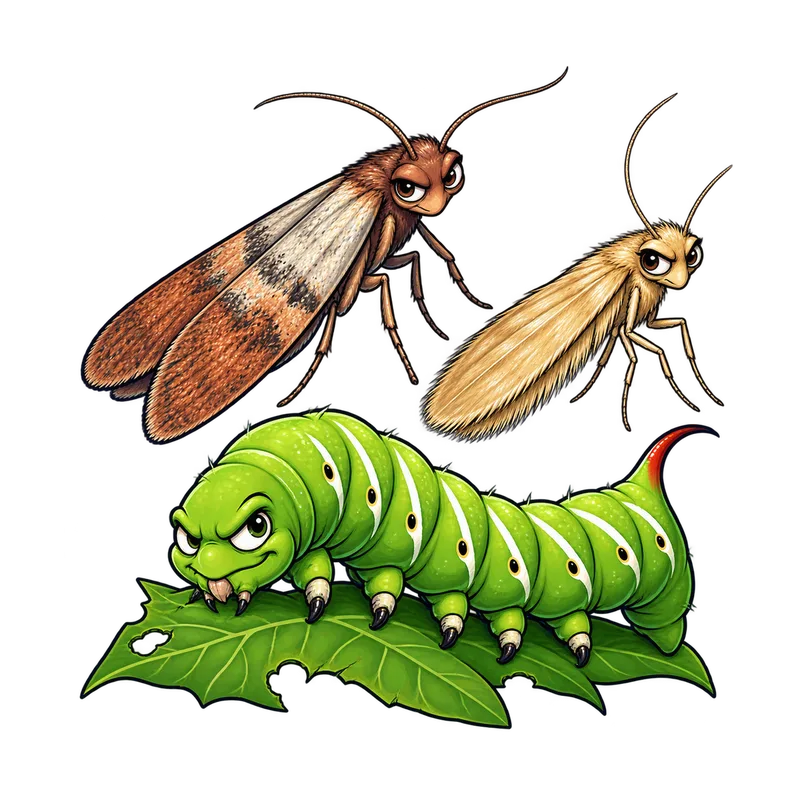
Indian meal moth larvae look like small caterpillars wriggling inside grains, cereals, or pet food bags. As they feed and crawl through your dry goods, these pests spin silken threads that trap tiny droppings and shed skins, causing the food to stick together in strange stringy clumps.
What is actually going on
You are standing in the kitchen pouring yourself a morning bowl of oats, only to notice that the flakes are sticking together in strange, stringy clumps. When you tilt the box, a delicate, sticky cobweb stretches across the cardboard opening. If you look closer inside that oat bag or a forgotten bag of flour, you are likely staring at the handiwork of Indian meal moth larvae. These little caterpillars are the sole feeding stage of a very common pantry pest. While the adult moths with their distinct copper-tipped wings flutter around your ceiling at night, they do not eat your food. The larvae do all the damage, chewing through grains, nuts, pet food, and cereal while spinning silken threads that trap tiny droppings and shed skins.
People often wonder how these critters got into a sealed bag of bird seed or gourmet flour in the first place. More often than not, the eggs or microscopic early-stage larvae were already hitching a ride inside the packaging from the grocery store or warehouse. Once they hatch out in your pantry, they set up shop in your dry goods. As they crawl and feed through your groceries, their silk glands leave behind continuous strands of webbing that bind everything together into a matted, ruined mess. The adult stage, scientifically known as Plodia interpunctella, measures 5/8 to 3/4 inch long and serves mostly as a visual indicator that an infestation is active nearby, since the adults lack functional chewing mouthparts.
How to tell for sure
Finding the larvae usually involves spotting things that do not belong in a dry box of food. You will usually notice small caterpillars wriggling inside your grains, cereals, or pet food bags. They possess chewing mouthparts and an appetite for almost any dry food commodity you keep on hand, from spices and chocolate to dog kibble and cornmeal. As they move through the substrate, they produce that characteristic silken webbing and drop tiny fecal pellets known as frass, which dirties and clumps the food. Vulnerable foods include raw and processed grains, breakfast cereals, dried fruits, tree nuts, bird seed, dry dog and cat food, powdered milk, and cocoa.
Another clue shows up when the caterpillars finish eating. You might spot them crawling high up on your pantry walls, cabinet hinges, or ceiling corners. This confuses people because they assume the pests are eating the drywall or structural wood. In reality, mature larvae wander away from their feeding site to find a dark, protected crack where they can spin a silken cocoon and turn into pupae. If you find small moths resting near your clothes closet instead of the kitchen, you are usually dealing with clothes moths instead. Indian meal moths strictly target stored food commodities and never touch wool, furs, or synthetic textiles. If you want to check adult wing tips for copper scales when distinguishing pantry insects, a 10x magnification hand lens can help.
What usually comes next
Once you spot an infestation, the most practical move is to check every single dry package in that cupboard and throw out anything showing signs of webbing, clumping, or tiny crawling pests. Do not try to salvage heavily infested food, and do not trust original cardboard boxes or thin plastic bags because the caterpillars easily chew right through them. Seal the ruined items tightly in plastic garbage bags and take them straight to an outdoor waste bin. Thoroughly vacuum and wipe down food storage shelves, cupboard joints, and cabinet cracks to clear spilled flour, crumbs, and loose food debris.
For items that look untouched but share shelf space with the infested goods, you have a couple of solid options to keep them safe. You can transfer vulnerable dry goods like flour, rice, and cereal out of their original packaging and into hard, airtight containers made of thick glass, metal, or rigid plastic with tight-fitting lids. Maintaining low relative humidity and adequate ventilation in pantries helps discourage future problems. Alternatively, if you want to deinfest large quantities of bird seed or pet food without throwing them away, you can place the items in a sealed polyethylene bag, exhaust excess air, and freeze them at minus 4 degrees Fahrenheit for 7 days. Just remember to let the bag warm up to room temperature over a full day before opening it so condensation does not ruin the food. You can also deploy non-toxic Indian meal moth pheromone sticky traps in food storage areas to detect and monitor adult male moth activity.
When to get help
Most pantry moth issues clear up with thorough sanitation, discarding spoiled items, and switching to airtight storage containers. However, certain situations call for outside support. If you are managing a widespread or persistent infestation in a commercial food storage facility, a multi-unit apartment building, or a large pantry where localized cleaning and non-chemical measures fail to stop the cycle, you should reach out to a licensed pest control operator.
Safety also comes first when handling any pest control products. Never spray liquid insecticides directly onto food items, shelves where food sits, or food-contact surfaces. Always follow official pesticide product labels strictly if you decide to use monitoring tools or treatments. Finally, stored-product pest infestations cause food spoilage and contamination, so if anyone in your household experiences persistent health concerns, respiratory irritation, or allergic reactions linked to contaminated food, consult a medical clinician right away.