
Where do clothes moth larvae hide in a wardrobe?
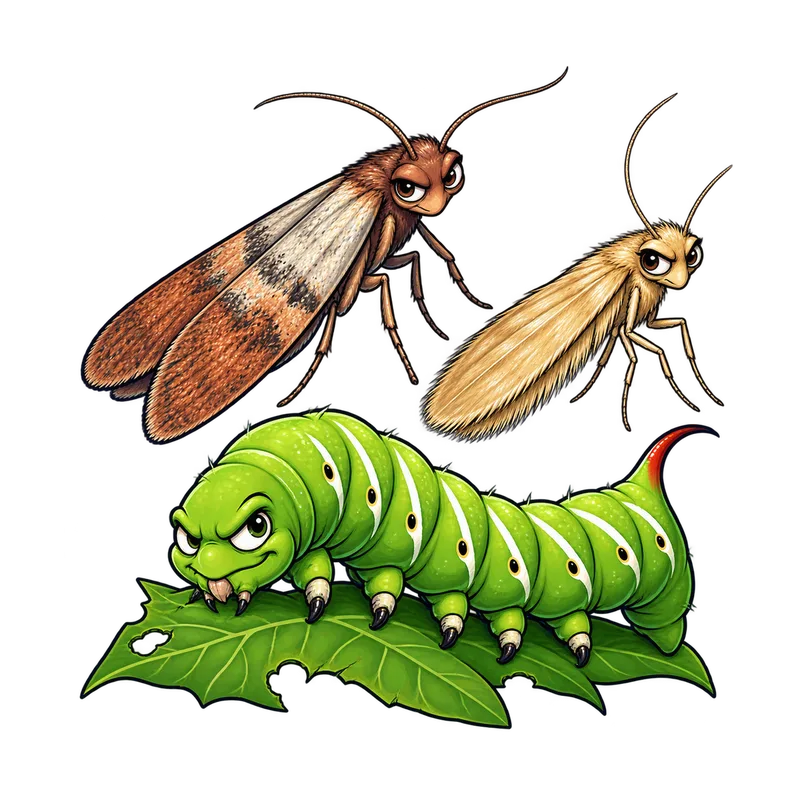
Clothes moth larvae hide completely out of the light in the deepest structural folds, seams, pockets, under collars, and inside accumulated lint at the bottom or rear corners of a closet. They stay tucked away in places where fabric stays squashed or folded, such as the contact zones between garments pressed tightly together for months.
What is actually going on
You reach into the back of the wardrobe for that wool coat you have not worn since last winter, and your fingers brush past a strange patch of missing fabric. There is no fluttering moth in sight, just a small cluster of damage right where the lapel folds over the chest. It feels like a minor household mystery until you realize something small and hungry has been dining on your winter wardrobe in absolute darkness. If you want to know where those clothes moth larvae are hiding, the short answer is that they stay entirely out of the light in the deepest structural folds, seams, pockets, under collars, and inside the accumulated lint at the very bottom or rear corners of your closet.
Clothes moth larvae possess a strong aversion to light, meaning they actively flee any brightness and seek out physical stillness. Because adult moths do not possess functioning mouths and cannot eat your clothes, the caterpillar stage does the actual damage. These larvae need animal-derived keratin to grow, which they find in wool, cashmere, mohair, silk, fur, and feathers. When a female moth lays tiny, fragile eggs directly onto these fabrics or into the adjacent crevices, the hatching larvae immediately look for shelter to begin feeding without disturbance.
You will usually find them tucked away in places where the fabric stays squashed or folded. Think about the underside of a collar, the dark recess behind a jacket lapel, inside turned-up trouser cuffs, or deep within a stack of folded sweaters. If garments hang tightly pressed against each other for months, the contact zones between them provide the exact combination of darkness and stability the larvae need. They also have a habit of zeroing in on garments soiled with tiny traces of perspiration, body oils, or food spills, because those stains give them essential extra nutrients like nitrogen and B vitamins.
How to tell for sure
Finding the damage is usually easy, but confirming what caused it takes a closer look. You might notice irregular, scattered holes in your woolens, or perhaps small sand-like pellets scattered across the fabric that match the color of the garment. That gritty material is actually larval excrement, often mistaken for eggs. Actual moth eggs are minute, soft, and translucent white, making them very difficult to spot without magnification.
Depending on the species, you might also find physical structures built by the caterpillars. Webbing clothes moth larvae usually spin fixed silken feeding tubes or flat sheets of silk right across the fabric surface, concealing themselves inside while they eat. Casemaking clothes moth larvae build a portable, cylindrical case made of silk interwoven with fibers and food debris, which they drag behind them as they graze like microscopic turtles. If you see tiny, fiber-covered cases that look a bit like grains of rice scattered across a shelf, you are usually looking at the handiwork of the casemaking variety.
It helps to know that carpet beetle larvae can also leave similar damage on animal fibers, but those beetles do not spin silk, and they leave behind hairy shed skins that look entirely different from moth cases. Furthermore, if you see moths fluttering around your ceiling lights or windows, they are usually harmless outdoor insects or food-infesting grain moths, because true clothes moths avoid light entirely and prefer to scurry into shadows when disturbed.
What usually comes next
Once you spot the signs of an active infestation, you have to empty the wardrobe completely and inspect every single garment under a bright light, paying close attention to those hidden seams and pockets. You will need to make a practical decision about how to treat the affected items and the wardrobe itself. Vacuuming the entire closet floor, baseboards, and shelf corners removes accumulated pet hair, dust, and lint that serve as a hidden breeding reservoir, and you should seal and discard the vacuum bag outside immediately.
For the clothes themselves, washing washable woolens in hot water or pressing them with a hot iron handles the job, while non-washable items generally belong at a commercial dry cleaner where heat and solvents kill all insect stages. If you prefer a non-chemical approach for delicate garments, sealing dry clothes in plastic bags and placing them in a deep freezer at negative four degrees Fahrenheit for a week will eliminate every egg and larva. Alternatively, sustained heat above one hundred twenty degrees Fahrenheit for an hour does the same thing.
Regarding treating the empty wardrobe structure, ready-to-use residual sprays labeled for crawling insects can be applied strictly as a crack-and-crevice treatment to baseboards and floor gaps. Never spray insecticides directly onto clothing or bedding, and always let treated surfaces dry completely before returning anything to the closet. Pheromone sticky traps can help monitor for adult male activity, but keep in mind that they only tell you moths are present, rather than stopping the larvae already eating your sweaters.
When to get help
Most wardrobe moth issues can be managed with thorough cleaning, freezing, or laundering, but certain situations call for professional intervention. If an infestation spreads across large areas of wall-to-wall wool carpeting or padded underlays beneath the floorboards, domestic cleaning methods often fall short. Similarly, if you are dealing with irreplaceable heirloom garments, antique tapestries, or high-value furs, professional gas fumigation or specialized thermal chambers are safer than experimenting at home.
You should also reach out to a pest control professional if larvae persist despite your best cleaning efforts, which usually means there is a hidden breeding reservoir tucked away inside wall voids, ceiling spaces, air conditioning ductwork, or a disused bird nest in a nearby chimney. From a health perspective, clothes moths do not bite or transmit diseases, so the main concern is potential respiratory irritation from inhaling dust and cast larval skins in severe infestations. If you decide to use commercial chemical repellents or residual sprays, always follow the product label instructions carefully to protect household occupants and pets.