
What does a household casebearer moth look like?
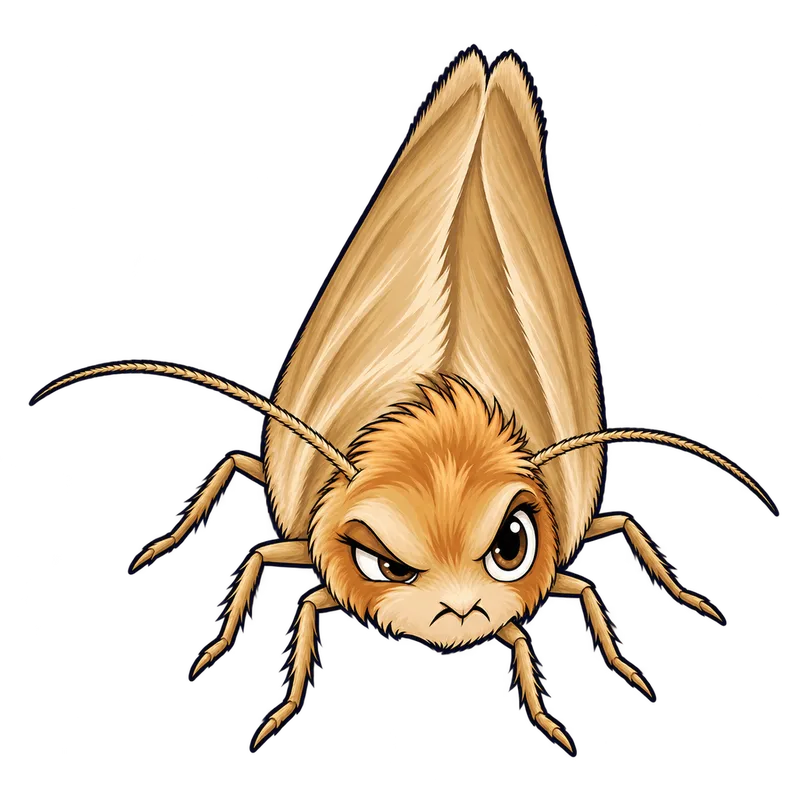
A casemaking clothes moth can look like a tiny, grayish speck dragging a microscopic cylindrical shell or a dull, buff-gray adult measuring about a quarter of an inch long with three dark spots on each front wing. The immature stage is a creamy-white caterpillar with a dark brown head that builds and carries a portable silken case, while empty pupal cases resemble small, flattened grains of rice.
What is actually going on
You reach into the back of the closet to grab that wool sweater you only wear once a year, and something catches your eye. There is a tiny, grayish speck moving slowly along the baseboard, dragging a microscopic cylindrical shell behind it like a nomadic creature hauling its home. If you have ever spotted one of these small crawling pods on a wall or found a nibbled hole in a favorite jumper, you are likely looking at the handiwork of the casemaking clothes moth.
The insect itself goes through a few distinct phases, but people usually notice either the fluttering adult moth or the crawling larval case. The adult is a modest creature, measuring about a quarter of an inch long with a dull, buff-gray or silvery appearance. If you manage to get a close look under good light, you will notice three slightly indistinct dark spots on each of its front wings. They are weak fliers that actively avoid the light, preferring to scuttle into dark crevices or deep folds of fabric when disturbed.
Here is where a common misconception usually trips people up. Adult moths do not possess functional mouthparts. They do not eat your clothes, and they do not cause any physical damage to textiles at all. Their only job is to mate and lay microscopic eggs in quiet, dark spots. The real damage comes from the immature stage, which is a creamy-white caterpillar with a dark brown head capsule. This caterpillar builds and carries a portable, open-ended silken case wherever it goes, stretching its head and legs out of the front to feed on animal-derived fibers like wool, silk, fur, and feathers while dragging the protective enclosure along for the ride.
How to tell for sure
Telling this pest apart from other household insects usually comes down to spotting its signature architecture. The casemaking caterpillar weaves micro-fragments of whatever it is eating directly into the walls of its silken tube. If the larva munches on a dark blue sweater and then moves to a gray blanket, its portable case will show distinct color bands reflecting its recent meals. When the caterpillar finally matures and turns into a pupa, it leaves behind an empty silken case that usually resembles a small, flattened grain of rice stuck to a wall, shelf, or garment seam.
You can usually separate this pest from its cousin, the webbing clothes moth, by looking at how it behaves. Webbing clothes moths spin stationary silk tubes or flat sheets right across the surface of the fabric, but they never build a portable sleeping bag they can haul around. You can also tell them apart from carpet beetles, which are small and oval with bristly hairs, because carpet beetles never spin silk and instead leave behind fuzzy, bristly cast skins as they grow.
Another detail that causes confusion is the presence of tiny dark specks near damaged wool. People often mistake these for moth eggs, but they are actually larval fecal pellets, known as frass. These hard, opaque cylinders are about the size of a grain of salt and usually match the exact color of the material the caterpillar has been consuming. Moth eggs, by contrast, are extremely small, soft, and translucent, and they are usually laid loosely in fabric crevices where a gentle brush or vacuuming session destroys them.
What usually comes next
Finding a few moths or empty cases means you need to make a practical decision about how to handle your textiles without ruining them. Because chemical sprays should generally never be applied directly to clothing, bedding, or items you wear against your skin, your best defense relies on physical methods like heat and cold.
If you are dealing with a washable wool garment or a fabric that can handle high heat, laundering it in hot water or pressing it with a hot iron usually finishes off any lingering eggs or larvae. For items that cannot be washed easily, freezing is a reliable option. Wrap the item in a bedsheet to absorb moisture, seal it tightly inside a heavy plastic bag, and place it in a freezer maintained at negative four degrees Fahrenheit for a solid week. When you pull it out, leave it sealed inside the plastic until it reaches room temperature so condensation forms on the outside of the bag rather than dampening your clothes.
For larger infestations hidden in closet corners or under heavy furniture, thorough vacuuming is usually the best starting point to pick up stray lint, hair, and pet dander that pests rely on. If you decide to use commercial moth repellents like naphthalene or paradichlorobenzene, they need to go into tightly sealed storage chests or garment bags rather than sitting loose on open shelves. Always read the product label to ensure you follow strict spacing rules, and never let the chemical crystals touch plastic hangers or delicate fabrics directly.
When to get help
While fabric pests are a nuisance for your wardrobe, they do not transmit human pathogens, sting, or bite. However, the fine frass pellets they leave behind and the microscopic hairs shed by similar pests can sometimes trigger contact dermatitis or aggravate asthma in sensitive individuals. If someone in your household develops persistent skin irritation or breathing difficulties, consult a qualified clinician or an urgent care service rather than trying to diagnose the reaction at home.
You should also look beyond DIY methods if the infestation spans multiple rooms, invades floor voids, or involves valuable historical heirlooms and antique tapestries that require specialized professional fumigation or controlled-atmosphere chambers. Additionally, if you trace the source of an infestation to abandoned birds or rodent nests tucked away in disused chimneys or attics, remember that removing those natural breeding reservoirs must wait until the nesting season has fully ended to comply with local wildlife protection laws.