
What do plaster bagworm cases look like?
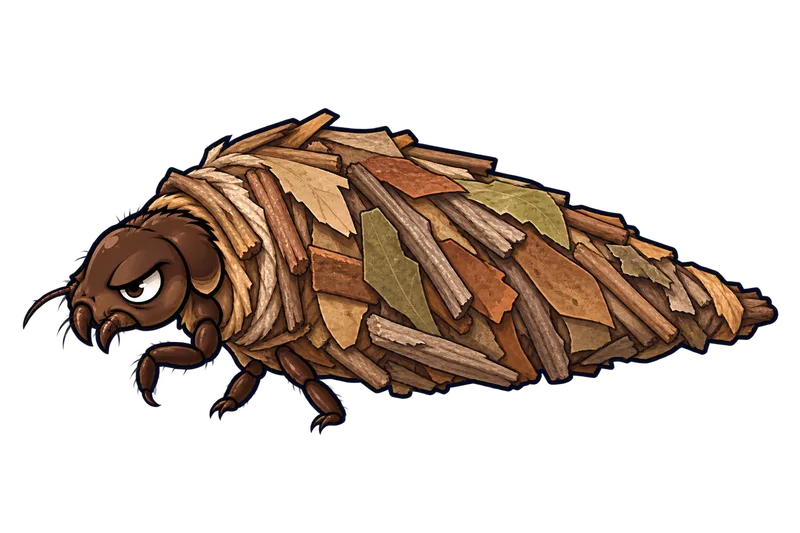
Casemaking clothes moth cases look remarkably like scattered grains of white rice, measuring up to half an inch long and firmly attached to fabrics or baseboards. Their color depends on what the caterpillar has been eating, allowing the rigid silk tubes to match the hues of nearby sweaters and carpets.
What is actually going on
Imagine opening the back of a rarely used coat closet, moving a heavy wool blazer out of the way, and noticing what looks suspiciously like a few grains of scattered white rice stuck right against the fabric or the baseboard. You reach down to brush them off, but they do not flick away. They are firmly attached. What you are actually looking at is the handiwork of a casemaking clothes moth larva, and those rice-like specks are actually tiny, custom-built portable sleeping bags made of silk and fabric scraps.
These little caterpillars do not wander around naked. As soon as they hatch from microscopic eggs, they spin a tubular silken case around themselves and drag it everywhere they go, much like a miniature camper hauling a sleeping bag or a tiny turtle carrying its shell. They leave both ends of the tube open so they can stretch their heads out to feed and crawl, dragging the whole structure behind them across your sweaters, carpets, or even up a vertical wall.
Here is where things get slightly confusing for anyone trying to name the culprit. People often call these creatures plaster bagworms because the empty cases look remarkably like the hardened debris found on walls in warm, humid climates. However, true plaster bagworms usually build flat, pumpkin-seed-shaped cases out of plaster dust and sand, while the critter most commonly found munching on woolens in standard homes is actually the casemaking clothes moth. Even so, the visual result is the same: a rigid, mobile silk tube that the caterpillar constantly updates and remodels.
How to tell for sure
If you want to know what you are dealing with, look closer at the cases themselves. A typical casemaking clothes moth case usually measures up to half an inch long, and its color changes depending on what the caterpillar has been eating. If it just chewed its way through a red cashmere sweater, it weaves red fibers directly into its silk, acting like a tiny textile chameleon. If it moves to a grey wool carpet, it adds grey fuzz.
You can usually tell these cases apart from other household pests by looking for a few specific clues. If you see a tiny, creamy-white caterpillar with a dark brown head poking its front half out of a silken tube and dragging the case along, you have a live case-bearing pest. If you find empty, rigid cases that look like scattered grains of rice, you are usually looking at abandoned shelters left behind after the adult moths have emerged.
A common doubt people raise is whether these are just the shed skins of carpet beetles. That is a fair mix-up, but carpet beetle larvae do not spin silk or build portable cases at all. Instead, they leave behind bristly, carrot-shaped brown husks that look like tiny, dried-out versions of the crawling beetle larvae themselves. Also, keep in mind that the adult moths fluttering around your clothes are not the ones doing the damage. The flying adults do not even have functional mouthparts, meaning they cannot eat fabric. All the holes, grazed patches, and portable tubes are the sole responsibility of the crawling caterpillars.
What usually comes next
Once you spot these tiny silk tubes resting on your garments or baseboards, your main practical choice usually comes down to whether you are dealing with a localized stash or a widespread wardrobe invasion. If you find just one or two cases tucked inside a storage bin, you do not need to panic or tear apart the entire house.
Your first line of defense should always involve mechanical removal and heat. Vacuuming closet floors, baseboard perimeters, and the undersides of heavy furniture helps clear out lint, stray hair, and hidden larvae before they can ruin more textiles. For infested washable items like woolens or heavy blankets, running them through a hot water wash cycle or taking them to a professional dry cleaner will reliably kill every life stage from egg to adult.
If you prefer a non-chemical approach for delicate wool or vintage items that cannot handle hot water, freezing is generally the most practical choice. You can seal the garments inside heavy plastic bags, press out the extra air, and place them in a freezer set to zero degrees Fahrenheit for several days. Letting the items warm up very slowly inside the sealed bag afterward prevents condensation from ruining the fabric, and it stops any hidden pests cold.
When to get help
While most clothes moth issues respond well to thorough cleaning, vacuuming, and careful laundering, certain situations call for backup. You should generally involve a licensed pest control professional if the infestation has spread deep into inaccessible structural areas like wall voids, central heating and cooling ducts, or large attic spaces where routine vacuuming cannot possibly reach.
Professional help is also usually the smartest route when you are dealing with high-value heirlooms, museum-grade textiles, antique wool carpets, or extensive taxidermy collections. These items often require specialized treatments, such as controlled-humidity thermal chambers or commercial gas fumigation, which cannot be safely replicated with household appliances.
On the health and safety front, neither these caterpillars nor their empty cases bite or act as blood-feeding parasites. However, if you or someone in your home struggles with severe asthma or allergies, heavy accumulations of insect debris, cast skins, and tiny frass pellets can trigger sensitivity. If cleaning up the space leaves you coughing or wheezing, or if an infestation simply refuses to clear up after thorough sanitation, bringing in an expert can save both your belongings and your indoor air quality.