
When should Maine residents check county browntail moth updates?
Maine residents should check county browntail moth updates across three distinct seasonal windows, starting in late winter around February. The second window runs in spring from April through June, and the third occurs in late spring when towns file local nuisance petitions.
What is actually going on
Imagine stepping out onto your porch on a crisp February morning with a cup of coffee, looking up at the bare oak tree by the driveway, and wondering if this is the year those tiny silken packages in the branches finally hatch into an itchy disaster. You want to know when you should actually pay attention to the county updates instead of just guessing. Maine residents should check county and state browntail moth updates across three distinct seasonal windows, starting in late winter around February to review winter web survey risk maps and clip nests before they hatch. The second window runs in spring from April through June to track active caterpillar emergence and airborne toxic hair warnings, and the third occurs in late spring when towns file local nuisance petitions.
Why split it into so many dates? Because this pest does different things depending on the month, and a map that helps you plan a winter pruning session is entirely useless when you are trying to figure out why your arms are covered in a rash in May. Checking the updates at the right moment keeps you from wasting energy on tasks that do not match the biological clock of the insect. Waiting until summer to look at a winter map means you missed the window to remove the nests while the larvae were still trapped inside.
Of course, someone might point out that you can just ignore the calendar and deal with the caterpillars whenever you see them chewing on your apple trees. That approach works fine until June rolls around and the airborne hairs catch the wind, turning a simple yard cleanup into an emergency trip to the pharmacy. Knowing the schedule lets you get ahead of the cycle rather than reacting after your skin pays the price.
How to tell for sure
Before you start panicking over every web or caterpillar in the yard, you need to make sure you are actually looking at browntail moths and not some harmless native lookalike. Identification usually comes down to location, timing, and a few specific physical traits.
The overwintering nest is your primary target during the cold months. It usually measures two to five inches long and consists of white silk tightly binding one or more dead leaves to the tip of a twig. Inside those durable silken packages, dozens of tiny larvae wait out the winter. Do not confuse these with fall webworm webs, which are much larger and looser, hanging loosely in trees during summer without any leaves tied tightly to the stem.
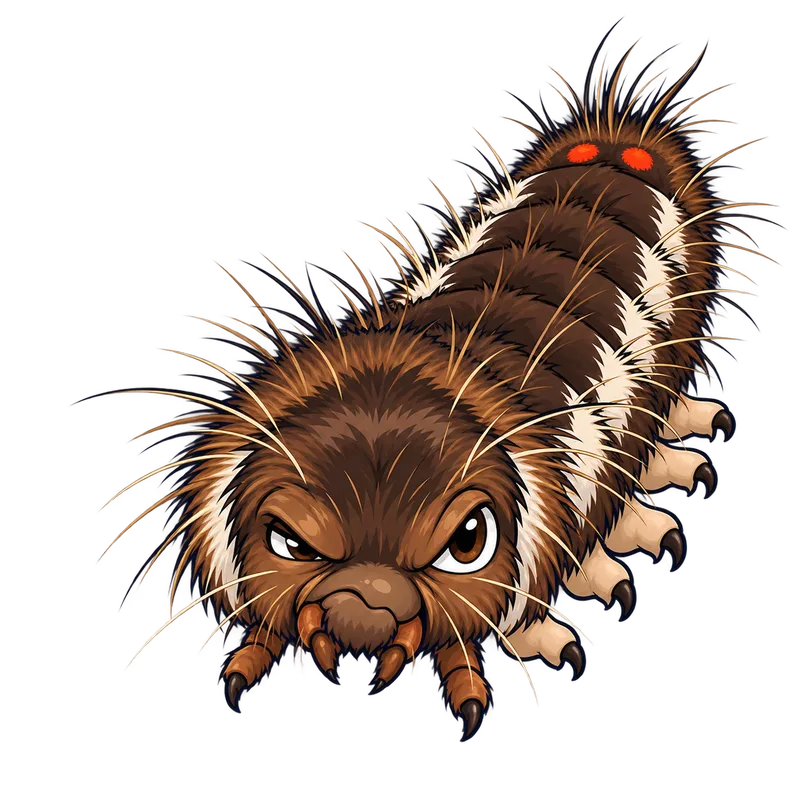
Once spring arrives, the caterpillars emerge and usually display a dark brown body marked by a broken white stripe on each side and two distinct red-orange spots near the tail end. Later in the summer, you might see adult moths with pure white wings and a brown tuft at the tip of the abdomen flying around porch lights. Curiously enough, the adult moths have non-toxic hairs and do not cause skin rashes, meaning the public health risk is entirely restricted to the caterpillars, the cocoons, and the dry environmental hairs left behind.
What usually comes next
Once you check the county updates and confirm you are dealing with an active infestation on your property, you have to decide how to handle it based on where the nests are located. If you spot those small silken webs on low-hanging branches of your apple, oak, or rugosa rose bushes in February, you usually want to grab a pair of hand pruners and clip them off. Make sure you drop the clipped webs directly into a bucket of soapy water or burn them so the larvae cannot crawl back out.
When the nests are sitting high up in a mature tree canopy beyond your reach, your practical choices shift. Home pruning from a ladder is usually a bad idea when you are dealing with fragile winter branches and high-voltage power lines nearby. That is the moment to look for a licensed arborist or a certified pesticide applicator who has the equipment to reach the upper canopy safely.
If you are doing yard work during the active feeding season, timing matters just as much as tools. You usually want to tackle outdoor raking or pruning on damp or rainy days because moisture weighs down the microscopic barbed toxic hairs and keeps them from floating into the air. Always wear protective gear like an N95 respirator mask, safety goggles, and long sleeves if you must disturb infested foliage when things are dry.
When to get help
Most mild rashes from browntail moth hairs can be managed at home by washing the skin with mild soap and cool water, applying soothing lotions, and taking oral antihistamines. Some municipal health departments even suggest simple topical mixtures of hydrocortisone and diphenhydramine cream to quiet the itching.
However, you should seek professional medical care immediately if an exposed individual experiences severe breathing difficulty, wheezing, swelling of the mouth or throat, or trouble swallowing. Those are signs of a serious systemic reaction that requires emergency intervention, as the airborne hairs can trigger severe respiratory distress in sensitive people.
For large-scale property management, when infestations spread across entire neighborhoods or threaten high-use public areas, towns often rely on a Public Health Nuisance Declaration under state statute. This legal mechanism allows municipal officers to petition the state health department so they can authorize local management plans and public funds for spraying on private lands. If your property is part of a heavy regional outbreak, keeping an eye on your local municipal announcements will tell you when public suppression efforts are swinging into gear.