
How is a browntail moth caterpillar different from other Maine caterpillars?
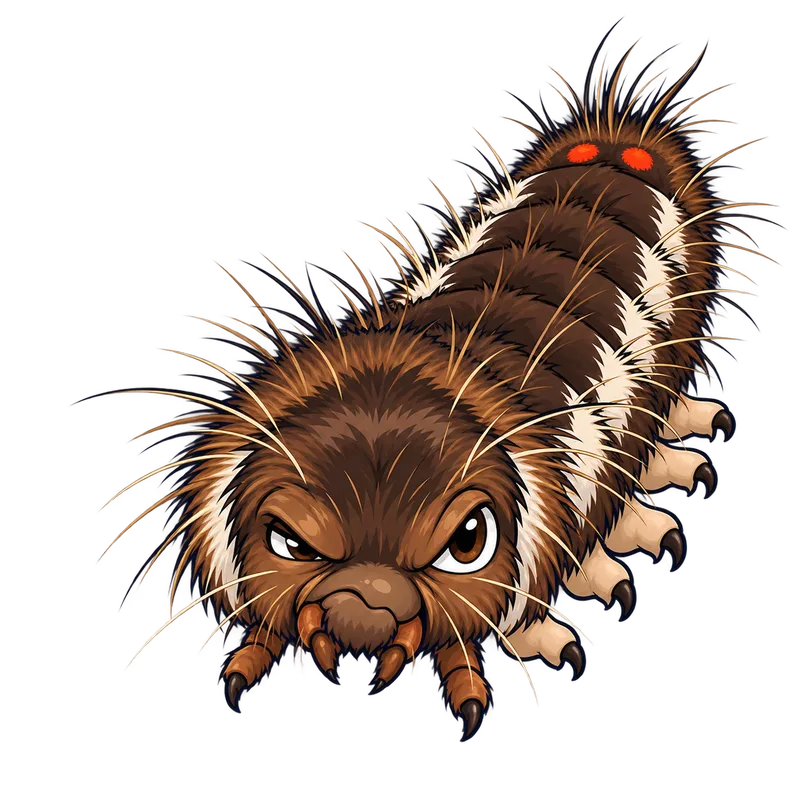
The browntail moth caterpillar is distinguished from other Maine caterpillars by its dark brown body, a broken white stripe along each side, two conspicuous reddish-orange spots near the tail, and microscopic barbed hairs. These toxic hairs cause severe contact dermatitis and respiratory distress.
What is actually going on
Picture stepping out onto your porch on a bright morning in June, coffee in hand, ready to admire the new leaves on your oak tree. A few days later, you wake up with an intensely itchy, red rash across your arms that looks remarkably like poison ivy, even though you have not stepped foot in the woods. You might even suspect bed bugs or fleas, wondering how bites could appear overnight while you were safely asleep. The culprit behind that mysterious misery is not an insect bite at all, but a tiny invasive caterpillar dangling from the branches above, or simply shedding hairs that drifted across your yard on the wind.
The browntail moth caterpillar is uniquely distinguished from all other Maine caterpillars by the combination of a dark brown body featuring a broken white stripe along each side, two conspicuous reddish-orange spots near the tail, and microscopic barbed hairs that contain a persistent toxin causing severe contact dermatitis and respiratory distress. While other caterpillars might munch on your garden foliage without leaving a mark, this European import comes heavily armed. Those two reddish-orange spots on the rear back act almost like tiny twin tail-lights, making the pest easy to identify once you know what to look for.
Why do these hairs cause such widespread misery long after the caterpillar has moved on? The microscopic bristles function like thousands of tiny barbed fishhooks that easily break off and become airborne during lawn mowing, leaf raking, or even a warm afternoon breeze. They carry a chemical toxin that triggers histamine-like skin eruptions and mucosal inflammation if inhaled. Worse yet, that chemical is remarkably stable in dry environments, meaning old winter webs, shed skins, and abandoned cocoons can remain hazardous for up to 3 years. When you hang your laundry outside on a sunny afternoon in June, those floating hairs embed themselves straight into your bedsheets, leading to that baffling midnight itching.
How to tell for sure
Telling a browntail caterpillar apart from native lookalikes comes down to spotting a few specific markings, though you usually need to look closely without actually touching the creature. The browntail features a dark brown body, a broken white line down each side, and those two bright reddish-orange spots on the rear back.
By contrast, common native lookalikes have entirely different wardrobes. The eastern tent caterpillar features a solid white stripe right down the middle of its back flanked by pale blue spots, and it builds large silk tents in branch crotches during the spring rather than wrapping individual leaves at the twig tips. The forest tent caterpillar displays white keyhole-shaped spots along its back that resemble tiny footprints. Meanwhile, the fall webworm builds large, loose, sprawling webs enveloping entire branch tips in late summer and autumn, long after the browntail season has peaked.
Winter is actually the best time to confirm an infestation, because deciduous trees have dropped their leaves and exposed the evidence. Browntail caterpillars overwinter inside small white silk webs measuring 2 to 5 inches long, tucked right at the very tips of host tree twigs like oak, apple, crabapple, or cherry. Crucially, they wrap the leaf petiole tightly to the twig with bright white silk to ensure the nest survives winter gales. If you spot a large, messy web sitting in a tree crotch, or a ragged, empty web left over from late summer, you are usually looking at a harmless native species instead of a browntail nest.
What usually comes next
When you discover those small, silk-wrapped winter nests at the tips of your fruit or shade trees, you generally have a narrow window to act before spring arrives and the hungry larvae emerge. Between November and February, when the trees are bare and the caterpillars are dormant inside, you can often handle the removal yourself if the nests are within safe reach from the ground.
Equip yourself with pole pruners or hand shears, and simply clip the twig containing the suspicious white web. Do not let it drop onto the lawn where larvae might survive the winter. Instead, drop the clipped nest directly into a bucket of water mixed with liquid dish detergent and let it soak thoroughly, or burn it completely in an incinerator. If your favorite oak tree hosts nests high up in the upper canopy where you cannot reach them safely with a pole saw, manual clipping becomes impossible, meaning you will usually need to pause and bring in a professional arborist with bucket trucks or specialized gear.
When spring gives way to early summer and the caterpillars become actively mobile, yard work changes entirely. Try to schedule lawn mowing, gardening, or tree trimming for damp, rainy days, or wet down the ground with a hose first so dry toxic hairs stay put instead of floating into the air. Always wear protective clothing like long sleeves tightly fastened at the wrists, gloves, and a mask if you must work near infested trees.
When to get help
While mild rashes can usually be managed at home with cool showers, 1% hydrocortisone cream, and oral antihistamines, certain situations demand immediate escalation. You should seek emergency medical care right away if exposure leads to any difficulty breathing, shortness of breath, severe wheezing, or noticeable swelling of the mouth, lips, tongue, or throat. Those are classic signs of severe systemic hypersensitivity and anaphylaxis that require professional medical intervention without delay.
Beyond personal health emergencies, property-wide infestations often require outside authority. If mature oak trees or tall shade trees on your property are completely overrun and the webs are entirely out of reach, a licensed arborist or professional pesticide applicator needs to step in with proper equipment and state-approved treatments. When local infestations become so severe that an entire neighborhood suffers from constant outbreaks, municipal officers can petition the state for an official public health nuisance declaration. That legal step grants local governments the authority to use public funds for suppression efforts on private lands, turning an individual backyard headache into a coordinated community solution.