
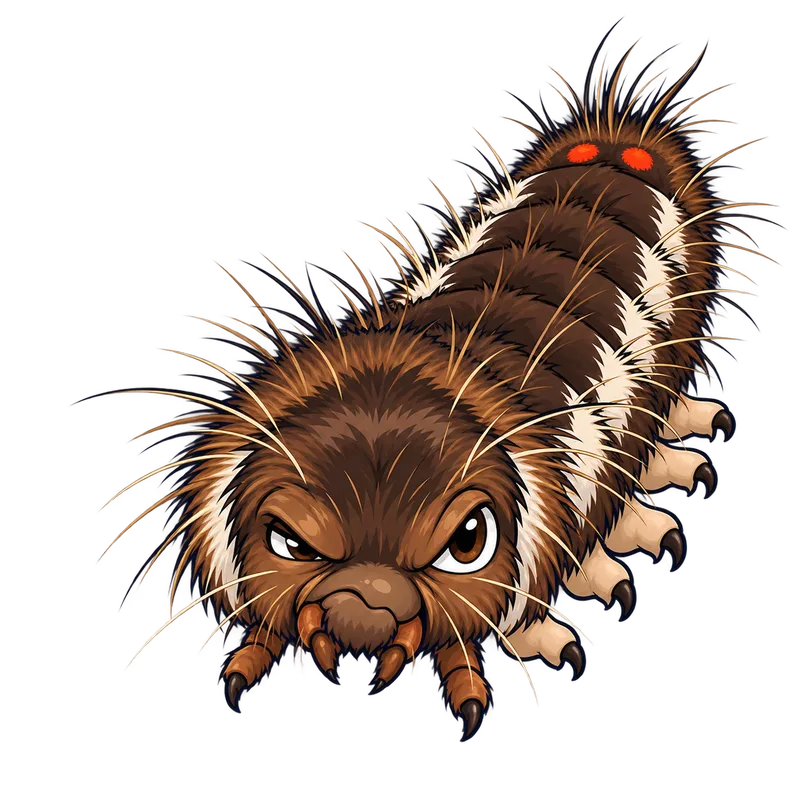
Browntail moth
Euproctis chrysorrhoea
- Size
- 1.5 inches wingspread
- Color
- Solid white wings, brown abdominal tuft
- Habitat
- Deciduous forests, orchards, suburban yards
- Diet
- Hardwood foliage, especially oak and fruit trees
- Life cycle
- One generation per year
The browntail moth is an introduced pest most commonly encountered in coastal and inland Maine and Cape Cod, Massachusetts. When you spot a white moth fluttering around your porch light in midsummer, you might wonder if it is the culprit behind itchy skin. The adult moth itself does not possess toxic hairs. The real trouble comes from the caterpillar and its cocoon, which carry microscopic barbed hairs that remain chemically active in the environment for up to 3 years in dry, sheltered conditions.
Identity
Telling this caterpillar apart from other common tree-dwellers comes down to a few distinct marks. Mature caterpillars reach roughly 1.5 inches in length and display a dark brown to black body covered in hair tufts. If you look closely, you will see a broken white longitudinal line running down each side of the body, accompanied by two distinct, unpaired, reddish-orange spots on the upper surface of the posterior abdominal segments. Several other species are easily confused with this moth, including the fall webworm and the Virginian tiger moth, but none share this exact pattern of bodily stripes and red-orange dots.
Habitat & behaviour
You will find this species in deciduous forests, fruit orchards, suburban landscapes, and coastal scrub. The caterpillars have a strong appetite for hardwood trees and shrubs, particularly members of the rose family like apple, crabapple, cherry, and oak. When populations surge, later-instar caterpillars can even survive on conifers if the broadleaf trees are stripped bare.
The life cycle is tied closely to the seasons. Overwintered caterpillars emerge from their silken nests in April as tree buds open, feeding communally before spinning cocoons in June. Adult moths fly at night during July and August, strongly attracted to artificial lights. After mating, females lay eggs on host foliage and cover them with brown hairs from their own bodies. In late summer, the newly hatched larvae feed and then weave dense winter nests at the very tips of twigs.
Visual variations
Both male and female adult moths wear solid white wings and matching white thoraxes, but you can tell them apart by looking closely at the abdomen. Females sport a white upper abdomen that terminates in a thick, wide tuft of dark reddish-brown hairs. Males go the other way with brown coloring spread across most of the upper abdomen, finishing in a narrower brown tuft.
Those appearances shift wildly as the insect moves through its life. Females lay eggs in clusters draped in brown body hairs. Tiny early caterpillars start out small, brown, and hairy, featuring a dark gland right behind the head where those notorious barbed hairs begin. Older larvae stretch up to 1.5 inches long, showing off the signature broken white stripes down their sides and the pair of red-orange dots near the rear. Tucked away inside silken cocoons packed with shed hairs, the pupae turn smooth and glossy, shifting from reddish-brown to dark brown.
Why it matters
Year-after-year defoliation strips leaves clean from oak and fruit trees, wearing down their strength and leaving them vulnerable to secondary pressures. Beyond the tree damage, the creature delivers a notorious human health punch. Touching caterpillars, cocoons, or even breathing in stray hairs floating around the yard leads to severe contact dermatitis. You end up with angry red skin rashes, swelling, and an intense itch that feels an awful lot like poison ivy or nasty bug bites. Catching those airborne hairs in your lungs can also trigger respiratory irritation, lingering coughs, headaches, and trouble breathing.
If you spot a rash, swelling, or relentless itching after working in the yard, head over to a clinician, primary care provider, or urgent care clinic to get checked out. Call emergency services right away if breathing gets tough, swallowing becomes a chore, or you notice the mouth, tongue, or throat swelling up. As for management, property owners can clip away low, reachable winter nests measuring 2 to 5 inches across during the cold months using pole pruners, then drop those clipped nests into soapy water or burn them. Reaching high canopies or handling wide-scale tree spraying demands a licensed commercial pesticide applicator to avoid nasty falls and massive exposure to airborne hairs.
Similar species
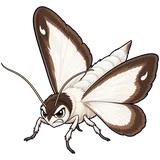 Box tree mothCydalima perspectalis
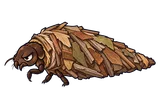 BagwormThyridopteryx ephemeraeformis
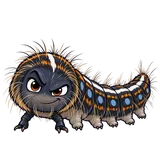 Eastern tent caterpillarMalacosoma americanum
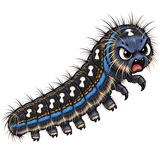 Forest tent caterpillarMalacosoma disstria
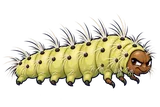 Fall webwormHyphantria cunea
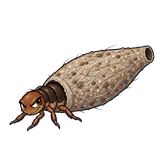 Household casebearer (plaster bagworm)Phereoeca uterella