
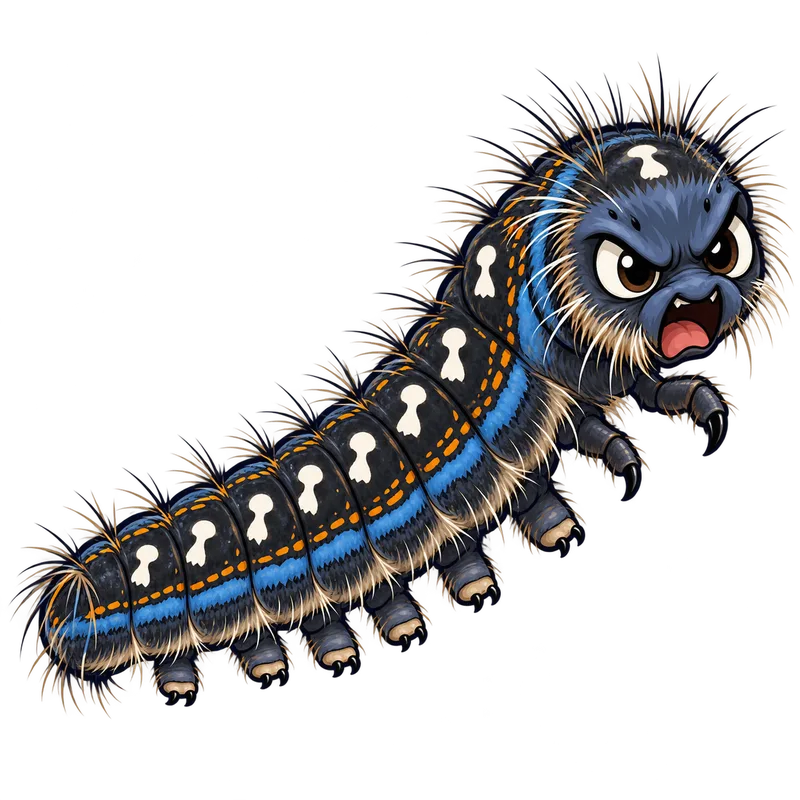
Forest tent caterpillar
Malacosoma disstria
- Size
- Not established
- Color
- Not established
- Habitat
- Broadleaf tree hosts and orchard canopies
- Diet
- Foliage of trees such as oak, maple, and birch
- Life cycle
- Overwinters as egg masses, hatching in early spring
The forest tent caterpillar is a native pest that feeds on the foliage of broadleaf trees across North America, and you will usually run into it when thousands of crawling larvae suddenly appear in your yard and begin stripping your shade trees bare. Despite sharing a family name with other silk-spinning insects, this creature defies expectations by refusing to build a communal tent. You will not find a silken web in the branch crotches. Instead, you will see the caterpillars themselves marching single file along trunks or clustering on bark. People often mistake them for other defoliating insects because the damage looks similar, but the lack of a tent is your first clue that you are dealing with this specific species.
Identity
Spotting them requires looking closely at the caterpillars as they feed on host leaves. To tell them apart from the eastern tent caterpillar, check the branch crotches. The eastern species builds a prominent, dense silken web in the forks of branches where it aggregates at night, whereas the forest tent caterpillar does not construct a tent. The fall webworm creates similar silken nests over branch tips, but it shows up later in the season during late summer, whereas forest tent caterpillars emerge in early spring as new leaves open. Meanwhile, the gypsy moth caterpillar also lacks a tent, but it is managed with distinct methods like egg mass scraping and burlap skirts, and carries different larval markings.
Habitat & behaviour
You will run into these caterpillars wherever deciduous woods and suburban properties hold their favorite trees, like ash, basswood, birch, chokecherry, cottonwood, elm, maple, oak, and garden apple trees. Local extension offices usually suggest skipping wild cherry and flowering crabapple near high-traffic yard spots if you want to keep host pressure low. Everything kicks off in early spring when tiny larvae hatch right as leaf buds begin to open. They spend their days chewing through leaves right out in the open canopy. Numbers peak in local hotspots every few years, but helpful predators like tachinid flies, parasitic wasps, birds, viruses, and fungi usually step in to keep populations from taking over completely.
Visual variations
The calendar starts with overwintering egg masses glued tight around thin twigs like dark bracelets during the dormant months, leading straight to hungry caterpillars hatching in April with the first leaves. Those tiny, newly hatched larvae measure under 0.5 inches long, marking the exact window when biological controls actually stand a chance of working. As the caterpillars grow through their later stages, they put on serious size and become much harder to treat. Moths show up later after pupating, finishing off a spring timeline where the eating stops entirely by early summer.
Why it matters
When an outbreak hits, your shade and fruit trees can lose their entire canopy, leaving them stressed, looking ragged, and dropping fruit yield on things like apples. A healthy, mature tree can usually handle getting stripped once, but getting hit year after year is a fast track to long-term decline. If you decide to treat them, every chemical and biological product has to follow EPA label instructions to the letter without any homebrew adjustments. Big shade trees usually need high-pressure commercial gear and a licensed pro to spray safely, and you should never take a torch to branches because fire ruins bark way faster than caterpillars ever could. If you run into odd skin reactions, marks, or health issues after working outdoors, step away from the internet and talk to a doctor, urgent care clinic, or poison control center instead.
Similar species
 Fall webwormHyphantria cunea
 Household casebearer (plaster bagworm)Phereoeca uterella
 Indianmeal mothPlodia interpunctella
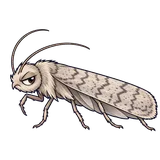 Mediterranean flour mothEphestia kuehniella
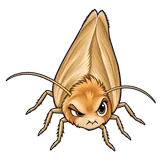 Webbing clothes mothTineola bisselliella
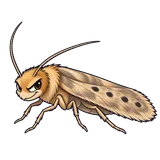 Casemaking clothes mothTinea pellionella