
Eastern vs forest tent caterpillars: do they build the same kind of tent?
No, Eastern and forest tent caterpillars do not build the same kind of tent. While the Eastern tent caterpillar constructs thick, silken web-nests in the branch forks of host trees, the forest tent caterpillar does not build a tent or web-nest at all and instead rests in flat mats on tree trunks.
What is actually going on
Imagine walking out to your favorite backyard crabapple tree on a crisp April morning, only to notice a shimmering, grayish clump of silk wedged neatly in the fork of a branch. A couple of weeks later, your neighbor points out a swarm of dark, hairy caterpillars marching in a tight line up the thick, smooth bark of a nearby oak tree, but you notice they have left zero webbing behind. It is easy to assume all fuzzy spring caterpillars share the same interior-decorating habits, but nature is rarely that uniform.
No, they do not build the same kind of tent. While the Eastern tent caterpillar constructs thick, silken web-nests in the branch crotches of host trees, the forest tent caterpillar does not construct a tent or web-nest at all.
This behavioral split comes down to how these two close cousins manage their daily routine. The Eastern tent caterpillar is a true web-builder. When spring leaves start to unfurl, colonies of young larvae spin a dense, multi-layered silken tent right in the major forks of host trees. Think of it like a cozy cabin where they gather during cold nights and damp mornings, heading out to neighboring foliage only when the sun warms up the canopy.
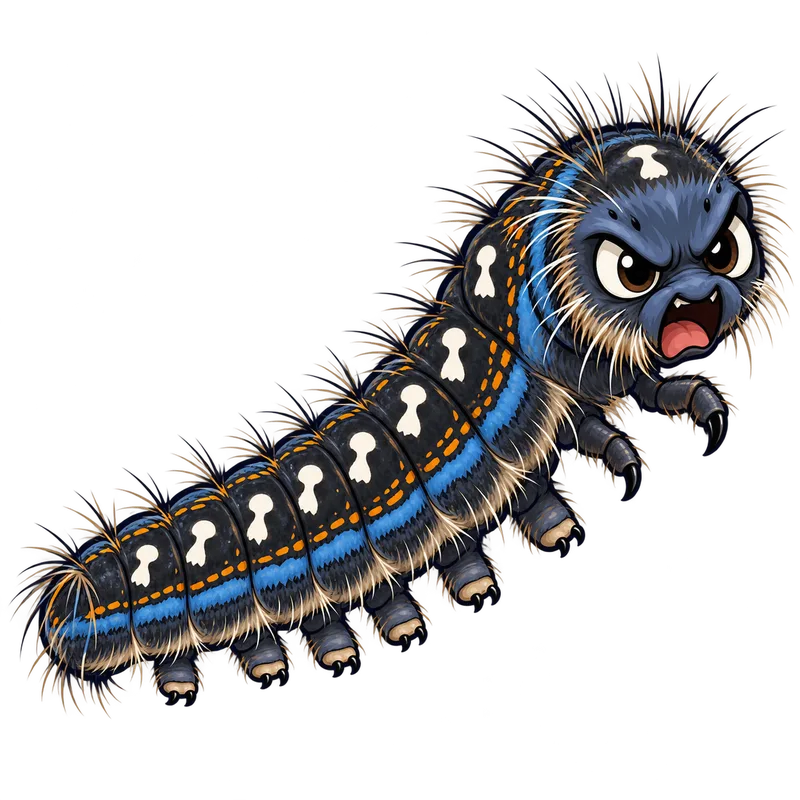
The forest tent caterpillar, despite its misleading name, refuses to build a roof over its head. Instead of constructing an enclosed nest, these larvae aggregate in flat, dense mats directly on the bark of tree trunks or larger limbs when they are resting between feeding bouts. Picture an open-air camp where everyone piles together on a single blanket on the trunk to soak up the sun, rather than retreating indoors.
How to tell for sure
Telling them apart usually comes down to location, timing, and a quick look at the tree structure. Eastern tent caterpillars almost always set up their architecture in the main crotches or forks of trees in the rose family, such as wild cherry, flowering crabapple, and domesticated apple.
If you are seeing caterpillars munching on hardwoods like oak, maple, ash, or birch with no silk in sight, you are usually looking at forest tent caterpillars. If you happen to grab a magnifying glass and get a closer look at the larvae themselves, the visual differences become even clearer. Eastern tent caterpillars usually feature a solid, continuous white stripe running right down the middle of their backs, bordered by blue lines and reddish-brown markings. Forest tent caterpillars usually display a row of distinct, keyhole-shaped or footprint-shaped white or yellow spots along their backs instead of a solid line.
You also want to watch out for timing mix-ups. Any silken webbing you spot high out on the tips of branches during late summer or fall belongs to the fall webworm, not the Eastern tent caterpillar. Eastern tent caterpillars emerge exclusively in the spring.
What usually comes next
Once you figure out which caterpillar you are dealing with, you have to decide whether to step in or just let the season play out. If you have a small cluster of Eastern tent caterpillars, knocking the nest down manually is usually the easiest route. You can simply scrape the silken tents right out of the branch forks during the early morning or late afternoon when the larvae are huddled up inside. Drop the whole mess straight into a bucket of warm, soapy water.
One thing you should never try is burning the nest out with a propane torch. That is a fast way to char the living bark and destroy the delicate cambium layer underneath, which causes far more permanent damage to the tree than a colony of hungry insects ever could. If your problem is forest tent caterpillars instead, you can brush those resting clusters right off the bark and into your soapy bucket.
When you prefer using a spray, biological options can be effective, but timing is everything. These organic bacterial treatments only work while the caterpillars are tiny and actively eating the leaves. Once the larvae grow larger, the spray stops doing much of anything. Always read the product label for the exact mixing instructions and safety precautions before treating any trees in your yard.
When to get help
Most healthy, mature trees can easily bounce back from a single season of heavy leaf loss by pushing out a fresh flush of foliage later in the summer. However, young trees, newly planted saplings, or older trees already dealing with severe drought stress may struggle to survive repeated heavy feeding.
If the infestation is sitting high up in the canopy of a massive shade tree, leave the extension ladder in the garage. Trying to reach high branches or spray overhead without commercial equipment is a fast way to end up in the emergency room. Large, mature trees with heavy infestations usually require a licensed certified arborist or a professional pesticide applicator equipped with proper power gear, mist blowers, or specialized trunk treatments.
Should you or anyone in your household handle caterpillars and experience an unexplained rash, persistent skin irritation, eye trouble, or an allergic reaction, stop trying to guess the cause at home. Direct the affected person to a physician, an urgent care clinic, or your local poison control center right away.