
What does box tree moth caterpillar damage look like?
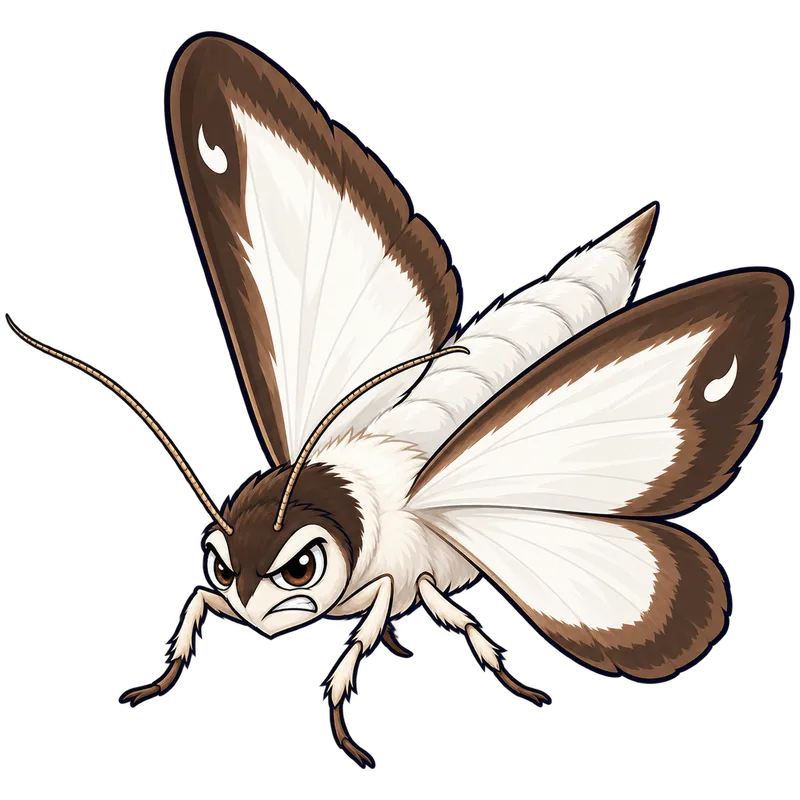
Box tree moth caterpillar damage starts as dull and papery pale translucent patches on individual leaves that look like scraped windowpanes. As the larvae grow, they wrap twigs in thick silken webbing and eat the entire leaf down to a bare network of veins and central midribs.
What is actually going on
You are out in the yard with your morning coffee, stopping to admire your favorite boxwood hedge, and you notice something looks decidedly wrong. The leaves near the middle are turning a dull, papery pale color, and when you look closer, there are strange threads wrapped around the twigs like a messy spiderweb. Box tree moth caterpillar damage looks like a progressive and severe disfigurement of boxwood shrubs, moving from subtle translucent patches on individual leaves to total skeletonization of the foliage wrapped in thick silken webbing. If you have ever scraped paint off a glass windowpane, you have a good mental picture of the early stage. Young caterpillars chew only the lower layer of the leaf and the soft green tissue inside, leaving the upper surface completely intact as a clear, see-through window that soon turns brown and dry. As those caterpillars grow up, their appetite picks up speed in a serious way. Older larvae spin structural silk tents and webs that bind adjacent leaves and twigs together, hiding right inside this messy matrix. Once they settle into these webbed nests, they eat the entire leaf down to the skeleton. If you want a quick visual comparison, think of how a corn cob looks after someone finishes eating it. The caterpillars strip away every bit of soft green material and leave behind a stark, bare network of central midribs and veins still attached to the bare branches.
The core issue here is a hungry invasive caterpillar that treats your ornamental boxwoods as an endless buffet. Because boxwood leaves are naturally thick, leathery, and evergreen, tiny newly hatched caterpillars lack the jaw power to bite right through the tough upper skin of the leaf. They stay on the underside and scrape away the softer inner material. This gives you those subtle, parchment-like windowpanes that you might easily mistake for sunscald or mild drought stress if you do not know what to look for.
As the weeks roll on, those small caterpillars mature into larger, voracious eaters with very different habits. They start weaving coarse, structural silk around the inner branches to protect themselves from predators and harsh weather. Inside this shelter, they chew through entire leaves rather than just nibbling the undersides. You will usually find dark greenish-black droppings, which entomologists call frass, trapped right in the webbing alongside shed caterpillar skins. That combination of bare ribs, structural silk, and accumulated waste gives the interior of the shrub a decaying, scorched appearance.
The damage is rarely distributed evenly across the whole plant at once. It almost always starts deep in the sheltered, shaded center of the bush where butterflies prefer to lay their eggs, which explains why a hedge can look perfectly fine from the pavement while the inside is quietly being hollowed out. By the time the webbed nests and skeletonized leaves push outward to the visible edges of the plant, the caterpillar population is already large enough to cause massive canopy dieback. If they run out of leaves entirely, desperate late-stage larvae will even chew the green bark off the stems, which can ring the branch and kill it outright.
How to tell for sure
To know for certain whether you are dealing with box tree moth caterpillars or something else entirely, you have to look past the outer appearance of the shrub. Part the dense outer stems and peer deep into the interior canopy, because that is where the evidence usually lives first.
You are usually looking for a combination of specific clues rather than just one isolated sign. If you see fine, dusty webbing accompanied by tiny yellow dots on the leaves, you are probably looking at common boxwood spider mites instead. Box tree moth silk is distinctly coarse, thick, and structural, wrapping around large clusters of leaves that have been stripped down to bare veins.
A hand lens with 10x magnification helps if you want to inspect the leaf undersides for early windowpanes or tiny micro-larvae before the heavy webbing appears. You can usually confirm the culprit with the naked eye once the caterpillars grow larger and leave behind those dark frass pellets tucked into the silk. If your boxwood shows uniform yellowing from root rot or fungal blight, the leaves will stay whole and limp, whereas box tree moth damage leaves behind physical missing tissue and stiff, skeletonized midribs.
What usually comes next
Once you spot the telltale webbing and skeletonized leaves, you have to make a practical choice about how to intervene based on the size of the infestation. If you catch it early on a small garden shrub, physical removal is often the most straightforward path. You can put on a pair of gardening gloves, pull the caterpillars and webbing out by hand, or prune away the affected branch tips and drop them straight into a bucket of soapy water.
When an infestation is too widespread for hand-picking but still made up of young, active caterpillars, many gardeners turn to biological sprays containing Bacillus thuringiensis, commonly known as Bt. This is a naturally occurring soil bacterium that disrupts the digestive tracts of young caterpillars when they swallow it. Timing is everything here, because Bt only works if it is ingested by small, actively feeding larvae before they spin heavy protective webs. You have to spray thoroughly enough to coat the lower leaf surfaces and penetrate deep into the interior canopy where the caterpillars hide, because a contact spray that misses the insect will not do much good.
Bt loses its punch against large, mature caterpillars that have outgrown the vulnerability window or tucked themselves securely inside dense silken nests. Waiting too long to take action usually means watching your prized boxwoods lose most of their foliage in a single season.
When to get help
There are moments when managing this pest crosses the line from a weekend gardening chore to a situation requiring professional or official intervention. If you spot heavy webbing and rapid defoliation in a region where box tree moth has not yet been officially established or widely reported, you should pause before treating or disposing of the plant. Take clear photographs of the caterpillars, the webbing, and the damage, and report the sighting immediately to your local agricultural extension office or national plant protection agency, such as the Canadian Food Inspection Agency if you are in Canada.
Commercial nurseries, public parks, and large historic estates with valuable formal boxwood plantings usually need to bring in licensed pesticide applicators and professional arborists. Wide-area spray programs require specialized equipment to reach the deep interior canopy, and professionals ensure that treatments comply with strict local plant health regulations and product label restrictions. If your boxwoods are suffering from severe dieback and stem girdling, a professional assessment can also tell you whether the plants can recover or if they need to be removed to protect neighboring landscape plants.