
What does a tomato hornworm turn into?
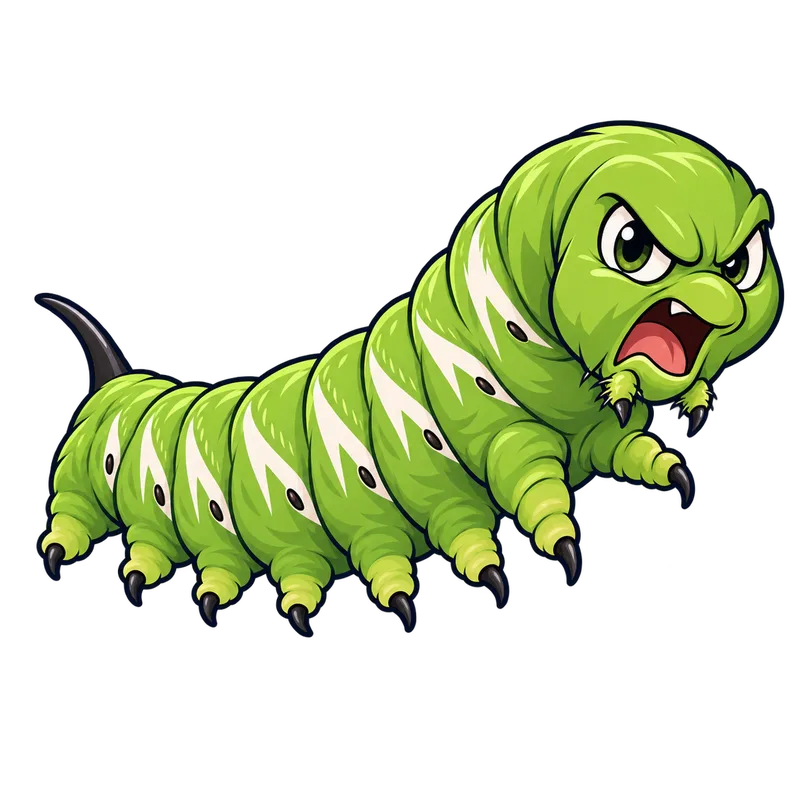
The tomato hornworm turns into a heavy bodied, long winged, fast flying sphinx moth, which is also called a hawk moth. This change happens underground after the caterpillar burrows into the soil and pupates inside a small chamber.
What is actually going on
On Monday the tomato plants looked fine. By Thursday the top of one plant has been stripped to bare stems, a green tomato has a chunk bitten out of it, and there are dark pellets scattered on the leaves below. You finally spot the culprit: a fat green caterpillar, almost the length of your finger, with white diagonal stripes down its sides and a pointed horn at its back end. It is so well camouflaged you had looked straight at it twice.
That is a tomato hornworm, and it turns into a moth. Not a small one either. It becomes a heavy bodied, long winged, fast flying sphinx moth, also called a hawk moth. There are actually two closely related species behind the name: the tomato hornworm and the tobacco hornworm. Both feed on tomatoes the same way, both leave the same damage, and both end up as large sphinx moths.
The change happens underground. Like butterflies and other moths, hornworms go through a complete transformation in four stages: egg, caterpillar, pupa and adult. When the caterpillar has finished eating, it climbs or drops off the plant, burrows into the soil and builds a small chamber there. Inside that chamber, as a pupa, its body is reorganized from a leaf chewing tube into a winged moth that will eventually dig its way up and fly off.
How to tell for sure
The caterpillar is easy to recognize once you know what you are looking for: bright green, white or pale diagonal stripes along the sides, and that distinctive horn at the rear. A fully grown one can reach about four inches.
Finding it is harder than recognizing it. Look at the tops of the plants first, where hornworms prefer to feed, for stems stripped down to the midribs and scars chewed into green fruit. Then check the leaves underneath for their droppings, which are large and dark and often easier to spot than the caterpillar itself.
A couple of other caterpillars get mixed up with hornworms. The tomato fruitworm, which is the same insect as the corn earworm, only reaches about an inch, comes in shades from green to brown, pink or nearly black, and bores straight into the fruit. The cabbage looper is a paler green measuring worm up to about an inch and a half that arches its back as it crawls, and it mostly goes after cabbage family crops and lettuce. And the parsleyworm, the caterpillar of the black swallowtail, has black bands with yellow and white spots and feeds on the carrot family, not tomatoes.
Why does a hornworm seem to appear overnight? It was there all along. Earlier, it was small and ate little, and the growing plant hid it well. Then it hits its last stage before pupating, and that final stretch is when it does around nine tenths of all its eating. What looks like a sudden invasion is really one caterpillar finishing its meal.
What usually comes next
In a home garden, the simplest method works best: pick them off by hand and drop them into a jar of soapy water. It is not elegant, but for a handful of plants nothing beats it, and it works at any size.
Before you pick, take one more look. If a hornworm has small white bumps on its back that look like grains of rice, leave it alone. Those are not hornworm eggs. They are the cocoons of tiny parasitic wasps whose larvae grew up inside the caterpillar, and that caterpillar is already finished as a pest. Leave it in the garden, and the wasps that emerge will go looking for other hornworms. Throwing it out is like firing your best unpaid gardener.
Sprays are where timing matters most. Products such as Bt, a bacterial insecticide the caterpillar has to eat, work well only on small hornworms, under about half an inch long. Once they are big, sprays lose most of their punch, and handpicking is the only reliable option left. So if you plan to spray at all, you have to start early in the season, before you ever see a big one.
Anything you do spray on a food crop comes with a label that says how long to wait between spraying and harvest. Those waiting periods vary a lot. Bt, for instance, is commonly labeled for use right up to the day of harvest, while some synthetic insecticides require a wait of a few days. If you are about to pick, the label decides which products are even an option. Follow it, and never use a product on a crop it does not list.
When to get help
A home garden rarely needs outside help for hornworms. If you are growing on a larger scale, or considering restricted use insecticides, those decisions belong to a licensed pesticide applicator, and your local extension service can help you plan.
If anyone in the household gets a pesticide on the skin, swallows one or has a strong skin reaction while working in the garden, contact a physician, an urgent care clinic or poison control rather than waiting it out.
For most gardeners, the plan is short: check the tops of your tomato plants often, pick off the big green ones, spare the ones wearing white cocoons, and remember that every hornworm you miss is a future sphinx moth looking for a tomato plant to lay eggs on.