
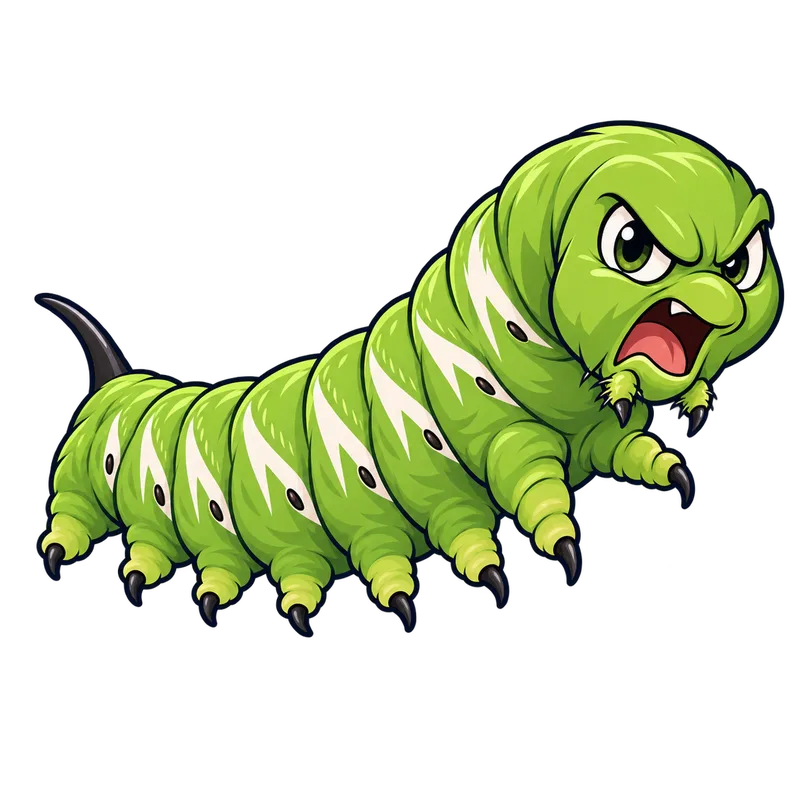
Tomato hornworm
Manduca quinquemaculata
- Size
- Up to 4 inches long
- Color
- Green with diagonal white side lines and a rear horn
- Habitat
- Vegetable gardens and plantings with nightshade family crops
- Diet
- Leaves, stems, and green fruit of tomatoes and related crops
- Life cycle
- Not established
The tomato hornworm is a large, green caterpillar found active during the summer growing season in vegetable gardens and commercial plantings where nightshade crops like tomatoes grow. In practical garden management, this name covers a two-species pest complex consisting of the tomato hornworm and the tobacco hornworm. Both species share identical habits, appearance, and destructive feeding traits on Solanaceous crops.
Identity
The field marks that separate these hornworms from other garden insects start with a green body reaching a maximum length of up to 4 inches. Prominent white or pale diagonal lines run along the lateral sides of the body segments, and a distinct, pointed horn projects upward and backward from the rear end. They are easily confused with other caterpillars, but a few simple checks clear up the confusion. The parsleyworm reaches only about 2 inches, features black bands with yellow spots, and pops out orange horns from behind its head when disturbed, alongside a preference for parsley or carrots rather than nightshades. The corn earworm is much smaller at about 1 inch, lacks a rear horn, and burrows directly into tomato fruit instead of stripping the upper canopy. The cabbage looper and imported cabbageworm stick to brassicas, feature smaller sizes well under 2 inches, lack a tail horn, and display either a looping gait or a velvety texture. Cutworms hide near the soil, curl into a C-shape, and chew stems at ground level rather than feeding openly on the upper leaves.
Habitat & behaviour
These caterpillars inhabit vegetable gardens and agricultural fields wherever tomatoes and related nightshade plants grow. They stay in the upper canopy, resting along main stems and leaf veins where their green coloration provides effective camouflage despite their large size. A common puzzle for gardeners is walking out one morning to find the top of a tomato plant stripped bare, leading to the assumption that a horde of pests arrived overnight. That sudden defoliation is actually an illusion. The caterpillar has lived on that exact plant all along, but early feeding is light and hidden by fast vegetative growth. A hornworm consumes 90% of its total lifecycle foliage intake during the final larval stage immediately before pupation, which explains why the heavy damage appears so suddenly.
Visual variations
These caterpillars live solitary lives and never form colonies or shared nests. While you rarely spot the round eggs or underground pupae during a normal walk through the garden, the caterpillar stage itself goes through a dramatic growth spurt. Tiny and thin when they first hatch, they transform into heavy, plump giants by the time they hit that 4-inch mark. Sometimes you will spot one carrying rows of upright white cocoons that look remarkably like grains of rice stuck along its back. Gardeners often panic over these, assuming it is some bizarre disease or a clutch of strange pest eggs, but those little white cylinders belong to helpful parasitic wasps. Eventually, these caterpillars turn into large sphinx moths or hawk moths, though you are far more likely to notice the chewing damage than the flying adults visiting your garden at dusk.
Why it matters
Finding them in the garden means you are about to lose the upper leaves of your plants along with deep, ugly gouges chewed right into your green tomatoes. The good news is that they pose zero threat to people or pets because they cannot bite, sting, or drop irritating hairs on your skin. When you do stumble on a hornworm decorated with those white wasp cocoons, let it be so the beneficial insects can hatch and manage future pest numbers. Catching them early is the only way to stay ahead of the damage. People often wait until the caterpillars are huge and obvious, but treatments like organic Bacillus thuringiensis or standard sprays only work while the pests are under 1/2 inch long. Once they reach full size, those sprays bounce right off them, leaving handpicking as your best option for older caterpillars. Always check the product label for legal pre-harvest intervals before picking fruit, remembering that options like Bacillus thuringiensis, pyrethrins, and neem oil can be applied up to the day of harvest once dry, while chemical choices like carbaryl require a 3-day wait and malathion requires a 1-day wait.
Similar species
 Tobacco hornwormManduca sexta
 Codling mothCydia pomonella
 Spongy mothLymantria dispar
 Browntail mothEuproctis chrysorrhoea
 Box tree mothCydalima perspectalis
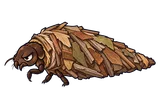 BagwormThyridopteryx ephemeraeformis