
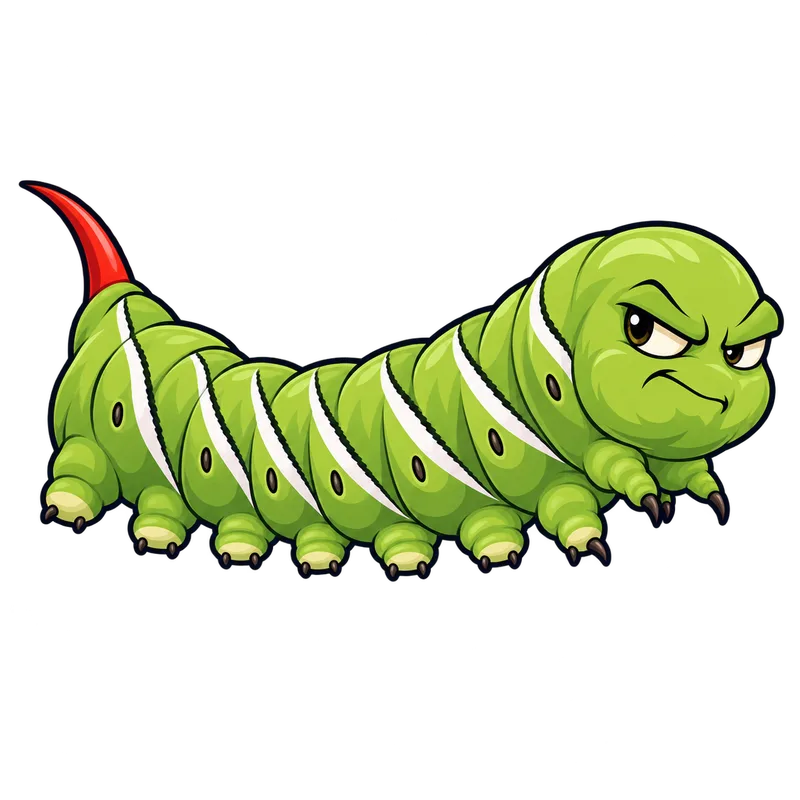
Tobacco hornworm
Manduca sexta
- Size
- Caterpillars reach 3 to 4 inches; wingspan 3.5 to 4 inches
- Color
- Pale or bright green with 7 white diagonal stripes, red horn
- Habitat
- Gardens, fields, and landscapes with solanaceous crops
- Diet
- Specialist herbivore on nightshade family plants
- Life cycle
- Egg, caterpillar, pupa in soil, and adult moth
The tobacco hornworm is the larval stage of Manduca sexta, a large, robust member of the sphinx and hawk moth family that is common across North America. When you find one chewing on your garden plants, you are looking at a caterpillar that reaches three to four inches at full maturity. The field marks are distinct once you know what to look for. The body is pale or bright green, though you will occasionally spot a brown morph, and it is marked along each side with seven straight, diagonal white lines that feature thin black margins. At the rear end sits a prominent, soft, red caudal horn.
Identity
Adults, known as Carolina sphinx moths, have a wingspan measuring three and a half to four inches. Their forewings are long and narrow, patterned in mottled gray, brown, and white to mimic tree bark, while the hindwings show dark transverse bands. The heavy, spindle-shaped gray abdomen carries six pairs of bright orange-yellow spots along its sides.
Habitat & behaviour
You will encounter this species in home gardens, commercial vegetable fields, and open landscapes wherever plants in the nightshade family are grown. The caterpillars are specialist herbivores that feed almost exclusively on solanaceous plants. In the garden, that means they target your tomatoes, peppers, eggplants, and potatoes, along with wild relatives like jimsonweed and wild tobacco.
Feeding starts at the top of the plant canopy and moves systematically downward. The caterpillars chew through leaf blades, tender stems, flower buds, and green developing fruit, leaving deep, irregular cavities that ruin the harvest. Adult moths are strictly nocturnal. They spend the daylight hours hidden and emerge from dusk until dawn to visit flowers for nectar, using agile hovering flight that resembles a hummingbird.
Visual variations
Growing up from an egg to a winged adult is a radical transformation. It starts as a tiny, round, and smooth light green egg that the female glues singly onto either side of a host leaf. Out of that egg crawls a hungry caterpillar that goes through several growth stages, staying remarkably hard to spot among the leaves thanks to its bright green suit.
When the caterpillar is finally done eating, it drops off the plant, digs a few inches down into the garden soil, and hardens into a dark reddish-brown pupa inside an earthen cell. You can spot this resting stage by its curved, pitcher-handle structure on the head, which is actually a casing for the developing mouthparts.
The adult moth eventually breaks out of that underground chamber with a heavy body and fully functional wings. Males and females share the exact same gray and brown tones, making it nearly impossible to tell them apart just by looking at them as they rest on a wall or tree trunk.
Why it matters
If you grow tomatoes, a single active caterpillar can strip a plant bare and chew ugly holes straight through your green harvest, especially if they sneak up on you in a greenhouse or raised bed. There is no need to panic about handling them, though, because they do not bite or sting, and that colorful tail horn is completely harmless to both people and pets.
Sometimes you will find a caterpillar carrying dozens of tiny, white, rice-like cocoons standing straight up on its back. Those are not pest eggs at all, but rather the nurseries of beneficial parasitic wasps. If you spot one covered in those white cylinders, leave it right where it is so the emerging wasps can do the heavy lifting for your garden.
Gardeners often mix up this species with the tomato hornworm because both of them treat your nightshade crops as a personal buffet. You can tell them apart by checking the stripes on the body, since the tobacco version has seven straight diagonal white lines paired with a red horn, while the tomato cousin shows eight V-shaped markings and a dark blue or black horn. Their adult forms look different too, with the Carolina sphinx moth carrying six pairs of orange-yellow spots along its belly instead of the five pairs you get on the five-spotted hawkmoth.
Similar species
 Codling mothCydia pomonella
 Spongy mothLymantria dispar
 Browntail mothEuproctis chrysorrhoea
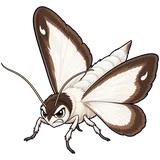 Box tree mothCydalima perspectalis
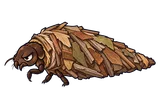 BagwormThyridopteryx ephemeraeformis
 Eastern tent caterpillarMalacosoma americanum