
What does a cabbage looper caterpillar look like?
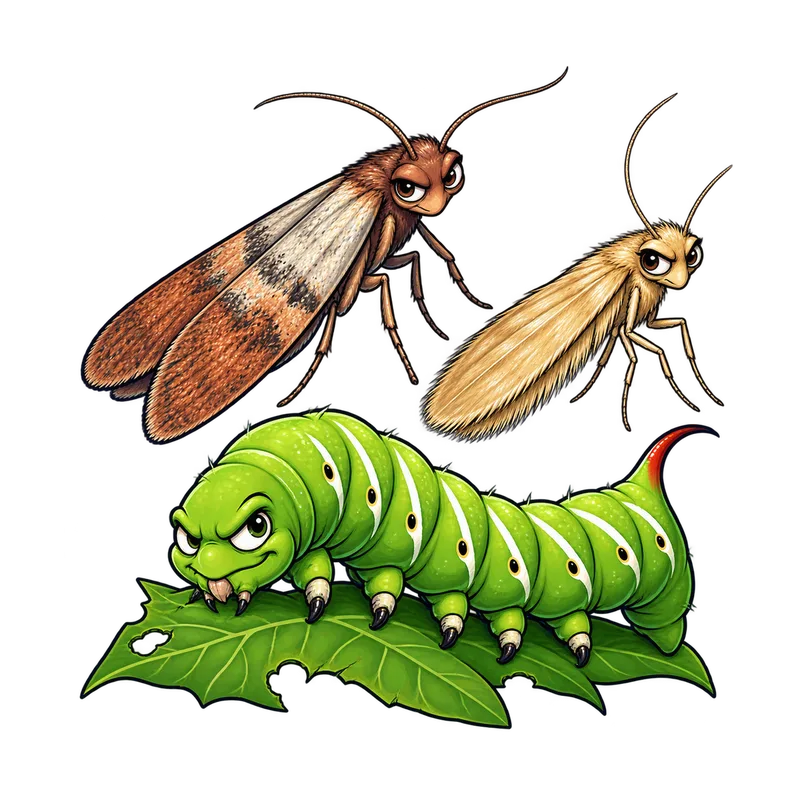
A cabbage looper caterpillar is a slender, pale green insect that can grow up to 1 and 1/2 inches long. Its body features thin white stripes running down the back and sides. When moving, it arches its back into a distinct loop like a measuring worm.
What is actually going on
You are standing in the vegetable patch on a quiet Tuesday morning, turning over a broad, waxy kale leaf, and you notice something is chewing right through your harvest. There are ragged, uneven holes punched through the green tissue, and resting quietly along the pale vein is a slender, pale green caterpillar. It matches the exact translucent shade of a fresh pea pod, which makes it wonderfully camouflaged until you look closer. When you nudge it with a twig, it does not crawl away flat like other garden bugs. Instead, it arches its back high into a distinct loop, pulls its rear end forward like a bent paperclip, and stretches out again in a classic measuring-worm motion.
That creature is a cabbage looper caterpillar, and it is likely causing the mysterious damage spreading across your cole crops and leafy greens. You might wonder how it gets around with such an odd gait, and the mechanics of it come down to its anatomy. Unlike standard caterpillars that have a full complement of prolegs spread out along their entire length, the cabbage looper lacks legs on its central abdominal segments. Because it has no middle support, it has to anchor its front and rear ends and draw the middle of its body up into a vertical arch to move forward. This unique movement is your first major clue to its identity, separating it from flat-crawling pests.
Beyond how it walks, you will find this caterpillar hanging out on a wide menu of plants in the garden. It is not overly picky, though it shows a strong preference for brassicas like cabbage, broccoli, kale, collards, Brussels sprouts, cauliflower, turnip, mustard, and kohlrabi. It also happily feeds on lettuce and will occasionally turn its attention to solanaceous crops like tomatoes, where it chews on both foliage and fruit. The life cycle moves at a steady pace, taking just over a month from egg to adult moth, which means you can easily see multiple overlapping generations pop up over the course of a single growing season if the weather stays warm.
How to tell for sure
Spotting a cabbage looper usually comes down to checking a few physical traits with your naked eye, though you can use a 10x hand lens for a closer look if you want to be completely certain. A mature cabbage looper can reach up to 1 and 1/2 inches in length, and its body is typically a pale green color marked by thin, parallel white stripes running lengthwise down its back and sides.
You should usually double-check the skin texture to avoid confusing it with similar garden visitors. The imported cabbageworm, for instance, is also green and eats the same crops, but it usually has a velvety texture covered in fine hairs and crawls completely flat instead of looping. Cutworms are another common lookalike, but they are stout, dull gray or brown, and tend to curl into a tight letter C shape when you disturb them, rather than staying on the foliage and arching their backs.
You will also notice the damage pattern before you spot the insect itself. Early feeding usually leaves behind skeletonized patches or ragged holes mostly confined to the undersides of leaves, much like someone took a ragged hole-punch to your green construction paper. As the caterpillars grow larger and mature, they often stop hiding on the leaves and bore directly into the heads of cabbage and broccoli, or tunnel deep inside tomato fruit, ruining the harvest from the inside out.
What usually comes next
When you confirm that cabbage loopers are munching on your crops, you have to decide how to handle them before they ruin your whole harvest. If you only have a few plants in a backyard garden, handpicking the caterpillars directly off the leaf undersides on a regular basis is usually enough to keep populations manageable. For larger infestations or tougher outbreaks, you might look toward biological controls like Bacillus thuringiensis, which is a natural soil bacterium that targets caterpillars specifically without harming most beneficial insects or mammals.
If you decide to use a spray like Bacillus thuringiensis, keep in mind that it does not work like a conventional chemical knockdown. You typically mix the product according to the package directions and spray it thoroughly over the leaf undersides where the loopers feed. The bacteria give the caterpillar an immediate stomach ache, meaning it stops feeding on the first day, but total mortality usually takes a few days. You do not need to wait before harvesting after applying this biological option, provided you follow the label.
When you choose to use chemical insecticides such as permethrin, carbaryl, or malathion, you must always follow the product label instructions for application timing and safety. You will need to respect the legally enforced pre-harvest interval, which is the mandatory waiting period between spraying and safely picking your vegetables. Permethrin usually requires a short wait, while other products require several days, though checking the exact product label is always required since rules can vary by crop and region.
When to get help
There are times when managing pests moves past simple home gardening tasks and requires professional oversight or official guidance. If you are running a commercial agricultural operation, applying chemical treatments typically requires a licensed applicator who operates under state regulations and strict environmental standards.
You should also reach out to your local university extension service or an agricultural specialist if you find tiny, early-stage larvae that have not developed their distinctive stripes yet, or if you find discolored caterpillars that have succumbed to unknown pathogens and cannot be reliably identified at home.
If you or anyone else suffers an accidental pesticide exposure, skin contact, eye contamination, or ingestion during treatment, do not attempt to self-diagnose the reaction. Contact a medical clinician, an urgent care facility, or your regional poison control center immediately with the product container in hand so medical professionals know exactly what active ingredients were involved.