
What does a codling moth larva do inside an apple?
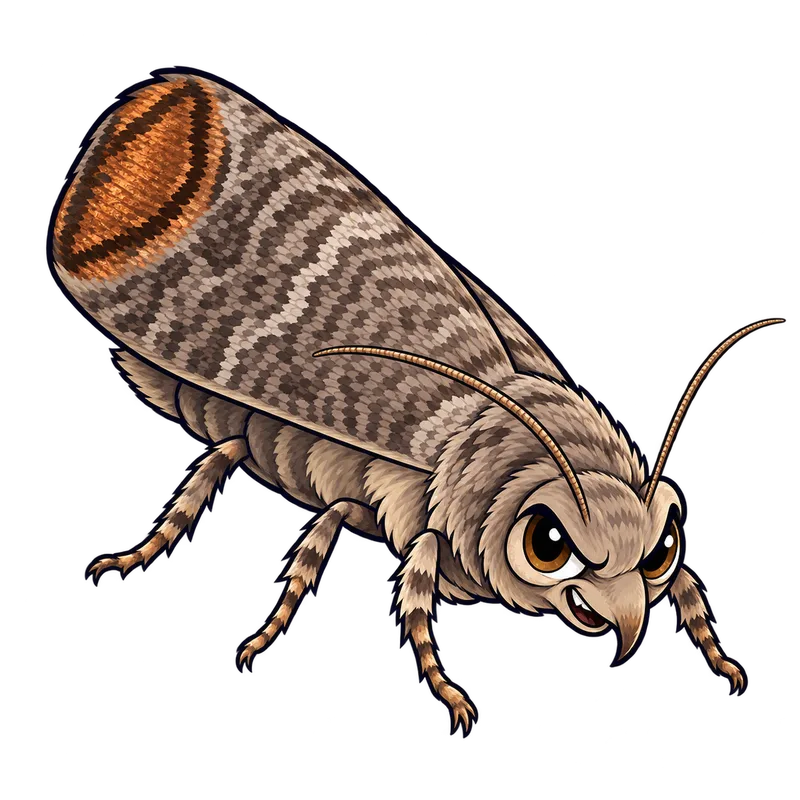
A codling moth larva hatches on an apple, chews through the skin, and tunnels directly to the core to feed on the flesh and seeds. To keep the tunnel clear, this pinkish caterpillar with a brown head pushes its waste back out through the entry hole as brown, crumbly frass.
What is actually going on
You pick a nice looking apple off your backyard tree, turn it over, and there on the side is a small hole ringed with something brown and crumbly, like wet sawdust. You cut it open. A tunnel runs straight to the middle, the core is a mess, and sitting in it is a pinkish caterpillar with a brown head. The classic worm in the apple.
That is very likely a codling moth larva, and what it did inside your apple follows a surprisingly consistent routine. It hatched from an egg laid on a leaf or on the fruit, crawled over the skin looking for a way in, chewed through, and tunneled directly toward the core. There it fed on the flesh and, above all, on the seeds, which are the richest food in the whole apple. To keep its tunnel from clogging, it pushed its droppings back out through the hole. When it was fully grown, it left the apple through a hole of its own and went off to spin a cocoon.
Those droppings are the brown crumbly stuff you saw at the entrance. It is called frass, a mix of waste and chewed fruit, and it is one of the best clues you have that a codling moth was at work.
How to tell for sure
The larva itself is the surest sign. A grown codling moth larva is about half an inch long, pinkish white, with a dark brown head and real legs, and you will usually find it in or near the core rather than in the outer flesh. It prefers to get in through natural dips in the fruit, such as the blossom end, or at a spot where two apples touch.
Not every worm in an apple is a codling moth, though, and the difference matters because the others need different timing and tactics.
If what you find has no head and no legs, is cream colored and has left winding brown trails through the flesh, it is the larva of the apple maggot, which is a fly. If it is a legless, grayish white grub inside a lumpy, misshapen fruit with crescent shaped scars on the skin, it is a plum curculio, which is a beetle. The pinkish caterpillar with a brown head and legs that heads for the seeds is the codling moth.
You may also notice small, shallow, corky marks on fruit that never became full tunnels. These are called stings. They often mean a young larva started to chew in, swallowed something that killed it, and died before it could get far. If you or a neighbor used a biological spray, stings are a sign it was doing its job, not failing.
What usually comes next
The most important thing to understand about codling moth is that once the larva is inside the apple, nothing you spray on the outside can reach it. Everything that works happens either before it gets in or after it leaves.
Start with cleanup, which costs nothing and helps a lot. Pick up and destroy fallen apples regularly, before the larvae inside can finish growing and crawl off to pupate. In early summer, thin out damaged fruit and pairs of apples that touch, removing any that already show an entry hole or frass. If there are unmanaged apple trees, wild crabapples or hawthorns nearby, they act as a supply of new moths.
With sprays, timing is the whole game. Biological products such as Bt, and a virus that specifically targets codling moth larvae, only work when the young larva eats them while chewing through the skin. That means they have to be on the fruit right at egg hatch, before the larva gets in, and reapplied through each hatching period. Orchards find that window using pheromone traps, which catch the male moths in spring, combined with a running tally of warm weather that predicts when eggs will hatch. For a home tree, your local extension service is the place to ask how hatch timing works in your area.
A fine clay coating on the fruit can also discourage egg laying and larval attachment before an infestation starts.
One popular gadget tends to disappoint in a backyard. Pheromone dispensers that confuse male moths and prevent mating only work across large, continuous orchards of several acres. On a single tree, the scent drifts away and already mated females simply fly in from outside.
Whatever you use on a fruit tree, the label is the rulebook: the right crop, the right rate and the required waiting time between spraying and harvest. Leaning on the same product over and over also invites resistance, so growers rotate what they use.
When to get help
If you are growing apples commercially and losing fruit across several generations of the pest, a university extension specialist or a certified crop advisor can help you set up trap monitoring and hatch timing properly. That is detailed work, and getting it right is what makes the sprays pay off.
And if you find damage that does not fit codling moth, apple maggot or plum curculio, such as unusual borers, sudden unexplained dieback, or an insect you suspect is not from around here, contact your state department of agriculture or plant health authority. Some fruit pests are regulated, and early reports matter.
For the backyard tree, the plan comes down to three habits: clean up the dropped fruit, thin out the damaged apples early, and if you spray, spray at hatch, not after you have found the worm.