
Fall armyworm vs sod webworm: what damage clues differ?
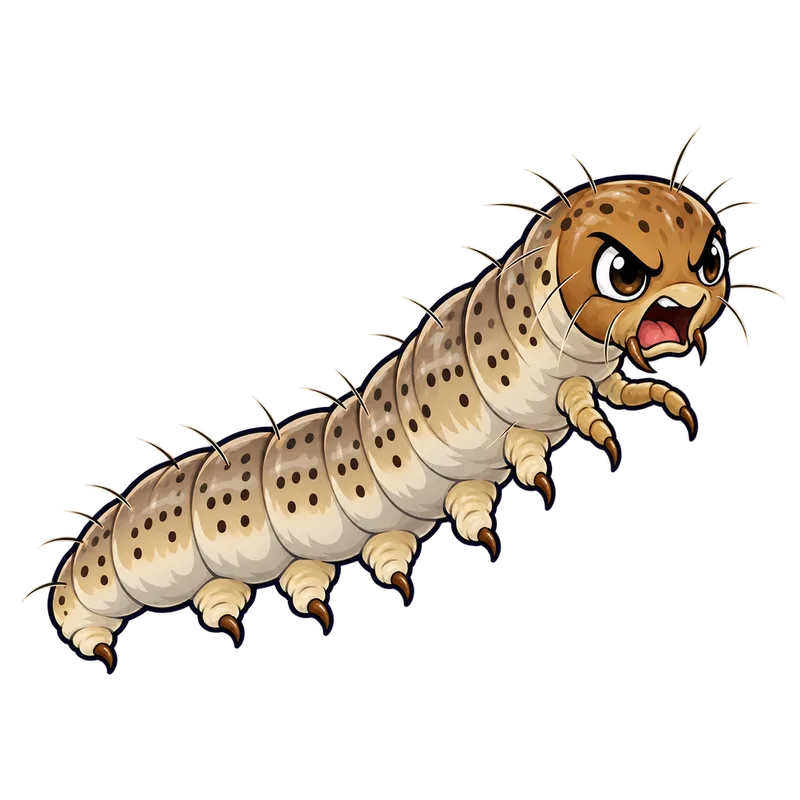
Fall armyworm and sod webworm damage differ in how the caterpillars attack the grass and the specific marks they leave behind. Fall armyworms create a frosted glass effect on grass tips and leave no silk webbing, while sod webworms notch blade margins, sever grass right above the crown, and build silken tunnels in the thatch.
What is actually going on
You walk out onto the back patio with your morning coffee, and something looks deeply wrong with the lawn. Last week the turf was a uniform green, but now there are weird straw-colored patches that seem to have appeared overnight. Naturally, you drop to your knees to investigate, half expecting a fungus or a missed watering zone. Instead, you notice the grass blades look like they have been run through a tiny paper shredder, or worse, chewed right down to the bare dirt.
It is easy to assume you are dealing with a generic lawn pest and reach for whatever bag of chemical granules is sitting on the garage shelf. But not all lawn caterpillars chew with the same habits, and treating them like they do is a fast track to wasting an entire weekend. Fall armyworms and sod webworms both leave behind brown, ravaged turf, but the way they attack the grass is entirely different.
Fall armyworms are brute-force defoliators that move systematically through the upper canopy, stripping foliage from the top down. Sod webworms are more like crafty home-invaders, building silken tunnels in the thatch layer and dragging individual grass blades down like noodles into a microscopic sleeping bag. Knowing which one you are looking at changes everything about how you handle the problem, starting with the very specific signature marks they leave on your grass blades.
How to tell for sure
Fall armyworm damage usually starts with young caterpillars eating just the lower epidermal layer of the grass blades. This creates a distinct translucent windowpane or frosted-glass effect on the tips before older instars devour entire leaves down to the soil line within twenty-four to forty-eight hours. They leave no silk webbing behind, and you will usually find them exposed or resting under debris when populations are dense.
Sod webworms play a totally different game. They are strict nocturnal eaters that spend daylight hours hiding inside silken, debris-lined tubes in the upper thatch or soil. If you look closely at the damaged grass, you will see they notch the margins of the blades, sever them right above the crown, and leave behind tiny, bright-to-dark green fecal pellets in the thatch layer.
To settle the debate once and for all, grab a bucket and try a soap drench test. Mix three to four tablespoons of liquid dishwashing soap into two gallons of water, and pour it evenly over a one-square-yard patch of suspect turf. Watch that patch closely for ten minutes. The mild irritation forces hidden caterpillars to crawl up to the surface so you can count them and see what you are dealing with.
If your count reveals nine or more armyworms per square yard, or fifteen or more webworms per square yard, you have crossed the action threshold where intervention usually becomes necessary. Armyworms typically grow up to two inches long with an inverted Y mark on the head, while webworms stay smaller, usually under an inch, and sport fine body hairs and distinct dark spots.
What usually comes next
Once you have figured out who is eating your grass, you need to decide how and when to treat it, which is where a lot of people accidentally ruin their own weekend work. You might think the right move is to water the lawn right after putting down a liquid spray, just to help soak the product down into the roots. For leaf-chewing caterpillars, though, that is doing the exact opposite of what actually helps.
Those sprays need to stay put right on the grass blades where the pests are actively chewing, acting as a contact and stomach poison. Washing the lawn right away just strips the treatment off the foliage and flushes it down into the dirt where the caterpillars are not eating. Keep the grass dry for a full day or two after treating, and skip mowing for a few days so you do not bag up and throw away the treated tips.
It also helps to time your spraying for the late afternoon or early evening. That is when these creatures start waking up and crawling out of the thatch to begin their nightly meal.
If you lean toward organic or biological controls, products made with bacteria like Bacillus thuringiensis or soil microbes like spinosad can do the job, provided you catch the problem early. These gentler options only work on small, young caterpillars that have not hit the half-inch mark yet. If your soap test turns up giant, fully grown larvae, those biological sprays usually will not cut it, and you will need to look into stronger synthetic choices or talk to a pro.
When to get help
Sometimes a lawn disaster moves much faster than a weekend project can keep up with. If you are facing a massive outbreak of nearly full-grown armyworms, they can wipe out an entire healthy yard in less than forty-eight hours. When the damage is spreading that aggressively, waiting around to see if a home remedy works can mean losing your grass entirely.
It is also smart to call in a local turf expert or check with your county extension office if you suspect the bugs are resisting standard treatments or if local rules get in the way. Certain strong formulas are restricted to licensed applicators and cannot be bought off the shelf for a standard backyard.
If you are just guessing at the cause, or if your brown patches are a messy mix of drought, fungus, and insects all at once, hiring someone saves you from wasting cash on the wrong fix. A professional can look at the big picture, check local pest numbers, and apply treatments safely without harming helpful bugs in the neighborhood.