
Indian meal moth vs other pantry moths: what can you identify?
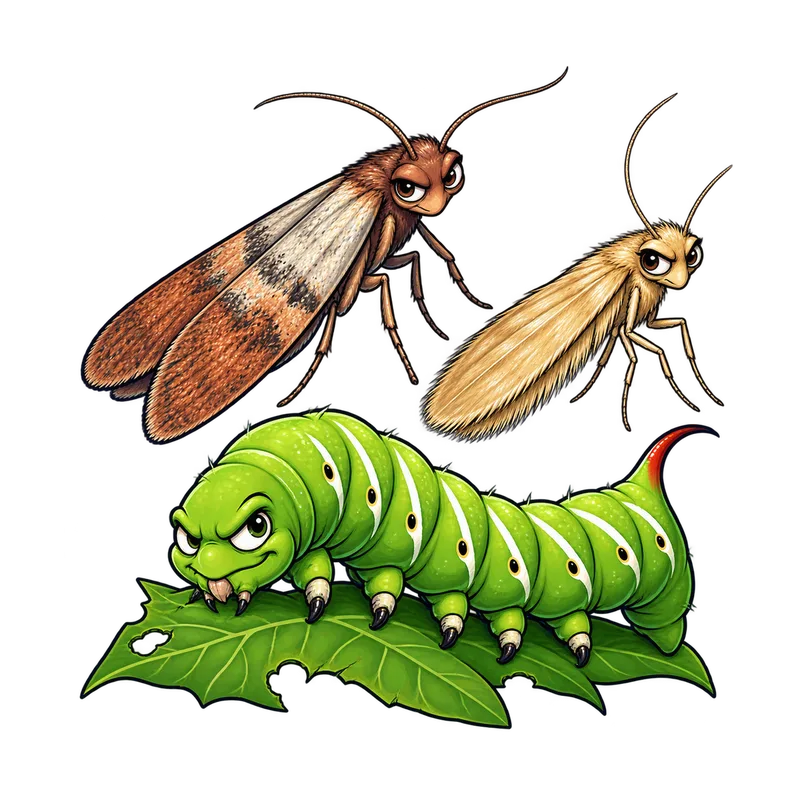
You can identify the Indian meal moth by its unique wingspan measuring five-eighths to three-quarters of an inch, featuring a pale grey front third and a coppery back two-thirds. This pantry pest stays out in the open and ignores your clothes, whereas clothes moths prefer dark spaces and feed exclusively on animal-derived fabrics.
What is actually going on
You are standing in the kitchen at dusk, pouring a cup of coffee, when a small, mottled moth flutters past the pendant light and lands right on the cereal box. Naturally, you wonder if it came out of the oats or if it flew in from the yard, and more importantly, whether you need to check your sweaters or your pantry shelves. The culprit is almost certainly an Indian meal moth, and the easiest way to tell it apart from other household moths comes down to a striking two-toned wing pattern and an absolute refusal to touch your wardrobe.
While clothes moths prefer the dark and feed exclusively on animal-derived keratin like wool, silk, and feathers, the Indian meal moth cares only about plant-based dry goods. If it is living in your flour, birdseed, pet food, or dried pasta, it belongs in the pantry pest category. They do not eat clothes, and clothes moths do not eat cereal.
You might object that a moth is a moth and they all look like dull little triangles fluttering around the house. Yet their behavior and markings are entirely different. An Indian meal moth has distinct wings, split visually into a pale grey or cream front third and a coppery, reddish-brown back two-thirds. They are meandering fliers that do not mind ambient light, unlike clothes moths, which scuttle away into dark shadows the second a closet door opens.
How to tell for sure
Identification usually starts with the adults, but you will often find the evidence in the larval stage first. If you spot a small, cream-colored caterpillar with a brown head capsule crawling through a box of oatmeal, you are usually looking at an Indian meal moth larva. As these caterpillars feed, they spin fine, sticky silk webbing that clumps the grain or flour together into messy webs. If you find loose silk threads and clumped flour particles, you are dealing with pantry pests.
Adult Indian meal moths measure about five-eighths to three-quarters of an inch across their wingspan. That copper-and-cream color pattern is unique among common kitchen invaders. If the moth is completely uniform in color, such as a golden-buff or silvery-grey, you are likely looking at a clothes moth instead. Webbing clothes moths are small and golden with a tuft of reddish hair on the head, while casemaking clothes moths are grey with three faint dark spots on each wing.
You might also encounter other lookalikes that are not moths at all. Carpet beetle larvae, often called woolly bears, are brown, bristly grubs that leave behind cast skins and drop-shaped frass rather than silk webbing. Grain mites can turn flour into what looks like moving dust, and booklice thrive in damp, moldy cardboard boxes. None of these share the specific winged silhouette and two-toned coloration of the Indian meal moth.
What usually comes next
Once you confirm you are dealing with Indian meal moths, the primary job is hunting down the source. Start by emptying the pantry completely and checking every single package of cereal, rice, nuts, spices, and pet food. Look closely at the folded corners of bags and the inner rims of cardboard boxes for fine silk threads or tiny crawling caterpillars.
Get rid of heavily infested items by sealing them in plastic bags and tossing them straight into an outdoor trash bin. Do not bother spraying chemical insecticides on your shelves, as pesticides should never come into contact with food or food packaging. Instead, wipe down the shelves with warm soapy water and vacuum out the corner cracks where mature caterpillars love to migrate before they turn into pupae.
To protect uninfested food moving forward, transfer dry goods into rigid glass, metal, or heavy plastic containers with airtight seals. If you suspect unopened packages might harbor hidden eggs, you can kill them by placing the items in a freezer set to sub-zero temperatures for about a week, or by heating small quantities in an oven at low temperatures for an hour. Always let frozen items return to room temperature inside their sealed bags to prevent condensation from ruining your dry goods.
When to get help
Most pantry moth infestations respond well to thorough kitchen sanitation, vacuuming, and airtight storage. However, you should involve a professional pest management company if you are dealing with a commercial facility, a multi-unit apartment complex, or a persistent infestation that survives rigorous cleaning and pantry checks.
If you ever spot suspected exotic agricultural pests, such as the khapra beetle, which features dense, hairy larvae in imported commodities or bulk storage, report the sighting immediately to your regional agricultural authority or state department of agriculture. For typical household pantry moths, no medical emergency exists, but anyone experiencing severe allergic reactions or asthma flare-ups from grain dust, mite debris, or insect fragments should consult a clinician.