
Why can fall armyworm damage appear suddenly in a lawn?
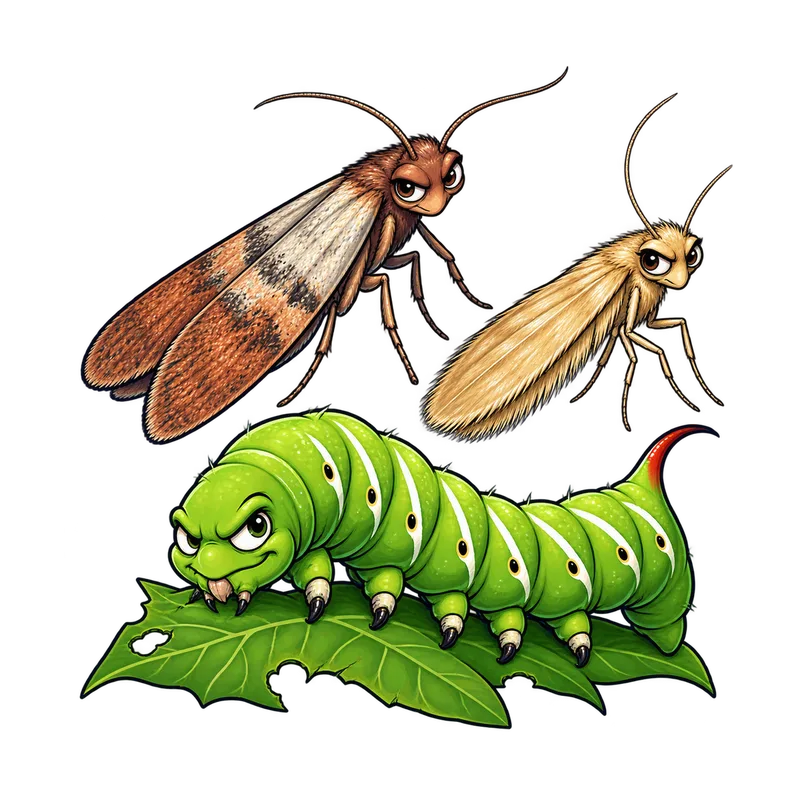
Fall armyworm damage appears suddenly because these caterpillars spend their first ten to twelve days eating only the tips of grass blades while staying practically invisible. During their final two to three days, they hit a massive growth spurt, consuming over eighty percent of their food and stripping entire grass blades down to the soil in under forty-eight hours.
What is actually going on
You walk out to check the mail on a Tuesday morning and notice your lawn looks a bit dull around the edges. By Thursday afternoon, you step onto the grass and realize a large swath of your yard has turned the color of a paper bag, looking like someone dragged a blowtorch across it. It feels impossible that a healthy patch of turf could vanish into thin air in less than forty-eight hours, but that is the trick these caterpillars pull every single year.
The reason fall armyworm damage seems to appear out of nowhere comes down to a matter of sheer appetite. For the first ten to twelve days of their two-week caterpillar life stage, these little pests are practically invisible. They spend their time munching on the very tips of the grass blades, leaving behind tiny, transparent patches that look like stretched tissue paper or a light dusting of frost. You would never notice it unless you were crawling around with a magnifying glass.
Then everything changes in a hurry. Think of it like raising a teenager who barely touches their dinner for a week and then suddenly consumes the entire refrigerator over a single weekend. In their final two to three days of development, these caterpillars hit a massive growth spurt and consume over eighty percent of their total food intake. A high-density population of mature larvae will strip entire grass blades right down to the soil level in twenty-four to forty-eight hours. Once they clear out one spot, they march together in a line toward the next green patch, leaving a trail of total devastation behind them.
How to tell for sure
Before you start pointing fingers at a fungus or a sudden dry spell, you need to verify who is actually eating your yard. Do not try to diagnose the problem just by looking at a brown patch from twenty feet away because armyworm damage is frequently confused with drought stress or common lawn diseases.
Take a close look at the individual grass blades near the edge of the brown patch. If you see those translucent windowpane marks or fine, bleached tips, you are usually looking at early caterpillar work. To know for sure what is hiding in the turf, use a simple soap flush test. Mix about three or four tablespoons of liquid dish soap into two gallons of water, and pour it evenly over a square yard of suspect lawn where the green grass meets the brown.
Wait about ten minutes and watch the surface. The soapy water irritates the thatch layer and drives the hidden caterpillars right up to the top. If you count more than nine armyworms popping up in that single square yard, you have officially crossed the threshold where action is usually warranted in a residential lawn.
What usually comes next
Once you confirm you have an armyworm outbreak on your hands, you have a practical choice to make about how to handle the treatment, and timing is everything. Homeowners often make the mistake of running out with a bottle of insecticide and watering it deep into the soil the way they would for root-eating white grubs. That approach will completely backfire here.
Armyworms feed directly on the leaves, which means any foliar spray you apply needs to stay right on the grass blades to act as a stomach poison. You should generally apply treatments in the early evening when the caterpillars climb up out of the thatch to start feeding. Most importantly, do not water the lawn or mow for at least twenty-four hours after spraying. If you wash the product off the leaves into the dirt, the caterpillars will keep right on eating your lawn unchecked.
If you prefer an organic approach, products containing Bacillus thuringiensis can work well, but keep in mind they are only effective on small caterpillars under a half-inch long. Once the larvae reach maturity, organic sprays lose their punch, and you may need to evaluate other registered options on the product label. If your grass is a resilient warm-season type like Bermudagrass, it usually possesses tough underground runners that allow it to recover from total defoliation in a few weeks, provided the crown of the grass is still alive. Cool-season grasses under severe heat stress often need a lot more care to bounce back.
When to get help
There are moments when managing a lawn pest crosses the line into territory that requires outside help. If your lawn is overrun with broad-spectrum insect problems, or if you are dealing with high-potency commercial formulations that are legally restricted to licensed professionals, you will need to call in a certified applicator to handle the application safely.
You should also pay close attention to your local ecosystem. Spraying broad-spectrum insecticides can wipe out beneficial predators like spiders and ground beetles, which often triggers secondary pest flare-ups later on. If you notice birds, skunks, or raccoons tearing up your damaged turf to feed on the grubs and caterpillars, remember that vertebrate wildlife is protected by state and federal regulations. Never attempt to trap or relocate these animals yourself. If you encounter wildlife exhibiting unusual or aggressive behavior that raises concerns about disease, reach out to your local animal control or public health department right away.