
Casemaking clothes moth
Tinea pellionella
- Size
- 1/4 inch long
- Color
- Dull buff-gray or silvery-grey
- Habitat
- Dark closets and bird nests
- Diet
- Keratin from wool and fur
- Life cycle
- 1 month to 1 year
The casemaking clothes moth, known scientifically as Tinea pellionella, is a small insect that spends most of its life disguised as a mobile piece of debris. You are probably looking at this creature because you found a tiny, rice-shaped speck crawling across a wool sweater or heard about clothes moths ruining a vintage coat.
Identity
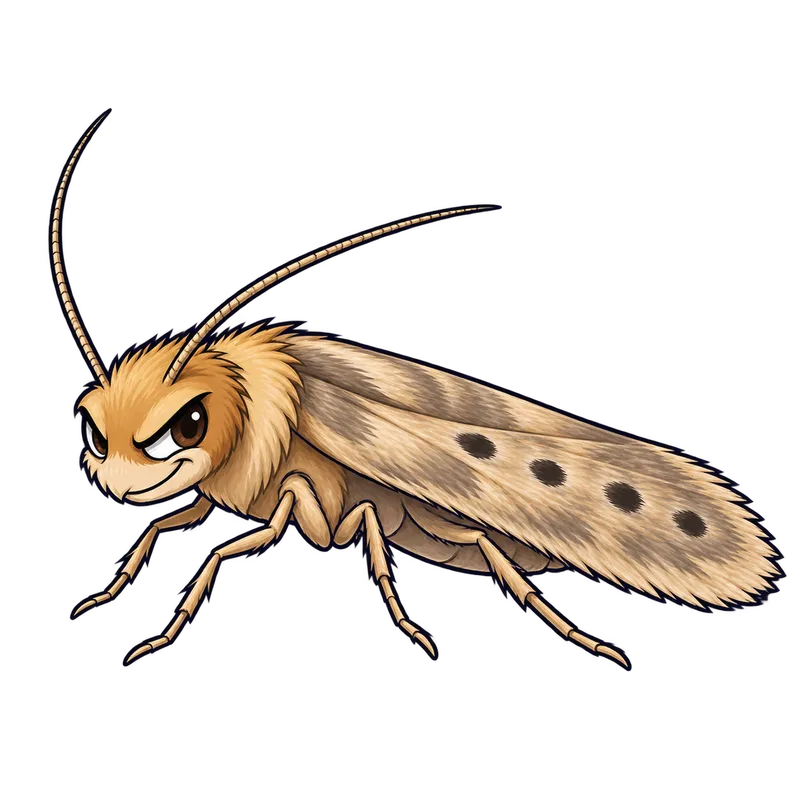
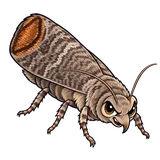
Adults measure about 1/4 inch long when their wings are folded tent-like over their backs. Their forewings are a dull buff-gray or silvery-grey, carrying three somewhat indistinct darker spots formed by tiny scales. You can spot these markings clearly with a simple 10x hand lens or even a sharp naked eye if you catch one resting in a dim hallway.
Unlike other household moths that fly toward lamps, these adults actively avoid light. When you open a dark closet or lift a storage box, they tend to run or drop into shadows rather than flutter around your ceiling fixtures. Their flight is weak, fluttery, and erratic, which is usually your first real clue that you are dealing with a clothes moth rather than a pantry pest.
Habitat & behaviour
These moths seek out dark, quiet, undisturbed locations where natural animal fibers sit in peace. You will find them tucked away in closets, bureau drawers, attics, beneath heavy furniture, along baseboards, and inside boxes of seasonal clothing.
Outdoors, they often inhabit abandoned birds nests in chimneys, roof eaves, and hollow trees. In fact, many indoor infestations start when adult moths hatch from a bird nest in a chimney and fly right down into your living space through an open flue or window.
Inside a centrally heated home, they breed continuously year-round, cycling through up to four generations in twelve months. They have a strict appetite for animal-derived proteins containing keratin, meaning wool, cashmere, mohair, fur, feathers, leather, and silk are on the menu. If a garment is stained with human perspiration, body oils, milk, or beer, they will target it even faster because those organic residues provide extra nutrients that speed up their growth.
Visual variations
You will not find complex colonies or busy workers here. This is a solitary creature that goes through a complete transformation from an egg to a caterpillar, then to a resting pupa, and finally into a winged adult.
The egg stage starts out microscopic and clear, hidden right in the folds of a garment or deep in animal fur. That egg hatches into a caterpillar, which is the only stage of life that actually causes any damage. The caterpillar grows up to 1/2 inch long, showing off a creamy-white body and a dark brown or black head.
What sets this particular moth apart is its portable sleeping bag. The caterpillar spins an open-ended silken tube around itself, weaving bits of the fabric it is eating right into the walls so it stays hidden in plain sight. It drags this little case everywhere it goes, sticking just its head and front legs out to eat. When it outgrows the case, it simply adds more silk and chewed fiber to the ends to stretch it out.
When the caterpillar finally stops eating, it glues the case to a seam, seals up the ends, and rests inside until it changes shape. The adult moth eventually crawls out as a dull flyer with narrow wings and useless mouthparts, caring only about finding a mate and starting the cycle over again.
Why it matters
Spotting these insects at home means your favorite natural garments are at risk of being chewed right through. The caterpillars leave behind thinned, patchy wool filled with hard little droppings that match the color of whatever they just ate, along with a scattering of abandoned cases that look just like stray grains of rice.
Your health is not at risk, since these pests pose no danger to people or animals. They do not bite, sting, spread illnesses, or bother your potted houseplants.
When you discover just a few damaged sweaters or a stray case here and there, basic steps like vacuuming, hot laundering, dry cleaning, or freezing can handle the problem in a single closet. Still, if the infestation gets out of hand and spreads across wall-to-wall wool carpets, heavy upholstered furniture, or deep into your heating ducts, or if you are trying to save irreplaceable vintage heirlooms, it is time to call in a professional pest control expert.
Similar species
 Sod webwormsFamily Crambidae
 Squash vine borerMelittia cucurbitae
 Imported cabbagewormPieris rapae
 Tomato hornwormManduca quinquemaculata
 Tobacco hornwormManduca sexta
 Codling mothCydia pomonella