
Pantry moths vs clothes moths: how can you tell?
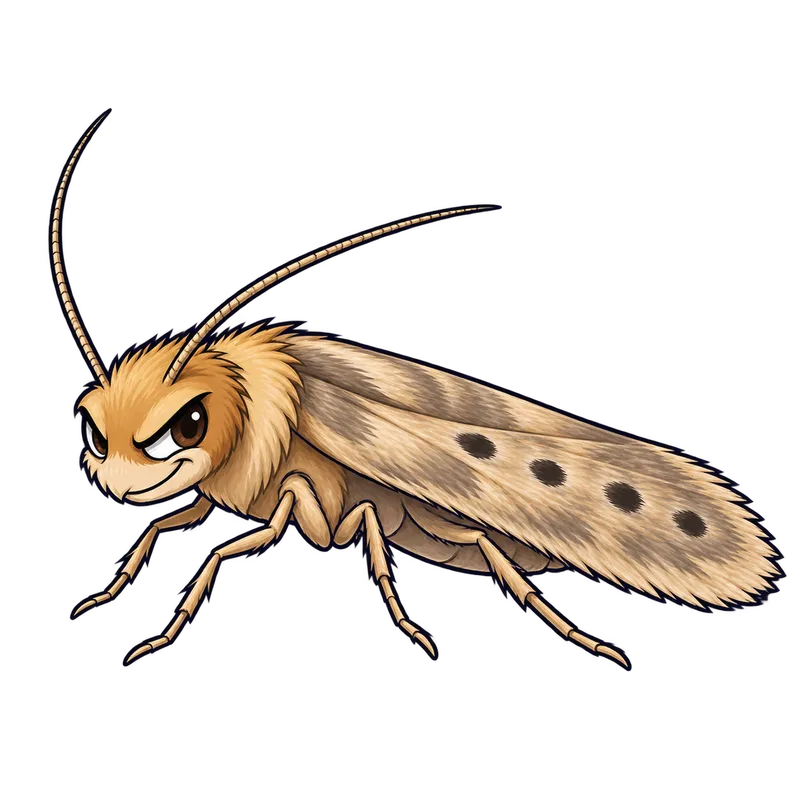
You can tell pantry moths and clothes moths apart by their size, wing colors, behavior, and where you find them. Pantry moths are about five-eighths to three-quarters of an inch long with two-toned wings and are drawn to indoor lights near food. Clothes moths are smaller, run from light into dark closets, and feed on animal fibers.
What is actually going on
You reach into the back of the pantry for that bag of flour you bought last month, and a small brownish moth flutters up, landing right on the kitchen ceiling light. Or perhaps you pull your favorite wool sweater out of the closet and spot a ragged little hole near the collar, followed quickly by a tiny, frantic, golden-buff moth scuttling across the shelf into the dark shadows. Both bugs have wings and fly around your house, but they are entirely different creatures with completely different agendas.
The short answer is that pantry moths and clothes moths belong to different insect families, target opposite things in your home, and act in contrasting ways. Think of the pantry moth as the bold guest who hangs out directly under the bright kitchen light near your cereal boxes, while the clothes moth is the shy wallflower that scrambles into the dark corners of your closet the moment a door opens.
To tell them apart, you just need to look at their wings, notice where you found them, and remember who is actually doing the damage. Adult moths of both kinds have tiny, useless mouths. They do not eat your clothes or your oatmeal, and they cannot bite you. Their only job is to reproduce. All the destruction is done by their hidden caterpillar offspring living in your food containers or chewing on your favorite garments.
How to tell for sure
Pantry moths, usually represented by the Indian meal moth, are about five-eighths to three-quarters of an inch long when resting. Their most striking feature is a two-toned wing pattern. The inner third of the wing is a pale grey or yellowish white, while the outer two-thirds are a coppery or reddish-brown with a metallic sheen. They have a weak, erratic flight style and are normally drawn right toward indoor lights during the evening. If you catch one, it usually means it came from somewhere close to your dry food storage.
Clothes moths are smaller, usually measuring about a quarter of an inch long, and they prefer to run or flutter close to surfaces rather than fly out into the open. The webbing clothes moth is a uniform golden-buff color with a tiny tuft of reddish-orange hair right on top of its head, which you can spot if you look closely with a magnifying glass. The casemaking clothes moth is a dull silvery-grey with three faint dark spots on each forewing. Neither of these has the coppery wing bands of a pantry moth, and both will actively run away from light into the dark folds of a closet or under a heavy piece of furniture.
The material they infest also usually gives them away. Pantry moth larvae feed exclusively on plant-derived starches and dry goods, so you will typically find them in cereal, flour, nuts, pet food, birdseed, or spices, often leaving behind loose, irregular silken webs that clump the food together. Clothes moth larvae have a rare digestive ability to break down animal keratin, which is the tough protein found in wool, fur, feathers, mohair, and natural silk. They leave behind clean-edged holes in textiles, alongside hard, sand-like frass pellets that match the color of the fabric. Casemaking clothes moth caterpillars even drag around a tiny, portable silken case that looks like a grain of rice, using bits of the fabric they eat to build it.
What usually comes next
Once you spot an adult moth, your first practical move is to track down the source of the infestation rather than wasting time chasing flyers around the room. If you suspect pantry moths, open every box and bag of grain, flour, dried fruit, and pet food in the pantry. Look for fine silken threads or clumping in the dry goods, and immediately toss out anything that shows signs of visitors into an outdoor trash bin.
If you are dealing with clothes moths, empty out the affected closet or dresser drawer entirely and inspect your woolens, cashmere, and feathered items for silken feeding tubes or chewed fibers. Wash susceptible clothing in hot water or take it to the dry cleaner to wipe out any hidden eggs or larvae. For items you cannot wash, like heavy wool coats or delicate vintage textiles, sealing them in a heavy plastic bag and putting them in a deep freezer at minus four degrees Fahrenheit for a full seven days will kill every life stage.
Pheromone sticky traps can help you monitor activity, but keep in mind that they only catch specific species using synthetic female scents. A pantry moth trap will ignore a clothes moth entirely, so make sure you match the trap to the exact pest you are trying to track.
When to get help
While most household moth problems can be managed with thorough cleaning, discarded infested foods, and careful laundering, some situations call for outside help. If an infestation is spreading extensively through wall voids, heating ducts, or hidden structural spaces in a large or historic home, you should bring in a licensed structural pest control operator to handle the treatment safely.
When clearing out old bird nests from an attic, chimney, or eaves to remove a hidden reservoir of casemaking clothes moths or carpet beetles, remember to check local wildlife protection regulations, as certain nesting birds are protected by law and cannot be disturbed until the breeding season ends.
If you or anyone in your household experiences persistent skin rashes, unexplained respiratory reactions, or ongoing allergic symptoms, do not assume they are insect bites or direct stings. Moths do not bite humans, but floating scales, shed skins, and frass from heavy infestations can sometimes trigger allergic rhinitis or asthma. Reach out to a licensed clinician, an urgent care facility, or your regional poison control center for proper medical guidance.