
How are sod webworms treated?
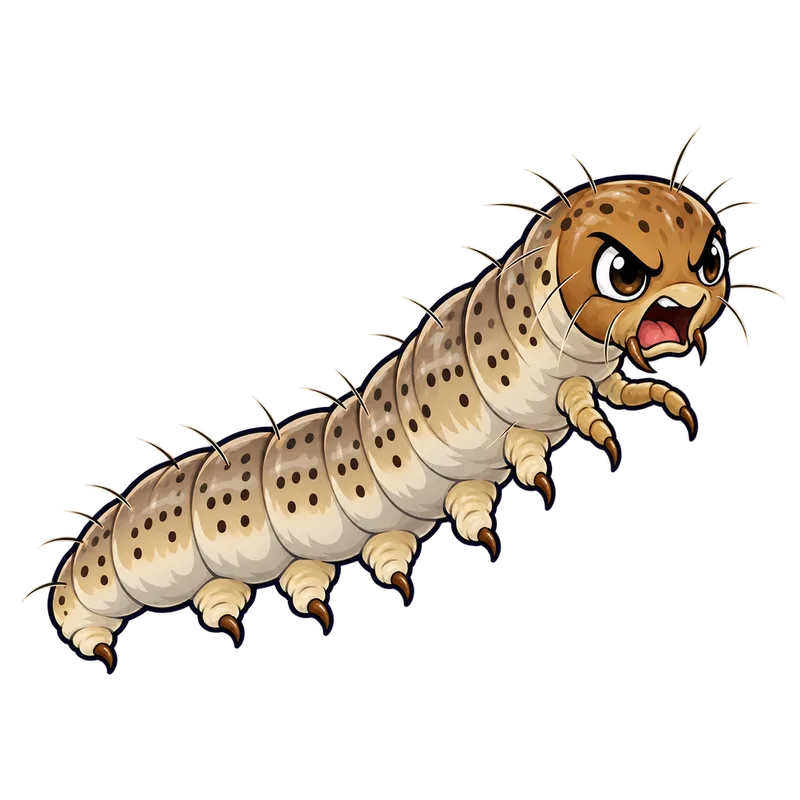
Sod webworms are treated by confirming an infestation with a soap test and applying biological controls or contact insecticides in the early evening. The timing depends on finding fifteen or more caterpillars per square yard, and treatment must happen precisely when the young caterpillars hatch and begin feeding on the grass blades.
What is actually going on
You are walking across the lawn on a warm summer evening, and every time your shoe brushes the grass, a dozen small, dingy tan moths flutter up like tiny scraps of paper before settling a few feet away. It looks harmless enough, almost like you are disturbing grass seed blowing in the wind. But a couple of weeks later, those same areas of your yard begin to look ragged, thinning out into irregular brown patches that refuse to green up no matter how much you water them. What you are actually looking at is a classic sod webworm situation, where the adult moths you see flying around are merely laying eggs for a hungry generation of underground caterpillars.
Treating sod webworms is not about swatting those fluttering adults, and it is certainly not about dumping broad-spectrum poison across your entire yard at the first sign of an insect. Effective treatment relies on a simple rhythm of scouting, confirming larval numbers with a basic soap test, and applying either targeted biological controls or labeled contact insecticides precisely when the young caterpillars hatch and begin feeding on the grass blades. Because these pests spend their daylight hours hidden in silken tunnels deep within the lawn thatch, getting the treatment right means understanding their habits rather than just guessing with whatever chemical happens to be on the hardware store shelf.
The real damage is done exclusively by the larval stage, which chews through grass blades right above the soil crown at night. If you treat too early, you waste your effort while the moths are still flying. If you treat too late, the caterpillars grow large, tough, and completely immune to gentle organic controls like microbial sprays. Timing is everything here, and the window opens roughly two weeks after you notice peak adult moth activity in your yard.
Before you buy a single product, you need to know for a fact that sod webworms are the culprits, because brown patches in a lawn can just as easily point to drought stress, fungal disease, or chinch bugs. Those adult moths you see at dusk have distinct, snout-like mouthparts pointing forward and usually rest with their wings wrapped tightly against their bodies, or folded in a neat triangular shape if you are dealing with the tropical variety common in the American South. However, the moths themselves cause zero damage to your turf. You have to look a little closer to find the actual pests.
How to tell for sure
To confirm an active population, you usually perform a simple soap flush test right at the edge of the damaged turf. Mix about one fluid ounce of ordinary liquid dish soap into a gallon of water, and pour it evenly over a one-square-yard section of the lawn. Give it three to ten minutes to work its way through the thatch. If sod webworms are present, the mild irritation will drive them to the surface where you can actually see them.
Once they crawl up, look closely. Mature caterpillars are usually under an inch long, ranging from light green to pinkish-white or yellowish-brown, and marked with distinctive dark spots along their segments and a dark brown head. If you count fifteen or more caterpillars in that single test square, your infestation has crossed the economic threshold where treatment is generally justified. If you find only a couple, or none at all, your lawn can usually recover on its own with basic care, and you can skip the chemicals entirely.
What usually comes next
Once your soap test confirms that you have crossed the magic threshold of fifteen caterpillars per square yard, your single most practical decision comes down to choosing between a gentle biological option and a synthetic contact treatment based on how far along the infestation has gone. If you caught the problem early, right when those tiny larvae are newly hatched, biological options work remarkably well by acting as stomach poisons when the caterpillars feed on the treated foliage.
The catch is that biologicals are remarkably fussy about timing. If you wait too long and those caterpillars grow large and heavily armored, microbial sprays will bounce right off them with zero effect. At that point, your only real choice for saving the lawn is to switch to a labeled synthetic contact treatment. Whichever path you choose, application requires strict discipline. You must apply the treatment in the early evening when the caterpillars finally emerge from their thatch tunnels to feed, and you must resist the urge to water or mow the lawn for at least twenty-four to seventy-two hours afterward so the product stays right where the pests can eat it.
When to get help
Most homeowners can manage a localized sod webworm patch with a bucket of soapy water and a properly timed evening spray, but certain situations call for stepping back and letting someone else handle it. If you manage a large commercial property, a public athletic complex, or a sprawling turf installation, you need to bring in a certified pesticide applicator. These settings often require restricted-use chemicals or heavy-duty dethatching machinery that simply does not belong in a residential shed.
Safety is another clear boundary. If you or anyone in your household experiences severe allergic reactions, respiratory distress, or accidental exposure when handling lawn treatments, stop immediately, contact poison control, and consult a clinician. Furthermore, if your property borders a natural pond, a stream, or a storm drain, be exceptionally cautious. Many powerful synthetic insecticides used for lawn caterpillars are extremely toxic to fish and aquatic life, meaning an accidental runoff can do far more damage to the local ecosystem than a few chewed blades of grass ever could. When the scale of the job threatens local waterways or exceeds standard residential equipment, calling a licensed professional is always the smartest route.