
What does a browntail moth caterpillar look like?
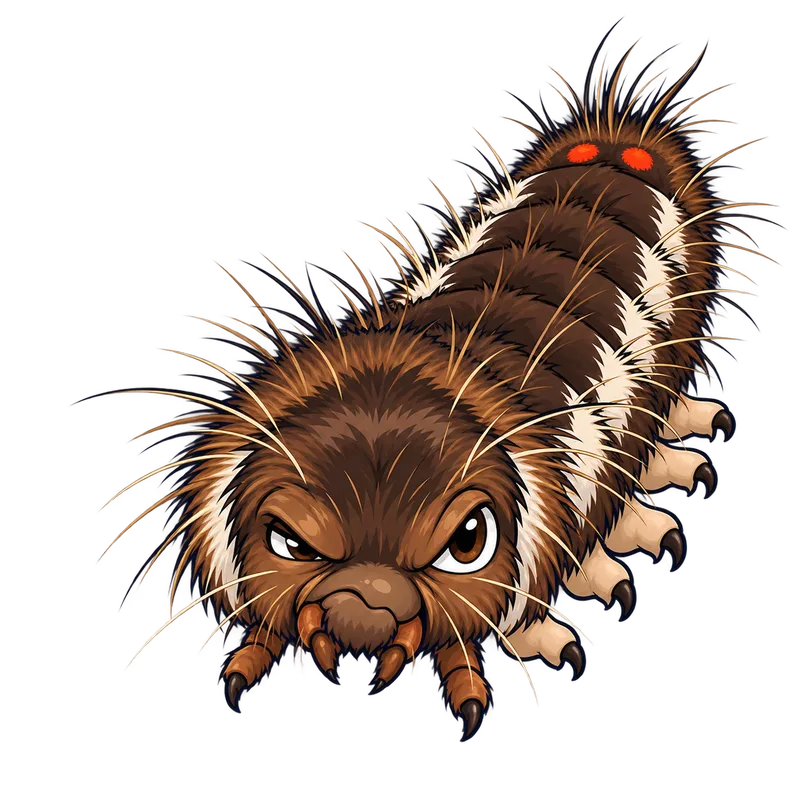
A browntail moth caterpillar is about one and a half inches long and dark brown or black with distinct features. It displays a broken dashed line of white hair tufts along each side and two bright red orange spots sitting close together near its rear end.
What is actually going on
You are standing in the yard on a pleasant morning in late May, admiring the fresh leaves on your apple tree, when you notice something dark and hairy crawling along a branch. Naturally, you lean in a bit closer to see what kind of visitor has moved in, wondering if it is just another harmless garden crawler or something you actually need to worry about. If it happens to be about one and a half inches long, dark brown, and carrying a few peculiar markings on its back, you are likely looking at a browntail moth caterpillar.
People often confuse these creatures with other common yard caterpillars, mostly because half the things crawling on trees in the spring look roughly the same at a glance. But this particular caterpillar is worth knowing by sight, and not just because it eats your hardwood trees down to the veins. It carries thousands of microscopic, barbed hairs filled with a toxin that can make you miserable if you get too close. Those hairs break off easily, float on the breeze, and stick to clothing or skin, triggering a rash that feels remarkably like a severe case of poison ivy.
The strange part is that these caterpillars spend the winter right out in the open. Long before spring arrives, groups of them spin tough, bright white silk at the very tips of tree branches, sealing themselves inside like a tightly wrapped sleeping bag. When the weather warms up in April, they come pouring out of those nests to feed and grow, reaching their full size by June before turning into ordinary white moths.
How to tell for sure
Spotting a mature browntail caterpillar usually comes down to three distinct features, and none of them require a microscope if you have reasonably good eyesight. First, look at the overall size. A fully grown one in late spring measures about one and a half inches long, which is roughly the length of the top joint of an adult thumb.
Next, scan the sides of its dark brown or black body. You will usually see a broken, dashed line of white hair tufts running laterally down each flank, resembling the dashed white line down the center of a two-lane highway. This is a helpful contrast against other species like the Eastern tent caterpillar, which usually sports a solid, unbroken white stripe straight down its back.
Finally, check the rear end of the caterpillar's upper side. You will find two bright red-orange spots sitting close together near the tail, acting almost like tiny warning dots or tail-lights. If you see those two red spots combined with the dashed white side stripes on a dark, hairy body in May or June, you are almost certainly looking at a browntail moth caterpillar. Spongy moth caterpillars, by comparison, carry rows of blue and red spots down their backs, so those two rear dots are a very specific signature.
What usually comes next
Once you spot these caterpillars in your trees, you have to decide whether to leave them be or get them out of your yard before the rash season ruins your summer. If the nests are still hanging on the bare branch tips during the winter months, from November to February, you can often prune them out using long-handled pole pruners while standing safely on the ground.
Pruning winter nests is the cleanest way to keep populations down before the larvae hatch and start wandering. Just remember that you cannot simply toss a clipped nest onto the grass, because the living caterpillars inside will crawl right back up. Drop those clipped nests straight into a bucket of soapy water and let them soak for a few days to finish the job.
If you are dealing with active caterpillars crawling around your trees in May and June, pruning is no longer practical, and shaking or sweeping them can send those toxic hairs flying into the air like microscopic fiberglass splinters. At that stage, many people prefer to hire a licensed arborist or pest control professional who has the high-pressure equipment to treat canopy trees safely without bathing the entire yard in drifting hairs. If you attempt any yard work near infested trees on a dry spring day, wearing long sleeves, eye protection, and a dust mask is generally a wise precaution.
When to get help
Most minor skin irritations from browntail hairs can be managed at home with cool showers, mild soap, calamine lotion, or over-the-counter hydrocortisone cream. But you should not try to tough it out if the reaction goes beyond a standard itchy rash.
Get medical help immediately if you or someone in your household experiences trouble breathing, difficulty swallowing, or swelling around the mouth, tongue, and throat after being exposed to airborne hairs. Inhalation of these toxic bristles can trigger severe respiratory distress or acute asthma attacks, which require prompt clinical care.
For large property infestations that stretch high into mature oaks or maples where you cannot safely reach with pole pruners, bring in a licensed tree care professional. Trying to manage an extensive canopy outbreak with homeowner tools usually leads to accidental exposure, falls, or wasted effort. When a local population reaches nuisance levels, municipal authorities sometimes step in with coordinated community plans, so checking with your local town office or state forestry extension can also point you toward the right regional resources.