
When are bagworms most vulnerable to treatment?
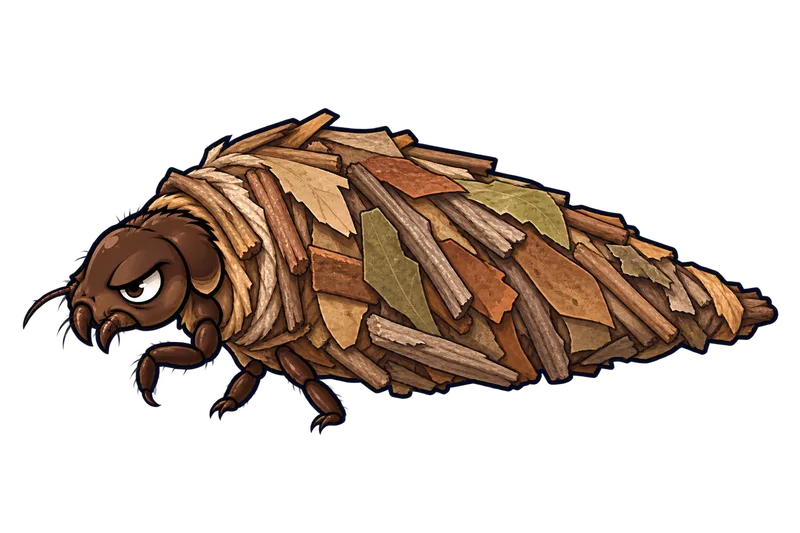
Bagworms are most vulnerable to treatment in late spring to early summer. During this time, the newly hatched larvae have constructed small silk bags that measure under half an inch in length. The exact timing depends on your region, starting in late May in southern areas and early June in northern areas.
What is actually going on
You walk out to your favorite arborvitae on a bright June morning, coffee in hand, only to notice what looks like a cluster of tiny, moving pine needles hanging from the branches. Look closer, and you will see that these are not stray debris at all. They are miniature caterpillars hauling around tiny silk backpacks woven from bits of your plant. If you want to stop them before they turn your prized evergreens into brown toothpicks, timing is everything. Bagworms are most vulnerable to chemical and biological treatments in late spring to early summer when the larvae have newly hatched and constructed small silk bags under half an inch in length.
Once those caterpillars emerge from their overwintering eggs, they start feeding aggressively on the outer foliage and building their portable casings. In coastal and southern regions, this hatch often kicks off in late May, while gardens further inland or in northern areas see them appear by early to mid-June. During this narrow window, the pests are small and their protective silk bags are thin. That combination makes them exceptionally susceptible to treatments.
As summer rolls on, the physics of the situation change entirely. The caterpillars grow larger, and their backpacks get reinforced with tougher bits of leaves and twigs. That construction turns into a physical shield that deflects contact sprays and prevents stomach poisons from working. By the time late summer arrives, the surviving caterpillars anchor their cases firmly to the twigs and pupate inside. At that point, spraying them is a waste of time and money.
People often mix up bagworms with other tree-dwelling insects, which usually leads to using the wrong control at the wrong time. Bagworms are entirely unique because every single caterpillar carries its own individual, portable conical case. You will usually find them dangling from evergreens like arborvitae, juniper, cedar, spruce, and pine, though they also hit deciduous trees like birch and honey locust.
You want to make sure you are not looking at tent caterpillars or fall webworms instead. Eastern tent caterpillars build large, stationary silken webs in the crotches of branches early in the spring, while fall webworms spin sprawling webs enclosing the outer foliage later in the season. Bagworms do not build communal tents or webs. They move around independently, each hiding inside its own little hanging pouch.
If you spot bags that are already longer than an inch and a half by midsummer, or if you find hard, sealed bags swinging in the autumn wind, you are looking at mature stages. Those older casings are tough, leathery, and firmly zipped shut for the winter. Spotting the pest while it is still tiny and actively crawling across the needles is the only way to confirm you have caught them in the vulnerable window.
How to tell for sure
Your main decision boils down to a simple choice between taking action now with targeted sprays or waiting for the cold months to hand-pick the cases. If you catch the infestation during that late spring or early summer window while the bags are under half an inch long, you can use foliar sprays containing biological options like bacterial agents or spinosad. Because these particular products work as stomach poisons that the caterpillar must ingest while feeding, you usually want to apply them in the late afternoon or evening. That timing avoids the harsh ultraviolet sunlight that degrades the spray too quickly, and it protects foraging honeybees that have already called it a day.
If you miss that spring window and discover the infestation later when the bags are large, brown, and tough, spraying is generally pointless. Trying to increase the strength of the chemical will not pierce the reinforced casing or solve the problem. In that case, your practical move is to wait until autumn or winter when the leaves drop or the evergreens are dormant, and manually clip the bags off the branches one by one.
When you do hand-pick those bags, remember one crucial detail. You have to snip the tough silk band that wraps around the twig to anchor the case. If you simply pull the bag off and leave that loop behind, the expanding stem will get choked by the remaining silk, which can girdle the branch and kill the twig just as effectively as the pests would have.
What usually comes next
Sometimes a garden problem outgrows a pair of hand pruners and a garden hose, and it pays to know when to bring in outside help. If you are dealing with towering landscape evergreens that stretch higher than fifteen feet, trying to treat the upper canopy with standard home equipment is usually unsafe and ineffective. That is the moment to call a professional arborist who has the high-pressure sprayers and proper reach to treat the entire tree evenly.
You should also contact a professional if a high-value conifer suffers heavy defoliation and shows signs of rapid decline. Evergreens like arborvitae and juniper cannot easily regenerate new foliage on old wood once they are stripped bare, meaning a severe single-season attack can kill the plant permanently.
There are also moments when you need to be careful with what you apply. Repeatedly soaking trees with broad-spectrum chemical sprays can wipe out beneficial predatory mites, which often triggers a secondary explosion of spider mites that damages the plant even further. If you are unsure about the safety margins of systemic treatments or restricted-use products near sensitive areas, consult a local extension service or a certified tree care expert before you spray.
When to get help
When dealing with persistent infestations on mature trees, reaching out to an extension service or a professional arborist ensures the treatment matches the severity of the damage.